Category
page 1Hindu cosmology

classical elements
group of constituent basic elements of matter (water, earth, fire, air and sometimes aether), used to explain nature patterns since ancient times
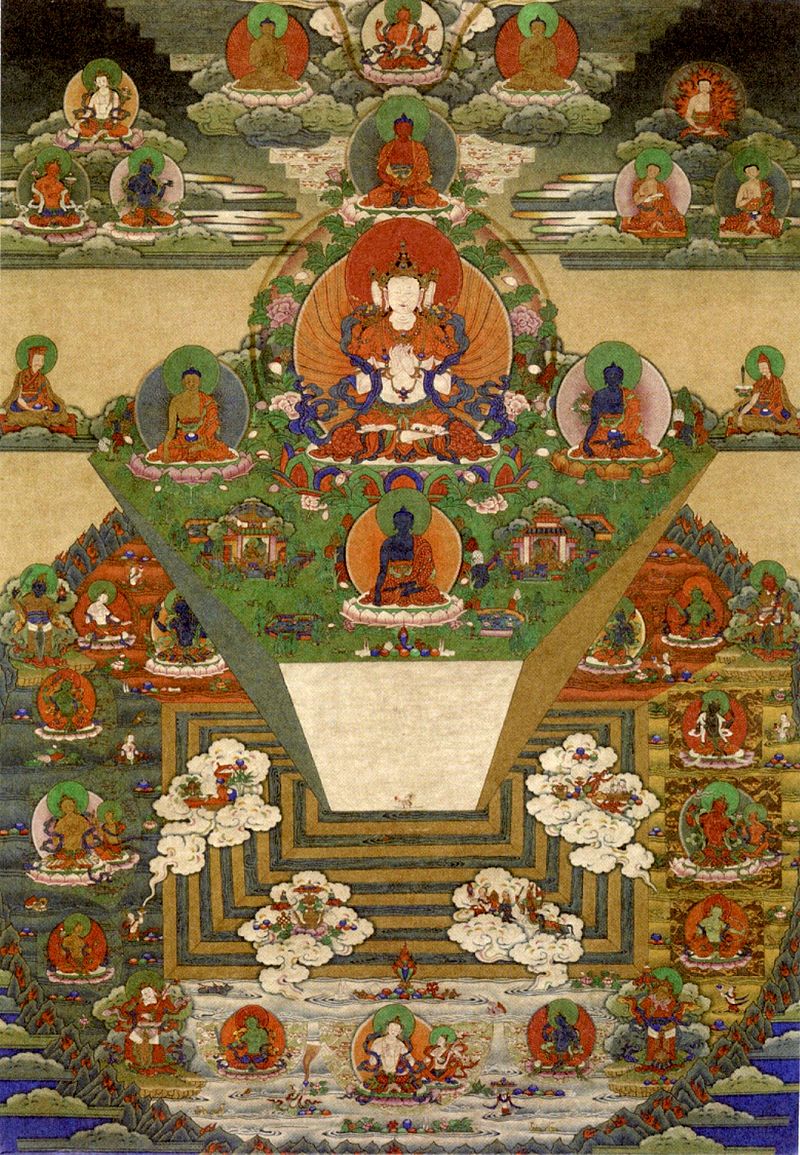
Mount Meru
sacred geographical object

Prithvi
Prithvi (Sanskrit: पृथ्वी, ', also पृथिवी, ', "the Vast One", also rendered Pṛthvī Mātā), is the Sanskrit name for the Earth, as well as the name of the goddess-personification of it in Hinduism. The goddess Prithvi is an archetypal Mother Goddess, and one of the most important goddesses in the historical Vedic religion.

Svarga
thumb|380x380px|Frieze of Gandharva|gandharvas and apsaras, residents of Svarga
Svarga (, ), also known as Swarga, Indraloka and Svargaloka, is the celestial abode of the devas in Hinduism. Svarga is one of the seven higher lokas (esoteric planes) in Hindu cosmology. Svarga is often translated as heaven, though it is regarded to be dissimilar to the concept of the Abrahamic Heaven.
Brahmanda Purana
Sanskrit text, one of the eighteen major Puranas

loka
thumb|upright|Rajaloka, Saṁgrahaṇīratna by Śrīcandra, 17th century.
Seven Heavens
seven levels or divisions of the Heavens in religious or mythological cosmology

Brahmapura
thumb|Brahmaloka, as seen on the head of Vishnu's Vishvarupa form as the Cosmic Man
Brahmaloka (Sanskrit: ब्रह्मालोक, IAST: Brahmāloka) or Satyaloka (Sanskrit: सत्यलोक) sometimes refers to the realm of Brahma, the creator god, a member of the Trimurti along with Vishnu and Shiva, along with his consort Saraswati. It is also referred to as Brahmapura, in the Puranas. Brahmaloka also refers to the abode of Brahman.

Pralaya
thumb|260x260px|The Matsya (fish) [[avatar of Vishnu saves the first Manu during a Prakritapralaya.]]
Pralaya () is a concept in Hindu eschatology. Generally referring to four different phenomena, it is most commonly used to indicate the event of the dissolution of the entire universe that follows a kalpa (a period of 4.32 billion years) called the Brahmapralaya.
Hindu cosmology
description of the universe in Hindu texts

Avīci
thumb|Avīci hell, 13th century, collected in Japan
Avīci or Avici (Sanskrit and Pali for "without waves") is one of the hells (naraka) in Hinduism and Buddhism. In Hinduism, it is one of the twenty-eight hells located in the kingdom of Yama, where individuals are reborn for bearing false witness and outright lying while transacting business or giving charity. In Buddhism, it is the lowest level of the Naraka or "hell" realm, with the most suffering, into which the dead who have committed grave misdeeds may be reborn. It is said to be a cube 20,000 yojanas () on each side, buried deep underneat

Devaloka
thumb|The Trimurti in Devaloka
Nasadiya Sukta
Hymn from Rig Veda that talks about creation of everything.

Panchangam
thumb|right| Panchaanga in Kannada
thumb|Tamil Vakya Panchangam
Svayambhuva Manu
First Human in Hinduism
Amaravati
figure in Hindu mythology
Garbhodaka
hindu celestial abode