Category
page 1Hindu festivals

Diwali
Dipavali (IAST: ), commonly known as Diwali (), is the Hindu festival of lights, with variations celebrated in other Indian religions such as Jainism and Sikhism. It symbolises the spiritual victory of Dharma over Adharma, light over darkness, good over evil, and knowledge over ignorance. Diwali is celebrated during the Hindu lunisolar months of Ashvin (according to the amanta tradition) and Kārtika – between around mid-October and mid-November. The celebrations generally last five or six days.

Holi
Holi () is a major Hindu festival of colours, love, and spring. It celebrates the love between the deities Radha and Krishna.
Additionally, the day signifies the triumph of good over evil, as it commemorates the victory of Vishnu as Narasimha over Hiranyakashipu.
Holi originated in ancient Indian subcontinent and is predominantly celebrated in the Indian subcontinent, but has also spread to other regions of Asia and parts of the Western world.

Kumbh Mela
Hindu pilgrimage and festival celebrated in India

Maha Shivaratri
Hindu festival for contemplation of self and Shiva

Navaratri
thumb|Durga Puja pandal
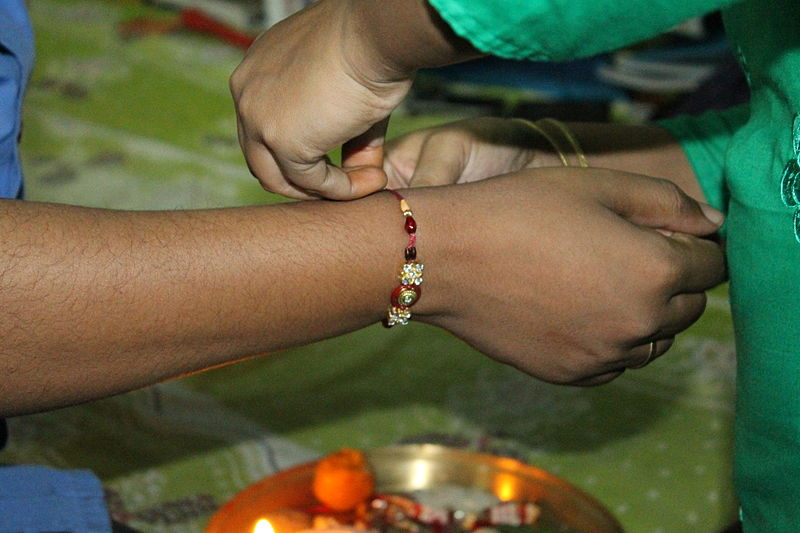
Raksha Bandhan
annual ritual originating from the Indian Subcontinent
Ganesh Chaturthi
multi-day Hindu festival revering god Ganesha (August–September)

Durga Puja
Hindu festival in Indian subcontinent

Krishna Janmashtami
Annual commemoration in India on account of birth of the Hindu deity Lord Krishna
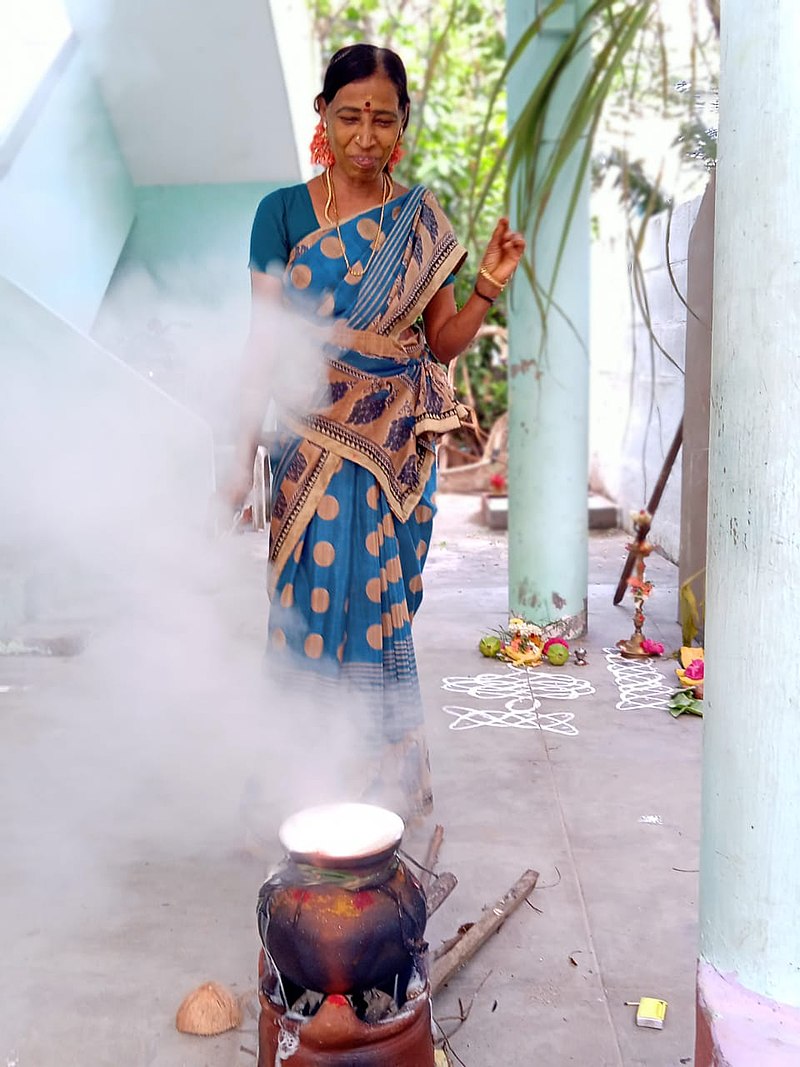
Pongal
multi-day annual harvest Tamils festival in South India and Sri Lanka various region
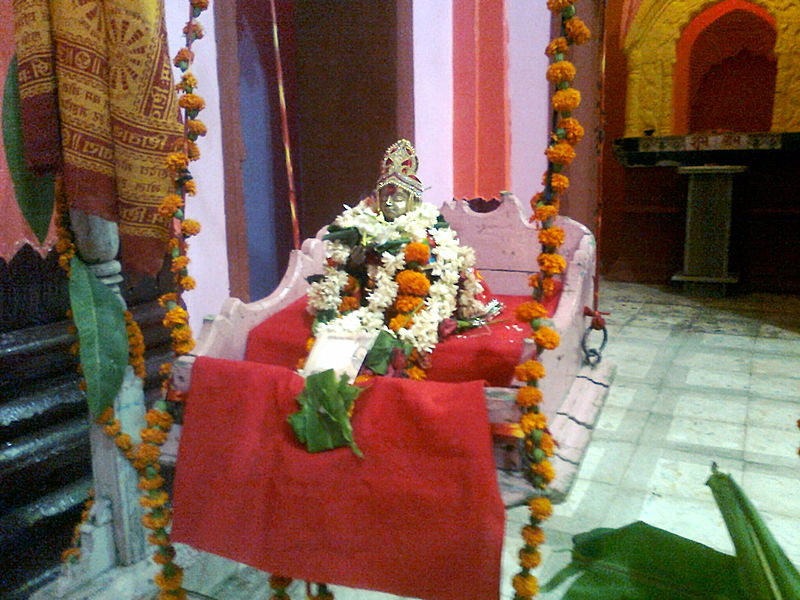
Rama Navami
spring festival that celebrates the birthday of the Hindu God Rama

Onam
Onam () is an annual harvest and Hindu cultural festival celebrated mostly by the people of Kerala and is traditionally associated with the legend of the benevolent Asura King Mahabali, who once ruled Kerala, returning each year to visit his people. A major annual event for Keralites, it is the official festival of the state and includes a spectrum of cultural events.

Vijayadashami
Vijayadashami (), more commonly known as Dasara, or Dassahra, and also known as Dashāhra or Dashain in Bhojpuri, Maithili and Nepali, is a major Hindu festival celebrated every year at the end of Durga Puja and Navaratri. It is observed on the tenth day of the waxing moon (Shukla Paksha) in the month of Ashvin, the seventh in the Hindu lunisolar calendar, and falls in the Gregorian calendar months of September and October.

Makar Sankranti
Makar(a) Sankrānti, also referred to as Uttarāyana, Makara, or simply Sankrānti, is a Hindu observance and a mid-winter harvest festival in India and Nepal. It is typically celebrated on 14 January annually, this occasion marks the transition of the sun from the zodiac of Sagittarius (dhanu) to Capricorn (makara). As this transition coincides with the sun's movement from south to north, the festival is dedicated to the solar deity, Surya, and is observed to mark a new beginning. Across India, the occasion is celebrated with numerous multi-day festivals.
Ratha Yatra
Hindu festival
Vasant Panchami
festival

Ugadi
Ugadi Pachadi|thumb|right
' (), (, ) or also known as Saṁvatsarādi' (), is the first day of the year on the Hindu calendar. It is traditionally celebrated by the Kannadigas and Telugu people in the Indian states of Andhra Pradesh, Karnataka and Telangana, in some parts of Tamil Nadu and Kerala, as well as by diaspora communities elsewhere. The cycle consists of 60 years—each year individually named. It is observed on the first day of the Hindu lunisolar calendar month of Chaitra. This typically falls in late March or early April of the Gregorian calendar. It also sometimes falls on the day aft
Naga Panchami
Hindu Festival honouring serpents

Thaipusam
Thaipusam or Thaipoosam (Tamil: Taippūcam, ) is a Tamil Hindu festival celebrated on the first full moon day of the Tamil month of Thai coinciding with Pusam star. The festival is celebrated to commemorate the victory of Hindu god Murugan over the demon Surapadman. During the battle, Murugan is believed to have wielded a vel, a divine spear granted by his mother, Parvati.
Karva Chauth
Indo-Nepali festival celebrated by Hindu women

Ekadashi
thumb|Ekadashis are associated with the worship of the god Vishnu, patron of the Vaishnavism sect.
Guru Purnima
Spiritual tradition
Pitru Paksha
ancestral Worship from Hindu religion

Chhath Parwa
thumb|Chhath Puja at Chaudhary Pokhair in Basuki Bihari town of Bihar

Amavasya
Amavasya () represents the lunar phase of new moon in the Hindu calendar. A calendar month ends on amavasya as per the amanta tradition of the Hindu lunar calendar. Various Hindu beliefs and rituals are associated with the day. Hindu festivals including Diwali are celebrated on the amavasya day of various months.
Hindu festivals
Wikimedia list article
Kali Puja
Hindu festival dedicated to the goddess Kali
Akshaya Tritiya
Auspicious day of Hindu Tradition
Kartik Poornima
Hindu holy day
Bhai Dooj
festival celebrated by Hindus
Dhanteras
Dhanteras (), also known as Dhanatrayodashi (), is the first day that marks the festival of Diwali or Tihar in most of India and Nepal.

Dashain
Dashain or '''Bada'dashain, also known as Vijaya Dashami in Sanskrit, is a Hindu religious festival in Nepal, Sikkim, West Bengal, Assam, South India, and Sri Lanka. It is also celebrated by other religions in Nepal and elsewhere, including the Lhotshampa of Bhutan and the Burmese Gurkhas of Myanmar. The festival is also known as Nauratha''', derived from the Sanskrit word for the festival: Navaratri (Nine Nights).
Anant Chaturdashi
Last day of Ganesh Chaturti in Nepal
Holika Dahan
Hindu festival
Royal Ploughing Ceremony
traditional rite in some Asian countries
%20spotted%20at%20Kambalakonda%2001.jpg)
Teej
Tīja, , literally meaning "third"—denoting the third day after the new moon when the monsoon begins per the Hindu calendar—is a collective term for three Hindu festivals primarily dedicated to the mother goddess Pārvatī and her consort Śiva. It is mainly celebrated by married women and unmarried girls, especially in Nepal and North India, to pray for the long life of their husband or future husband and to welcome the arrival of the monsoon through singing, swinging, dancing, joyous celebration, pūjā, and often fasting.
Jivitputrika
Jitiya (also known as Jiutiya or Jivitputrika) is a three-day-long ancient Hindu festival celebrated from the seventh to ninth lunar day of Krishna-Paksha in Ashvin month. It is celebrated in Nepal and the Indian states of Uttar Pradesh, Bihar and Jharkhand. Mothers fast for the well-being of their kids. It is celebrated for eight days in Jharkhand from the first moon day to the eighth moon day in the first half of the Ashvin month.

juggernaut
thumb|right|The Car of Juggernaut, as depicted in the 1851 Illustrated London Reading Book
thumb|Juggernaut cart in the Ulsoor temple complex in Bangalore, India, around 1870
thumb|The festival (2007) in Jagannatha Temple, Odisha|alt=
A juggernaut (), in current English usage, is a literal or metaphorical force regarded as merciless, destructive, and unstoppable. The term frequently implies an out-of-control force or object.
Sharad Purnima
Festival
Gudi Padwa
Marathi Hindu new year festival
Tulsi Vivah
ceremonial marriage of the Tulsi plant (holy basil) to the Hindu god Vishnu or his Avatar Krishna
Kanwar Yatra
Tradition or Holy Custom of Hindu religion

Bhogi
Bhogi is the first day of the four-day Sankranti festival. It falls on the last day of Agrahāyaṇa or Mārgaśīrṣa month of Hindu Solar Calendar, which is 13 January by the Gregorian calendar. It is the day before Makar Sankranti, celebrated widely in the Indian states of Andhra Pradesh, Telangana, Karnataka, Tamil Nadu, and Maharashtra.
thumb|262x262px|an Kaappu Kattu Tradition in Kongu Nadu houses.
On Bhogi, people discard old and derelict things and concentrate on new things causing change or transformation. At dawn, people light bonfires with logs of wood, other solid-fuels, and wooden furni
Dahi Handi
events and a team sport during the Hindu festival Gokulashtami
Shayani Ekadashi
Ekadashi

Radhastami
Radhashtami () is a Hindu festival commemorating the appearance anniversary of the goddess Radha, the chief consort of the god Krishna. It is celebrated in her birthplace, Barsana and the entire Braj region on the eighth day (ashtami) of the bright fortnight (Shukla Paksha) in the month of Bhadrapada in Anuradha Nakshatra at 12 noon in town of Barsana (Rawal), Uttar Pradesh, India. As per the Gregorian calendar, her birth date was believed to be 23 September 3221 BC - a Wednesday. Radhashtami falls fifteen days after Krishna Janmashtami.
Maghi
Maghi is a Punjabi cultural festival, the Indian harvest festival celebrated on winter solstice. Maghi falls on the first day of the month of Magh and is celebrated in Punjab, Haryana, Jammu and Himachal Pradesh. It follows on the heels of the mid-winter festival of Lohri which is marked by bonfires in North Indian fields and yards. The next morning is seen as an auspicious occasion for ritual bathing in ponds and rivers.
Mysore Dasara
state-festival of the state of Karnataka, India
Vishwakarma Day
Day of celebration for Vishwakarma

Jagaddhātrī
Jagatdhatri or Jagaddhatri or Mahadurga (, ) is an aspect of the Hindu goddess Durga, worshipped in the Indian state of West Bengal and other states like Odisha and Jharkhand. Maa Jagadhatri, the Goddess who is revered as the protector of the world. In Bengal, her puja is celebrated as the comeback of Devi, specifically in Krishnanagar, Chandannagar, Santipur, Rishra, Midnapore,Singur and Guptipara.
Ratha Saptami
hindu festival dedicated to Surya
Indra Jatra
holiday
Rishi Panchami
festival of Hindus

Gangaur
Gangaur (, ) is a Hindu festival celebrated in the Indian states of Rajasthan, Haryana, Fazilka District of Punjab, the regions of Malwa, Nimar (Manawar, Barwani, Khargone, Khandwa) of Madhya Pradesh and the Braj and Bundelkhand regions of Uttar Pradesh. It is also celebrated in some parts of Gujarat and West Bengal. A variation of the same festival known as Chaitra Gauri Vrat is observed on the same day in the states of Maharashtra and northern Karnataka. Another variation called Saubhagya Gauri Vratam is observed in the states of Telangana and Andhra Pradesh.
Naraka Chaturdashi
Hindu festival
Sankranti
Sankranti () refers to the transmigration of the sun from one zodiac to another in Indian astronomy. In Saurmana varsha (Hindu Solar year), there are twelve Sankrantis corresponding with twelve months of a year. The Sankrantis can be broadly classified into four main categories: Ayan (Solstice), Vishuva (Equinox), Vishupadi and Shadshitimukhi sankrantis.
Each Sankranti is marked as the beginning of a month in the sidereal solar calendars followed in South Indian states: Andhra Pradesh, Telangana, Tamil Nadu, Kerala, Karnataka; Himalayan states: Jammu region, Himachal Pradesh, Uttarakhand, Nort
Kamada Ekadashi
Ekadashi Tithi on Shukla Paksha of Chaitra month
Lakshmi Puja
festive day dedicated to the Hindu Goddess Lakshmi
Vivaha Panchami
Public holiday in Mithilanchal
Karthika Deepam
festival of lights