Category
page 1Hindu reformers
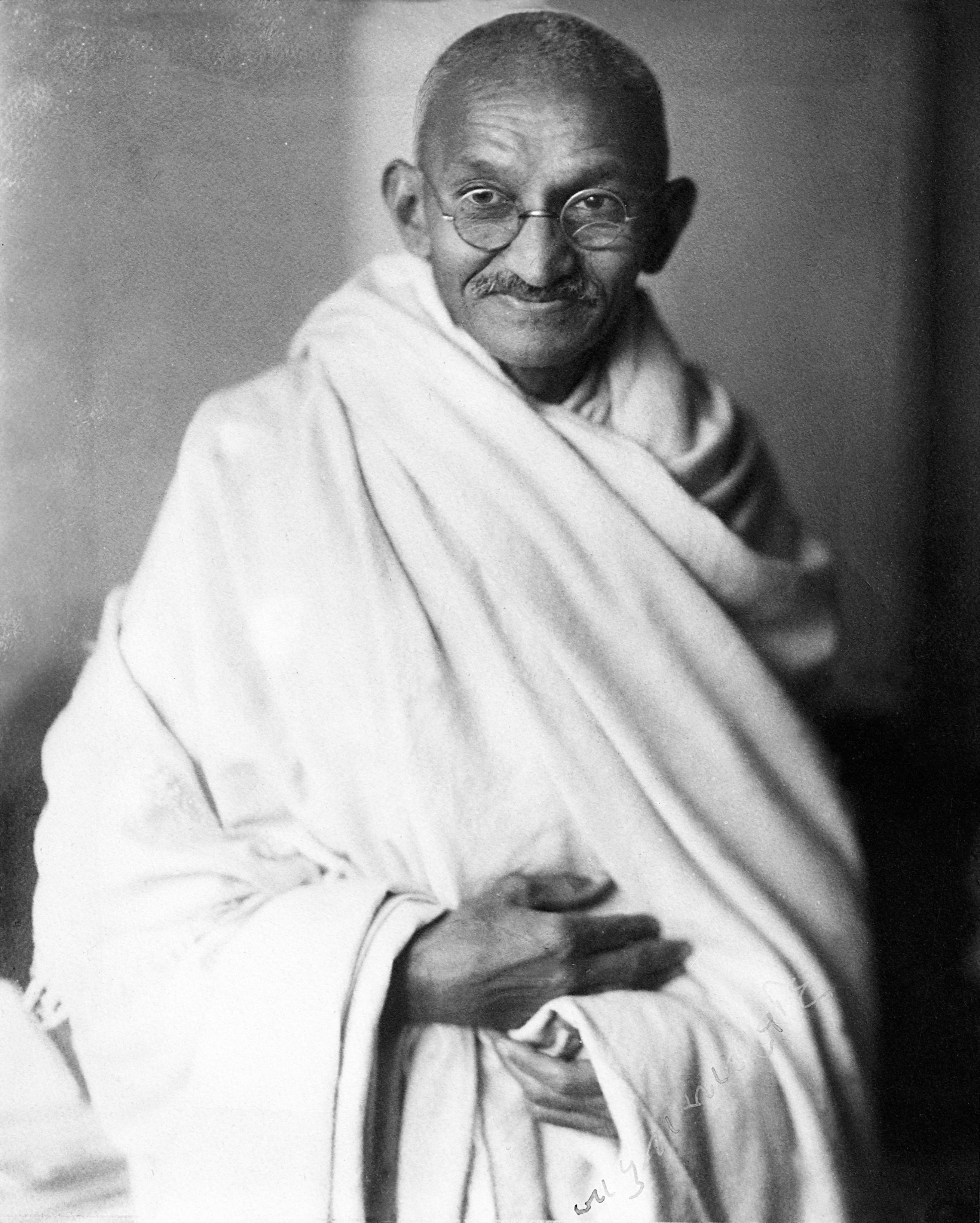
Mahatma Gandhi
Mohandas Karamchand Gandhi was an Indian lawyer, anti-colonial nationalist and political ethicist who employed nonviolent resistance to lead the successful campaign for India's independence from British rule, and to later inspire movements for civil rights and freedom across the world. The honorific Mahātmā, first applied to him in 1914 in South Africa, is now used throughout the world.

Swami Vivekananda
Indian Hindu monk and philosopher (1863–1902)

Ramakrishna
Ramakrishna (18 February 1836 – 16 August 1886), also called Ramakrishna Paramahamsa (; ; ), born Ramakrishna Chattopadhyay (his childhood nickname was Gadadhar), was an Indian Hindu mystic. He was a devotee of the goddess Kali, but adhered to various religious practices from the Hindu traditions of Vaishnavism, Tantric Shaktism, and Advaita Vedanta, as well as Christianity and Sufi Islam. His parable-based teachings advocated the essential unity of religions and proclaimed that world religions are "so many paths to reach one and the same goal". He is regarded by his followers as an avatar (di

Aurobindo Ghosh
Indian Bengali philosopher, yogi, maharishi, poet and nationalist (1872–1950)

Ādi Shankara
8th-century Hindu philosopher and theologian- Restorer of “Dashanami Sampradaya”.

Ramanuja
Ramanuja ('; Middle Tamil: Rāmāṉujam; Classical Sanskrit: Rāmānuja; 1077 – 1157, trad. date 1017-1137), also known as Ramanujacharya''', was an Indian Hindu philosopher, guru and social reformer. He is one of the most important exponents of the Sri Vaishnavism tradition in Hinduism. His philosophical foundations for devotional practice were influential in the Bhakti movement.

Bal Gangadhar Tilak
Indian self-rule activist (1856–1920)
.jpg)
Sadhguru
Jagadish "Jaggi" Vasudev (born 3 September 1957), also known as Sadhguru, is an Indian guru and founder of the Isha Foundation, based in Coimbatore, India. The foundation, established in 1992, operates an ashram and yoga centre that carries out educational and spiritual activities. Sadhguru has been teaching yoga since 1982. He is the author of the New York Times bestsellers ''Inner Engineering: A Yogi's Guide to Joy and Karma: A Yogi's Guide to Crafting Your Destiny'', and a frequent speaker at international forums.

Dayananda Saraswati
Indian social reformer (1824-1883)

Gaudapada
Gauḍapāda (Sanskrit: गौडपाद; ), also referred as Gauḍapādācārya (Sanskrit: गौडपादाचार्य; "Gauḍapāda the Teacher"), was an early medieval era Hindu philosopher and scholar of the Advaita Vedanta school of Hindu philosophy. While details of his biography are uncertain, his ideas inspired others such as Adi Shankara who called him a Paramaguru (highest teacher).

Swaminarayan
Swaminarayan (IAST: '; 3 April 1781 – 1 June 1830), also known as Sahajanand Swami''', was a yogi and ascetic believed by followers to be a manifestation of Krishna or the highest manifestation of Purushottama, around whom the Swaminarayan Sampradaya developed.
Bhaktisiddhanta Saraswati
Gaudīya Vaisnava Hindu guru and instructor (1874–1937)
Ramalinga Swamigal
Vallalar history (1823-1874)
Ramakrishna Gopal Bhandarkar
Indian academic (1837–1925)
Kedarnath Dutta
Indian spiritual leader (1838–1914)

Narmadashankar Dave
Narmadashankar Lalshankar Dave (24 August 1833 – 26 February 1886), popularly known as Narmad, was an Indian Gujarati-language poet, playwright, essayist, orator, lexicographer and reformer under the British Raj. He is considered to be the founder of modern Gujarati literature. After studying in Bombay, he stopped serving as a teacher to live by writing. During his prolific career, he introduced many literary forms in Gujarati. He faced economic struggles but proved himself as a dedicated reformer, speaking loudly against religious and social orthodoxy. His essays, poems, plays and prose were

Lakulish
thumb|Lakulisha at Sangameshvara Temple at Mahakuta, Karnataka (Chalukya dynasty|Chalukya, 7th century CE). His 5th–10th century ithyphallic statues are also found in seated yogi position in [[Rajasthan, Uttar Pradesh and elsewhere.]]
Lakulisha ( ) (Etymology: लगुड (staff) or लकुट (mace) + ईश (lord) = meaning, the lord with a staff or mace or club or stick) was a prominent Shaivite revivalist, reformist and preceptor of the doctrine of the Pashupatas, one of the oldest sects of Shaivism.

Premanand Govind Sharan
Premanand Govind Sharan popularly known as Premanand Maharaj is an Indian Hindu spiritual guru, saint, and philosopher. He is a worshipper of Radha Krishna. His Ashram is Shri Hit Radha Keli Kunj in Vrindavan. He has gained an iconic social media presence due to his aversion to publicity and refusal to treat his celebrity devotees differently from others.
N. G. Chandavarkar
Indian politician (1855–1923)
Gedong Bagus Oka
Indonesian Hindu philosopher (1921-2002)
Bijoy Krishna Goswami
Hindu reformers and religious persons
Swami Adbhutananda
Adbhutananda (died 1920), born Rakhturam, was a direct monastic disciple of Ramakrishna, a Yogi of nineteenth century Bengal. He is familiarly known as Latu Maharaj among the followers of Ramakrishna. Adbhutananda was the first monastic disciple to come to Ramakrishna. While most of Ramakrishna's direct disciples came from the Bengali intelligentsia, Adbhutananda's lack of formal education made him unique among them. He was a servant boy of a devotee of Ramakrishna, and he later became his monastic disciple. Though unlettered, Adbhutananda was considered as a monk with great spiritual insight

Motilal Roy
Indian independence activist and social worker
Govindgiri
Govindgiri, also known as Govind Guru Banjara, (1858–1931) was a social and religious reformer in the early 1900s in the tribal border areas of present-day Rajasthan and Gujarat states in India. He is seen as having popularized the Bhagat movement, which was first started in the 18th century.
Dada Bhagwan
spiritual leader from Gujarat, India (1908-1988)