Category
page 1Historical Celtic peoples

Picts

Gauls
thumb|upright=1.2|The Dying Gaul, [[Capitoline Museums, Rome]]
Celtic Britons
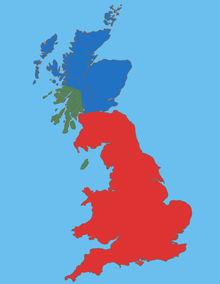
ancient Celtic people who lived in Great Britain from the Iron Age through the Roman and Sub-Roman periods

Noricum
thumb|300px|Roman province of Noricum highlighted

Belgae
thumb|upright=1.35|Approximate location of pre-Roman Belgic Gaul shortly before Roman conquest, according to an interpretation of Caesar
300px|thumb|Map of northeastern Gaul around 70 AD
The Belgae ( , ) were a large confederation of tribes living in northern Gaul, between the English Channel, the west bank of the Rhine, and the northern bank of the river Seine, from at least the third century BC. They were discussed in depth by Julius Caesar in his account of his wars in Gaul. Some peoples in southern Britain were also called Belgae and had apparently moved from the continent. T. F. O'Rahilly

Helvetii
thumb|300px|Map of the Roman province Maxima Sequanorum (c. 300 AD), which comprised the territories of a part of the Helvetii, [[Sequani and several smaller tribes. The relative locations of the Helvetian pagi Tigurini and Verbigeni, though indicated on the map, remain unknown.]]

Boii
thumb|350px|Map showing the approximate location of the Boii in Bohemia and in [[Italy. The contemporary La Tène culture is indicated in green tones, the preceding Hallstatt culture in yellow.]]

Arverni
thumb|Arverni coin depicting a warrior, 5th-1st century BC.

Aedui
The Aedui or Haedui (Gaulish: *Aiduoi, 'the Ardent'; ) were a Gallic tribe dwelling in what is now the region of Burgundy during the Iron Age and the Roman period.

Lusitanians
The Lusitanians were an Indo-European-speaking people living in the far west of the Iberian Peninsula, in present-day central Portugal and the regions of Extremadura and Castilla y León of Spain. It is uncertain whether the Lusitanians were Celts or Celticized Iberians, related to the Lusones. After its conquest by the Romans, the land was subsequently incorporated as a Roman province named after them (Lusitania).
Parisii
Gallic tribe

Brigantes
The Brigantes were a tribe or confederation of Celtic Britons who dwelt in what is now Northern England during the Iron Age and Roman era. Their territory, often referred to as Brigantia, was probably the largest of the British tribes and was centred on the Pennines and what is now Yorkshire. Their Roman-era capital was Isurium Brigantum (Aldborough), and the city of Eboracum (York) was within their territory. They are also associated with Stanwick fort. Prominent leaders named in Roman sources were queen Cartimandua and king Venutius.
Veneti
Gallic tribe

Allobroges
The Allobroges (Gaulish: *Allobrogis, 'foreigner, exiled'; ) were a Gallic people dwelling in a large territory between the Rhône river and the Alps during the Iron Age and the Roman period.

Cantabri
thumb|right|250px|The Iberian Peninsula in the 3rd century BC
The Cantabri (, Kantabroi) or Ancient Cantabrians were a pre-Roman people and large tribal federation that lived in the northern coastal region of ancient Iberia in the second half of the first millennium BC. These peoples and their territories were incorporated into the Roman Province of Hispania Tarraconensis in 19 BC, following the Cantabrian Wars.

Silures
The Silures ( or ) were a powerful and warlike tribe or tribal confederation of ancient Britain, occupying what is now south-east Wales and perhaps some adjoining areas. They were bordered to the north by the Ordovices, to the east by the Dobunni, and to the west by the Demetae.

Eburones
thumb|A 19th century statue of Ambiorix, prince of the Eburones (1st century BC), in [[Tongeren, Belgium]]

Bastarnae
thumb|right|400px|Map showing Roman Dacia and surrounding peoples in 125 AD
The Bastarnae, Bastarni or Basternae, also known as the Peuci or Peucini, were an ancient people who are known from Greek and Roman records to have inhabited areas north and east of the Carpathian Mountains between about 300 BC and about 300 AD, stretching in an arc from the sources of the Vistula in present-day Poland and Slovakia, to the Lower Danube, and including all or most of present-day Moldava. The Peucini were sometimes described as a subtribe, who settled the Peuke Island in the Danube Delta, but apparently d

Senones
thumb|A map of Gaul in the 1st century BC, showing the relative positions of the Celtic tribes.
The Senones or Senonii (Gaulish: 'the ancient ones') were an ancient Gallic tribe dwelling in the Seine basin, around present-day Sens, during the Iron Age and the Roman period.

Treveri
frame|right|Modern reconstruction of Treveran dwellings at Altburg, Germany.
The Treveri (Gaulish: *Trēueroi) were a Celtic–Germanic tribe of the Belgae group who inhabited the lower valley of the Moselle in modern day Germany from around 150 BCE, if not earlier, until their displacement by the Franks. Their domain lay within the southern fringes of the Silva Arduenna (Ardennes Forest), a part of the vast Silva Carbonaria, in what are now Luxembourg, southeastern Belgium and western Germany; its centre was the city of Augusta Treverorum (Trier), to which the Treveri give their name. Although r
Sequani
thumb|310px|A portion of the map, Gallia, from Butler's 1907 atlas showing the divisions of the diocese of Gaul in the late [[Roman Empire. According to the key, the map depicts 17 Provinciae Galliae, "Provinces of Gaul," of which the 17th, [Provincia] Maxima Sequanorum, "Greater Sequania," identified with an XVII shown in the Jura Mountains, contains the Sequani and Helvetii.]]

Trinovantes
The Trinovantes or Trinobantes were one of the Celtic tribes of Pre-Roman Britain. Their territory was on the north side of the Thames estuary in current Essex, Hertfordshire and Suffolk, and included lands now located in Greater London. They were bordered to the north by the Iceni, and to the west by the Catuvellauni. Their name possibly derives from the Celtic intensive prefix "tri-" and a second element which was either "nowio" – new, so meaning "very new" in the sense of "newcomers", but possibly with an applied sense of vigor or liveliness ultimately meaning "the very vigorous people". Th

Insubres
thumb|300px|The peoples of Cisalpine Gaul, 391-192 BC.
The Insubres or Insubri were an ancient Celtic population settled in Insubria, in what is now the Italian region of Lombardy. They were the founders of Mediolanum (Milan). Though completely Gaulish at the time of Roman conquest, they were the result of the fusion of pre-existing Ligurian and Celtic population (Golasecca culture) with Gaulish tribes.

Caledonians
thumb|right|180px|Peoples of Northern Britain according to Ptolemy's 2nd-century Geography

Gododdin
The Gododdin () were a Brittonic people of north-eastern Britannia, the area known as the Hen Ogledd or Old North (modern south-east Scotland and north-east England), in the sub-Roman period. Descendants of the Votadini, they are best known as the subject of the 6th-century Welsh poem Y Gododdin, which memorialises the Battle of Catraeth and is attributed to Aneirin.
Bituriges
Celtic tribe of Gaul
Ordovices
right|thumb|300px|Tribes of Wales at the time of the Roman invasion. The modern Anglo-Welsh border is also shown, for reference purposes.
The Ordovices (from ; Common Brittonic: *Ordowīces) were one of the Celtic tribes living in Great Britain before the Roman invasion. Their tribal lands were located in present-day North Wales and England, between the Silures to the south and the Deceangli to the north-east. Unlike the latter tribes that appear to have acquiesced to Roman rule with little resistance, the Ordovices fiercely resisted the Romans. They were eventually subjugated by the Roman gove

Menapii
thumb|right|300px|Reconstruction of a Menapian dwelling at Destelbergen.The Menapii were a Belgic tribe dwelling near the North Sea, around present-day Cassel, during the Iron Age and the Roman period.

Catuvellauni
thumb|330px|Catuvellauni, Tasciovanus, "Hidden Faces" gold [[stater.
Obv: stylized crescents and wreaths with hidden faces.
Rev: Celtic warrior on horse right, carrying carnyx.]]
The Catuvellauni (Common Brittonic: *Catu-wellaunī, "war-chiefs") were a Celtic tribe or state of southeastern Britain before the Roman conquest, attested by inscriptions into the 4th century.

Volcae
The Volcae () were a Gallic tribal confederation constituted before the raid of combined Gauls that invaded Macedonia c. 270 BC and fought the assembled Greeks at the Battle of Thermopylae in 279 BC. Tribes known by the name Volcae were found simultaneously in southern Gaul, Moravia, the Ebro valley of the Iberian Peninsula, and Galatia in Anatolia. The Volcae appear to have been part of the late La Tène material culture, and a Celtic identity has been attributed to the Volcae, based on mentions in Greek and Latin sources as well as onomastic evidence. Driven by highly mobile groups operating
Taurini
thumb|282x282px|Peoples of Cisalpine Gaul 391-192 BC.
Carni
The Carni (Greek: Καρνίοι) were a tribe of the Eastern Alps in classical antiquity of Celtic language and culture, settling in the mountains separating Noricum and Venetia. They probably gave their name to Carso, Carnia, Carinthia, and Carniola.

Carnutes
The Carnutes or Carnuti (Gaulish: 'the horned ones'), were a Gallic tribe dwelling in an extensive territory between the Sequana (Seine) and the Liger (Loire) rivers during the Iron Age and the Roman period.

Lepontii
thumb|right|300px|Map of the Alpine provinces as of AD 14, showing the position of the Lepontii within Rhaetia and north of [[Gallia Transpadana]]
thumb|300px|Celts|Celtic (orange) and Rhaetic (green) settlements in [[Switzerland]]
thumb|Central and northern Italy according to the Historical Atlas, showing the Lepontii in the northern area of Gallia Transpadana.
Lingones
thumb|350px|A map of Gaul showing the relative position of the Lingones tribe, near centre right.

Nemetes
300px|thumb|A map of eastern Gaul showing the Nemetes at the right along the Rhine.
The Nemetes or Nemeti were a tribe settled along the Upper Rhine by Ariovistus in the 1st century BC.
Lemovices
The Lemovices (Gaulish: *Lēmouīcēs, 'those who vanquish by the elm') were a Gallic tribe dwelling in the modern Limousin region during the Iron Age and the Roman period.
Remi
The Remi (Gaulish: Rēmi, 'the first, the princes') were a Belgic tribe dwelling in the Aisne, Vesle and Suippe river valleys during the Iron Age and the Roman period. Their territory roughly corresponded the modern Marne and Ardennes and parts of the Aisne and Meuse departments.

Iapydes
thumb|250px|Iapodes territory in ca 5th century BC
The Iapodes (or Iapydes, Japodes; ; ) were an ancient Illyrian people who dwelt north of and inland from the Liburnians, off the Adriatic coast and eastwards of the Istrian peninsula. They occupied the interior of the country between the Colapis (Kupa) and Oeneus (Una) rivers, and the Velebit mountain range (Mons Baebius) which separated them from the coastal Liburnians. Their territory covered the central inlands of modern Croatia and Una River Valley in today's Bosnia and Herzegovina. Archaeological documentation confirms their presence in t
list of Celtic tribes
Wikimedia list article

Bellovaci
thumb|A map of Gaul in the 1st century BC, showing the relative position of the Bellovaci tribe.
Aluerci Cenomani
branch of the Aulerci people in Gallia Celtica

Pictones
thumb|281x281px|Pictonian stater (1st c. BC).
The Pictones were a Gallic tribe dwelling south of the Loire river, in the modern departments of Vendée, Deux-Sèvres and Vienne, during the Iron Age and Roman period.

Regni
The Regni (also the Regini or the Regnenses) were a Celtic tribe, or group of tribes, living in Britain prior to the Roman Conquest, and later a civitas or canton of Roman Britain. They lived in what is now Sussex, as well as small parts of Hampshire, Surrey and Kent, with their tribal heartland at Noviomagus Reginorum (modern Chichester).
Salassi
The Salassi or Salasses were a Gallic or Ligurian tribe dwelling in the upper valley of the Dora Baltea river, near present-day Aosta, Aosta Valley, during the Iron Age and the Roman period.
Corieltauvi
The Corieltauvi (also the Coritani, and the Corieltavi) were a Celtic tribe living in Britain prior to the Roman conquest, and thereafter a civitas of Roman Britain. Their territory was in what is now the English East Midlands. They were bordered by the Brigantes to the north, the Cornovii to the west, the Dobunni and Catuvellauni to the south, and the Iceni to the east. Their capital was called Ratae Corieltauvorum, known today as Leicester.

Cotini
The Cotini, sometimes spelled Gotini (because it is found in some manuscript copies of Tacitus), were a Celtic-speaking tribe living during Roman times in the mountains approximately near the modern borders of the Czech Republic, Poland, and Slovakia.

Deceangli
right|thumb|250px|Tribes within the map of present-day Wales at the time of the Roman invasion. Exact boundaries are conjectural.
The Deceangli or Deceangi (Welsh: Tegeingl) were one of the Celtic tribes living in Britain, prior to the Roman invasion of the island. The tribe lived in the region near the modern city of Chester but it is uncertain whether their territory covered only the modern counties of Flintshire, Denbighshire and the adjacent part of Cheshire or whether it extended further west. They lived in hill forts running in a chain through the Clwydian Range and their tribal capital

Dumnonii
The Dumnonii or Dumnones were a British tribe who inhabited Dumnonia, the area now known as Cornwall and Devon (and some areas of present-day Dorset and Somerset) in the further parts of the South West peninsula of Britain, from at least the Iron Age up to the early Saxon period. They were bordered to the east by the Durotriges tribe.
Durotriges
The Durotriges were one of the Celtic tribes living in Britain prior to the Roman invasion. The tribe lived in modern Dorset, south Wiltshire, south Somerset and Devon east of the River Axe and the discovery of an Iron Age hoard in 2009 at Shalfleet, Isle of Wight gives evidence that they may also have lived in the western half of the island. There is growing evidence to suggest that women held relatively high status in the tribe due to several factors including: high status grave goods found predominantly in female graves and the society being matrilocal. After the Roman conquest, their main
Santones
gallic tribe

Votadini
right|280px|Peoples of northern Britain according to Ptolemy's 2nd-century Geography

Turones
thumb|Turones coinage, 5th–1st century BCE|287x287px
The Turoni or Turones were a Gallic tribe of dwelling in the later Touraine region during the Iron Age and the Roman period.

Anartes
thumb|Peoples of Pannonia. The territory of the Anartes is visible in the top right corner.
The Anartes (or Anarti, Anartii or Anartoi) were Celtic tribes, or, in the case of those sub-groups of Anartes which penetrated the ancient region of Dacia (roughly modern Romania), Celts culturally assimilated by the Dacians.

Suessiones
thumb|Suessionean stater, ca. 200 BC
The Suessiones were a Belgic tribe, dwelling in the modern Aisne and Oise regions during the La Tène and Roman periods.
Vindelici
The Vindelici (Gaulish: ) were a Gallic people dwelling around present-day Augsburg (Bavaria) during the Iron Age and the Roman period.

Namnetes
thumb|upright=1.5|Coins of the Namnetes
The Namnetes were a Gallic tribe dwelling near the modern city of Nantes during the Iron Age and the Roman period.

Osismii
thumb|upright=1.5|Coins of the Osismii.
The Osismii or Ostimii were a Gallic tribe living in the western part of the Armorican Peninsula (modern Brittany) during the Iron Age and the Roman period.

Salyes
The Salyes or Salluvii (Greek: ) were an ancient Celto-Ligurian people dwelling between the Durance river and the Greek colony of Massalia during the Iron Age. Although earlier writers called them 'Ligurian', Strabo used the denomination 'Celto-ligurian' in the early 1st century AD. A Celtic influence is noticeable in their religion, which centred on the cult of the tête coupée ('severed head'), as well as in the names of their towns and leaders. During the 2nd century BC, the Salyes were most likely at the head of a political and military confederation that united both Gallic and Ligurian tri
.jpg)
Andecavi
thumb|280x280px|Andecavi stater.
The Andecavi (also Andicavi, Andegavi, or Andigavi) were a Gallic tribe dwelling in Aremorica during the Roman period.