Category
page 1Historical revisionism
historical revisionism
history rewriting

neo-Ottomanism
thumb|The fez (hat)|fez, which entered public life in the Ottoman Empire as part of [[Mahmud II's Westernization reforms, became a symbol of Islamist anti-Kemalism in Turkey.]]
thumb|The extent of the Ottoman Empire in 1683
Neo-Ottomanism ( or ) is a reactionary, revisionist, monarchist, conservative and Islamist political ideology in Turkey that discredits the Turkish secular nationalist republic and its reforms, and glorifies the Ottoman dynasty and its traditionalist establishments like the caliphate. It is also an irredentist and imperialist ideology that, in its broadest sense, advocates

Afrocentrism
Afrocentrism is a racialized worldview that is centered on the history of people of Black African descent or a view that favors it over non-African civilizations. It is in some respects a response to Eurocentric attitudes about African people and their historical contributions. It seeks to counter what it sees as mistakes and ideas perpetuated by the racist philosophical underpinnings of Western academic disciplines as they developed during and since Europe's Early Renaissance as justifying rationales for the enslavement of other peoples, in order to enable more accurate accounts of not only A
What Russia Should Do With Ukraine
Russian propaganda article, published by RIA Novosti on April 3, 2022, and regarded as Ukrainophobic publication
Stanley George Payne
American historian
1619 project
2019 project by the New York Times on the history of slavery
genocide denial
attempt to deny or minimize statements of the scale and severity of an incidence of genocide
Grover Furr
academic

Vlado Košić
Croatian bishop
Frederic L. Paxson
Pulitzer Prize for History winner (1877–1948)
Maafa
The Maafa (Swahili for "Great disaster"), the African Holocaust, the Holocaust of Enslavement, or the Black Holocaust are political neologisms popularized since 1988 to describe the history and ongoing effects of atrocities inflicted upon Black people worldwide. Of particular focus are those committed by non-Africans (specifically Europeans and Arabs in the context of the Trans-Saharan slave trade, the Indian Ocean slave trade, the Red Sea slave trade, and the Atlantic slave trade), which continue to the present day through imperialism, colonialism and other forms of oppression.
Shivkar Bapuji Talpade
Indian aviation pioneer (1864–1916)
ancient Egyptian race controversy
question of the race of ancient Egyptians
Wallmapu
Wallmapu is the word in the Mapuche language to say "Universe" or "set of surrounding lands", currently used by some historians to describe the historical territory inhabited by the Mapuche people of southern South America. The term was coined in the early 1990s by Indigenist groups but gained traction in the 2000s as the Mapuche conflict in Araucanía intensified. Some view the Wallmapu as being composed of two main parts Ngulumapu in the west and Puelmapu in the east, with the southern part of Ngulumapu being known as Futahuillimapu.
Walter Goffart
American historian (1934-2025)

Magellan
2025 film directed by Lav Diaz
historiography in the Soviet Union
Study of history in the Soviet Union
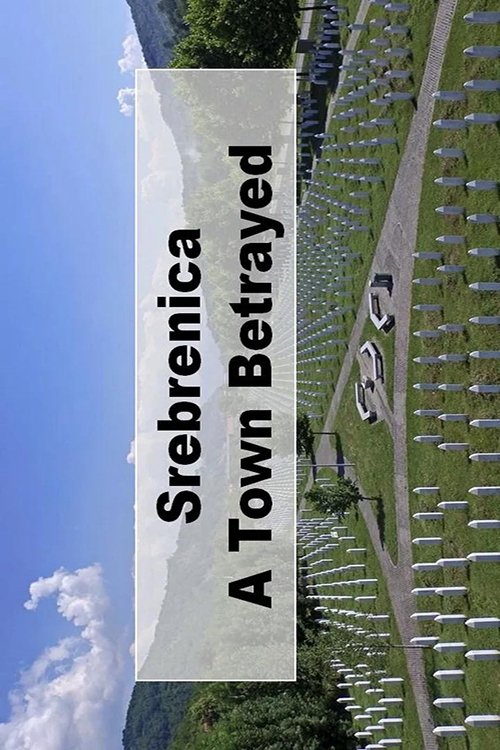
A town betrayed
2010 film
Black Legend of the Spanish Inquisition
Theory on propaganda
imperial view of history
history wars
public debate in Australia over British colonialism
Pakistani textbooks controversy
claimed inaccuracies and historical denialism
Alternative historical interpretations of Joan of Arc
historical nihilism
term used by the Chinese Communist Party to refer to hisorical viewpoints critical of its history
On Pre-Islamic Poetry
book by Taha Hussein

The Eastern Origins of Western Civilisation
book by John M. Hobson

Lies My Teacher Told Me
1995 book by sociologist James W. Loewen

Did Marco Polo go to China?
book by Frances Wood