Category
page 1History of Lombardy
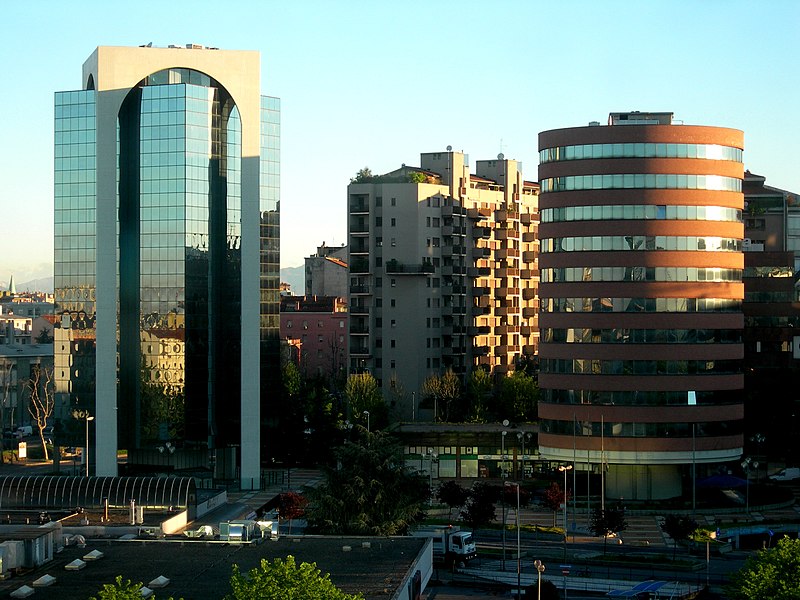
Sesto San Giovanni
Italian commune in Lombardy

Kingdom of Lombardy–Venetia
constituent land of the Austrian Empire (1815–1866)

Ligures
thumb|Ethnolinguistic map of Italy in the Iron Age, before the Roman expansion and conquest of Italy. Ligures are located in the upper left corner of the map (green).
Lombard League
medieval anti-Hohenstaufen military coalition
House of Visconti
Milanese noble family

House of Gonzaga
Italian noble family

Insubres
thumb|300px|The peoples of Cisalpine Gaul, 391-192 BC.
The Insubres or Insubri were an ancient Celtic population settled in Insubria, in what is now the Italian region of Lombardy. They were the founders of Mediolanum (Milan). Though completely Gaulish at the time of Roman conquest, they were the result of the fusion of pre-existing Ligurian and Celtic population (Golasecca culture) with Gaulish tribes.

Quadrilatero
thumb|right|The four fortresses of the Quadrilatero.
Republic of Crema
European polity

Gastald
300px|thumb|Prince Sico of Benevento, here pictured on one of his solidi, was the gastald of [[Acerenza before becoming prince]]
A gastald (Latin gastaldus or castaldus; Italian gastaldo or guastaldo) was a Lombard official in charge of some portion of the royal demesne (a gastaldate, gastaldia or castaldia) with civil, martial, and judicial powers.
Langobardia Major
historical and cultural region of medieval Europe, territory of the Langobard tribe in present-day Northern and Center Italy, whose name was preserved in the modern toponym of the Lombardy
Alberto da Giussano
legendary character of the 12th century
Euganei
The Euganei (fr. Lat. Euganei, Euganeorum; cf. Gr. εὐγενής (eugenēs) 'well-born') were a group of populations, difficult to define, settled in the flat and mountainous areas of Northeast Italy, between the Eastern Alps and the Adriatic. With the arrival of the Adriatic Veneti they retreated to the Alpine valleys, blending in with the Rhaetians.

Insubria
thumb|Territory of Insubria Euroregion
Insubria is a historical-geographical region which corresponds to the area inhabited in Classical antiquity by the Insubres; the name can also refer to the Duchy of Milan (1395–1810). For several centuries this name stood for an area stretching approximately between the Adda river in the east and the Sesia river in the west, and between the San Gottardo Pass in the north and the Po river in the south, thus it was a synonym of the Milan region and the surrounding countryside corresponding with Lombardy in modern Italy.

Republic of Bergamo
Short-lived French client republic
Lomellina
The Lomellina ( or ) is a geographical and historical area in the Po Valley of northern Italy, located in south-western Lombardy between the Sesia, Po and Ticino rivers. It is one of three areal divisions of the Province of Pavia.
Trumpilini
The Trumpilini were an ancient tribe that settled in Val Trompia, one of three main valleys in the Province of Brescia in Northern Italy.
Lombard nationalism
nationalist movement in Lombardy, Italy
Siege of Crema
1159–1160 siege

Repubblica delle Tre Pievi
Territory in Como, Lombardy, Italy
Company of Death
Pasagians
The Pasagians, also spelled Passagians or Pasagini, were a religious sect which appeared in Lombardy in the late 12th or early 13th century and possibly appeared earlier in the East. The Summa contra haereticos, ascribed to Praepositinus of Cremona, describes the Pasagians as retaining the Old Testament rules on circumcision, kosher foods, and the Jewish holy days; in other words, they observed the Law of Moses except in respect to sacrifices, and thus also were given the name Circumcisi.
oath of Pontida
1167 oath of the Lombard League
Palace Leone da Perego
palace in Legnano
Cesina family
Italian family
Battle of Treponti
battle in the second Italian war of independence, 1859
Lombardy (historical region)
Italian historical region
Renaissance in Lombardy
aspects of Renaissance art and culture in Lombardy