Category
page 1Holidays based on the date of Easter

Pentecost
Pentecost (also called Whit Sunday, Whitsunday or Whitsun) is a Christian holiday that takes place on the 49th day (50th day when inclusive counting is used) after Easter. It commemorates the descent of the Holy Spirit upon the Apostles of Jesus, Mary, and other followers of the Christ, while they were in Jerusalem celebrating the Feast of Weeks, as described in the Acts of the Apostles (Acts 2:1–31). Pentecost marks the "Birthday of the Church".

All Souls' Day
feast day in some Christian denominations

Feast of Corpus Christi
Catholic feast day, public holiday in some countries
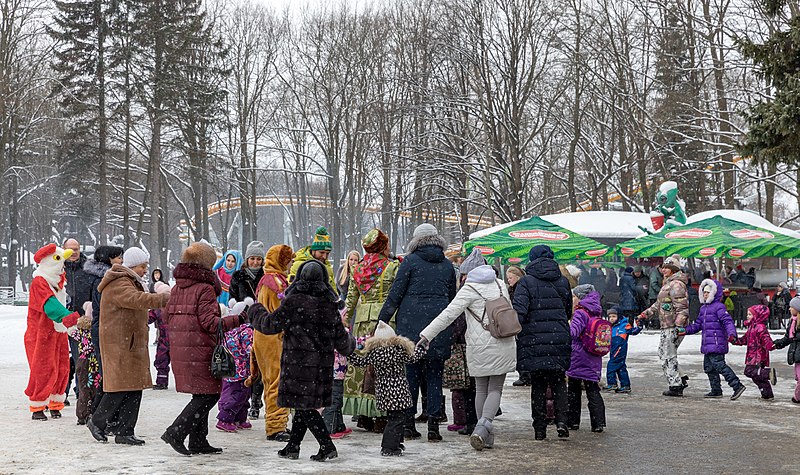
Maslenitsa
Maslenitsa (; ; ; ), also known as Butter Lady, Butter Week, Crepe week, or Cheesefare Week, is an Eastern Slavic religious and folk holiday which has retained a number of elements of Slavic mythology in its ritual. It is celebrated during the last week before Great Lent; that is, the eighth week before Eastern Orthodox Pascha, equivalent to the West's Sexagesima.

Mardi Gras
Mardi Gras, also known as Shrove Tuesday, is the final day of Carnival ; it thus falls on the day before the beginning of Lent on Ash Wednesday. Mardi Gras is French for "Fat Tuesday", referring to it being the last day of consuming rich, fatty foods, most notably red meat, in preparation for the Christian fasting season of Lent, during which such foods are avoided.
Trinity Sunday
Christian holiday in the Western Church on the Sunday following Pentecost
Immaculate Heart of Mary
title of Mary, the mother of Jesus, signifying her purity and freedom from sin
Fat Thursday
traditional Christian feast marking the last Thursday before Lent, associated with the celebration of Carnival
Lazarus Saturday
day before Palm Sunday in the Orthodox Church

Radonitsa
Radonitsa (Russian: Ра́доница, Belarusian: Ра́даўніца "Day of Rejoicing"), also spelled Radunitsa, Radonica, or Radunica, in the Russian Orthodox Church is a commemoration of the departed observed on the second Tuesday of Pascha (Easter) or, in some places (in south-west Russia), on the second Monday of Pascha. In the Ukrainian tradition it is called Provody (Ukrainian: Прóводи).
Whit Monday
holiday celebrated the day after Pentecost
Quinquagesima
Quinquagesima (), in the Western Christian Churches, is the last pre-Lenten Sunday, being the Sunday before Ash Wednesday, and the first day of Carnival (also known as Shrovetide). It is also called Quinquagesima Sunday, Quinquagesimae, Estomihi, Shrove Sunday, Pork Sunday, or the Sunday next before Lent.

Vardavar
thumb|300px|Yerevan, 2011
Vardavar or Vartavar (, Homshetsi: Vartevor or Behur) is a festival in Armenia where people drench each other with water. It is included in the intangible cultural heritage list of Armenia.
%20(cropped).jpg)
Śmigus-Dyngus
Śmigus-dyngus () or lany poniedziałek () is a celebration held on Easter Monday across Central Europe, and in small parts of Eastern and Southern Europe. The Eastertide tradition is widely associated with Poland in English-speaking countries and is observed by Polish diaspora communities, particularly among Polish Americans who call it Dyngus Day. Customs surrounding Śmigus-dyngus celebrate the arrival of Christianity in Poland. A similar tradition also exists among Hungarians, the Easter sprinkling called (sprinkling) and in Slovakia, called oblievačka (the pouring).
Septuagesima
Septuagesima () is the ninth Sunday before Easter, the third before Ash Wednesday. The term is sometimes applied to the seventy days starting on Septuagesima Sunday and ending on the Saturday after Easter. Alternatively, the term is sometimes applied also to the period sometimes called pre-Lent that begins on this day and ends on Shrove Tuesday, the day before Ash Wednesday, when Lent begins.
Clean Monday
the first day of Great Lent throughout Eastern Christianity
Apostles' Fast
fast observed by Eastern Orthodox, Oriental Orthodox and Eastern Catholic Christians; begins on the 2nd (In the Byzantine tradition) or 1st (in the Coptic/Syriac traditions) 2nd Monday after Pentecost; ends on the Feast of Sts. Peter and Paul
Feast of the Sacred Heart
Solemnity in the Catholic Church
Nabi Musa
local Development Committee in Jericho Governorate and Muslim holy site
Baby jumping
Spanish festival
Feast of the Transfiguration
Christian feast day
.jpg)
Lajkonik
thumb|Lajkonik fete 2025, Senatorska street, Kraków
The Lajkonik is one of the unofficial symbols of the city of Kraków, Poland. It is represented as a bearded man resembling a Tatar in a characteristic pointed hat, dressed in Mongol attire, with a wooden horse around his waist (hobby horse). It is the subject of the Lajkonik Festival () that takes place each year on the first Thursday after the religious holiday of Corpus Christi.

Bibi
Romani cult

Meteņi
Meteņi () or Metenis is an ancient Latvian spring waiting holiday, that ends on Ash Wednesday, which is followed by Lent. Meteņi is celebrated in February or early March, seven weeks before Lieldienas.
Sham Ennessim
Egyptian national holiday marking the beginning of spring
Sexagesima
Sexagesima , or, in full, Sexagesima Sunday, is the name for the second Sunday before Ash Wednesday in the pre-1970 Roman Rite liturgical calendar of the Catholic Church, and also in that of some Protestant denominations, particularly those with Lutheran and Anglican origins. Sexagesima falls within pre-Lent.

Aberri Eguna
celebration day in Bilboa
Festa della Sensa
holiday
Store bededag
Danish holiday

Mid-Pentecost
Mid-Pentecost or Midfeast, also Meso-Pentecost (from ; ) is a feast day which occurs during the Paschal season in the Eastern Orthodox Church and those Eastern Catholic Churches and Eastern Lutheran Churches that follow the Byzantine Rite.
Feast of Christ the Priest
Roman Catholic moveable liturgical feast
Whit Tuesday
Christian holiday
Whitsun
Whitsun (also Whitsunday or Whit Sunday) is the name used in Britain, and other countries among Anglicans and Methodists, for the Christian holy day of Pentecost. It falls on the seventh Sunday after Easter and commemorates the descent of the Holy Spirit upon Jesus' disciples (as described in Acts 2). Whitsuntide, the week following Whitsunday, was one of three holiday weeks for the medieval villein; on most manors he was free from service on the lord's demesne this week, which marked a pause in the agricultural year. Whit Monday, the day after Whitsun, remained a holiday in Britain until 1971
Saturday of Souls
Day for commemoration of the dead
Thursday of the Dead
Feast day in the Levant