Category
page 1Horse breeds

Arabian horse
horse breed

mustang
The mustang is a free-roaming horse of the Western United States, descended from horses brought to the Americas by the Spanish conquistadors. Mustangs are often referred to as wild horses, but because they are descended from once-domesticated animals, they are actually feral horses. The original mustangs were Colonial Spanish horses, but many other breeds and types of horses contributed to the modern mustang, now resulting in varying phenotypes. Some free-roaming horses are relatively unchanged from the original Spanish stock, most strongly represented in the most isolated populations.

Thoroughbred
The Thoroughbred is a horse breed developed for horse racing. Although the word thoroughbred is sometimes used to refer to any breed of purebred horse, it technically refers only to the Thoroughbred breed. Thoroughbreds are considered "hot-blooded" horses that are known for their agility, speed, and spirit.

Lipizzaner
The Lipizzan or Lipizzaner (, , , , , , ) is a European breed of riding horse developed in the Habsburg Empire in the sixteenth century. It is a muscular horse, powerful, slow to mature and long-lived; the coat is usually gray.

Akhal-Teke
The Akhal-Teke ( or ; from Turkmen Ahalteke, ) is a Turkmen horse breed. They have a reputation for speed and endurance, intelligence, thin manes and a distinctive metallic sheen which led to their nickname, "Golden Horses" These horses are adapted to survive in severe climatic conditions and are thought to be one of the oldest existing horse breeds. There are currently about 6,600 Akhal-Tekes in the world, mostly in Turkmenistan, although they are also found throughout Europe and North America. The first part of their name, "Akhal," is the name of the line of oases along the north slope of th

Friesian horse
horse breed

Andalusian horse
horse breed
Shetland pony
horse breed

Appaloosa
The Appaloosa is an American horse breed best known for its colorful spotted coat pattern. There is a wide range of body types within the breed, stemming from the influence of multiple breeds of horses throughout its history. Each horse's color pattern is genetically the result of various spotting patterns overlaid on top of one of several recognized base coat colors. The color pattern of the Appaloosa is of interest to those who study equine coat color genetics, as it and several other physical characteristics are linked to the leopard complex mutation (LP). Appaloosas are prone to develop eq

Icelandic horse
horse breed
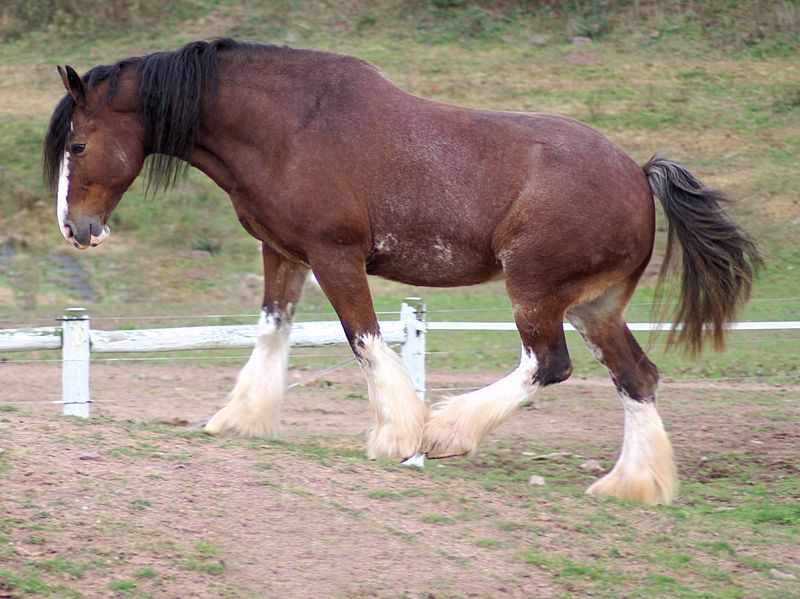
Clydesdale horse
horse breed
American Quarter Horse
horse breed

Percheron
The Percheron is a breed of draft horse that originated in the Huisne river valley in western France, part of the former Perche province, from which the breed takes its name. Usually gray or black in color, Percherons are well-muscled, and known for their intelligence and willingness to work. Although their exact origins are unknown, the ancestors of the breed were present in the valley by the 17th century. They are believed to descend from war horses. Over time, they began to be used for pulling stagecoaches; and later, for agriculture and hauling heavy goods. In the late 18th and early 19th

Standardbred
The Standardbred is an American horse breed best known for its ability in harness racing where they compete at either a trot or pace. Developed in North America, the Standardbred is recognized worldwide, and the breed can trace its bloodlines to 18th-century England. They are solid, well-built horses with good dispositions.
Mongolian horse
Mongolian horse breed

Haflinger
The Haflinger, also known as the Avelignese, is a breed of horse developed in Austria and northern Italy (namely Hafling in South Tyrol region) during the late 19th century. Haflinger horses are relatively small, are always chestnut with flaxen mane and tail, have distinctive gaits described as energetic but smooth, and are well-muscled yet elegant. The breed traces its ancestry to the Middle Ages; several theories for its origin exist. Haflingers, developed for use in mountainous terrain, are known for their hardiness. Their current conformation and appearance are the result of infusions of b
Shire horse
breed of draught horse
list of horse breeds
Wikimedia list article

Konik
The Konik or Polish Konik, , is a Polish breed of small horse or pony. There are semi-feral populations in some regions. They are usually mouse dun or striped dun.
Morgan horse
American horse breed
Falabella
The Falabella is an Argentine breed of small horse. It is among the smallest of horse breeds, with a height at the withers in the range ..
Belgian Draught
Belgian breed of horse
Bashkir horse
horse breed indigenous to the Southern Urals
Barb horse
horse breed
Karabakh horse
horse breed
Fjord horse
horse breed
Yakutian horse
horse breed
Hackney horse
horse breed

Holsteiner horse
The Holsteiner is a horse breed originating in the Schleswig-Holstein region of northern Germany. It is thought to be the oldest of warmblood breeds, tracing back to the 13th century. Though the population is not large, Holsteiners are a dominant force of international show jumping, and are found at the top levels of dressage, combined driving, show hunters, and eventing.
Hucul pony
horse breed

Trakehner
Trakehner () is a warmblood breed of horse, originally developed at the East Prussian state stud farm in the town of Trakehnen from which the breed takes its name. The was established in 1731 and operated until 1944, when the fighting of World War II led to the annexing of East Prussia by Russia, and the town containing the stud renamed as Yasnaya Polyana.
.JPG)
Ardennes horse
The Ardennais or Ardennes is one of the oldest breeds of draft horse, and originates from the Ardennes area in Belgium, Luxembourg, and France. They are heavy-boned with thick legs and are used for draft work.
Russian Don
horse breed
Hanoverian horse
horse breed

Anglo-Arabian
The Anglo-Arabian, also known as the Anglo-Arab, is a horse breed that originated in France by cross-breeding a Thoroughbred with an Arabian. The Anglo-Arabian has origins tracing back to the Limousin Horse. It was officially recognized by Emperor Louis Philippe I and produced by the Haras National du Pin. The Anglo-Arabian has long legs, a refined head, larger hindquarters, and are most commonly seen in gray, bay, or chestnut. To be recognized as an Anglo-Arabian with the Arabian Horse Association, the horse must have at least 25% Arabian blood. There are no color or height restrictions to be
Connemara pony
horse breed
Camargue horse
horse breed

Brumby
A brumby is a free-roaming feral horse in Australia. Although found in many areas around the country, the best-known brumbies are found in the Australian Alps region. Today, most of them are found in the Northern Territory, with the second-largest population in Queensland. A group of brumbies is known as a "mob" or "band".
Orlov Trotter
horse breed
%20Spanish%20battle%20stallion%201603.jpg)
Lusitano
The Lusitano, also known as the Pure Blood Lusitano or PSL (Puro Sangue Lusitano), is a Portuguese horse breed. Horses were known to be present on the Iberian Peninsula as far back as 20,000 BC, and by 800 BC the region was renowned for its war horses. The fame of the horses from Lusitania goes back to the Roman Age, which attributed its speed to the influence of the West wind, who was considered capable of fertilizing the mares. When the Muslims invaded Iberia in 711 AD, they brought Arabian horses with them that were crossed with the native horses, developing a horse that became useful for w
Welsh Pony and Cob
group of four closely-related horse breeds, originated in Wales
Exmoor pony
horse breed
Marwari horse
Indian horse breed
American Saddlebred
horse breed
Kabarda horse
horse breed
Cleveland Bay
horse breed

Finnhorse
The Finnhorse or Finnish Horse ( , literally "horse of Finland"; , literally "finnish cold-blood") is a horse breed with both riding horse and draught horse influences and characteristics, and is the only breed developed fully in Finland. In English it is sometimes called the Finnish Universal, as the Finns consider the breed capable of fulfilling all of Finland's horse needs, including agricultural and forestry work, harness racing, and riding. In 2007, the breed was declared the official national horse breed of Finland.
Budyonny horse
horse breed
Gypsy Vanner horse
horse breed
American Paint Horse
horse breed
New Forest pony
horse breed
horse breed
selectively bred form of the domesticated horse
Gotland Pony
horse breed
Tennessee Walking Horse
breed of gaited horse known for its unique four-beat running-walk
Selle Français
horse breed

Sorraia
The Sorraia is a rare breed of horse indigenous to the portion of the Iberian Peninsula, in the Sorraia River basin, in Portugal. The Sorraia is known for its primitive features, including a convex profile and dun coloring with primitive markings. Concerning its origins, a theory has been advanced by some authors that the Sorraia is a descendant of primitive horses belonging to the naturally occurring wild fauna of Southern Iberia. Studies are currently ongoing to discover the relationship between the Sorraia and various wild horse types, as well as its relationship with other breeds from the

Noriker horse
The Noriker horse, also called the Norico-Pinzgauer and historically known as the Pinzgauer horse, is a moderately heavy Austrian draught horse breed. The Noriker is considered indigenous to the central Alpine region of Europe, and is believed to have originated around the highest mountain of Austria, the Grossglockner. This region was once known as the Roman province of Noricum. At the end of the 19th century the original name Pinzgauer horse was changed to Noriker horse, due in part to the Romanophile attitude in this time.
Caspian horse
Small horse breed native to Northern Iran

warmblood
thumb|A Trakehner performing [[dressage]]
Nonius horse
horse breed