Category
page 1Hoverfly genera

Eristalis
thumb|250px|Eristalis arbustorum|European drone fly (Eristalis arbustorum) on a leaf
thumb|Eristalis dimidiata|Black-shouldered drone fly (Eristalis dimidiata) female

Volucella
Volucella is a genus of large, broad-bodied, dramatic hover-flies. They have distinctive plumose aristae and the face is extended downward. They are strongly migratory and males are often territorial. Adults feed on nectar of flowers and are often seen sunning on leaves. The larvae of most species live in nests of bumblebees and social wasps, where they are detritivores and larval predators.

Helophilus
Helophilus are a diverse genus of moderate to large hoverflies, that appear somewhat bee-like. This genus comprises two subgenera: Helophilus and Pilinasica. Larvae filter-feed in organic rich water. All Helophilus adults have a distinctive lengthwise striped thorax and a transverse striped abdomen.

Eristalinus
Eristalinus is a genus of hoverfly. Most species have very distinctive eye marking in the form of spots or banding, though these features may fade on some preserved specimens. Most are stout flies, and are nimble flyers, even compared to other hoverfly species.

Chrysotoxum
thumbnail|right|Female Chrysotoxum bicinctum
The genus Chrysotoxum (Meigen, 1803) consists of large, wasp-mimicking species. The adults are distinguished by very long antennae, oval abdomen with yellow stripes, and yellow patterns on the thoracic pleurae (sides of the thorax).
The species of Chrysotoxum are chiefly Holarctic in distribution.
. The species in this genus, are mostly very uniform in structure and colour and are separated with difficulty.
Larvae are specialized in preying upon root aphids associated with ant nests.

Syrphus
thumb|Image by Harold Maxwell-Lefroy - Life history of Syrphus
Syrphus is a genus of hoverflies.
It can be distinguished from other genera of the tribe Syrphini because it is the only genus that has long hairs on the upper surface of the lower lobe of the calypter (as well as hairs on the rear margin of the calypter as in most Syrphini).

Eupeodes
thumb|Eupeodes americanus, larva
.jpg)
Microdon
thumb|Microdon eggeri, larva, third instar
Hover flies (family Syrphidae) of the genus Microdon are unusual among the Diptera. Like other members of the subfamily, they are myrmecophiles, meaning they inhabit the nests of ants.

Cheilosia
Cheilosia is a genus of hoverfly. Most Cheilosia are black or largely un-coloured, lacking the bright colours and patterns of many hoverfly species. It is one of the most species diverse genera of hoverflies. The biology of many species is little understood, but where known, the larvae of Cheilosia species feed in the stems of plants or in fungi.
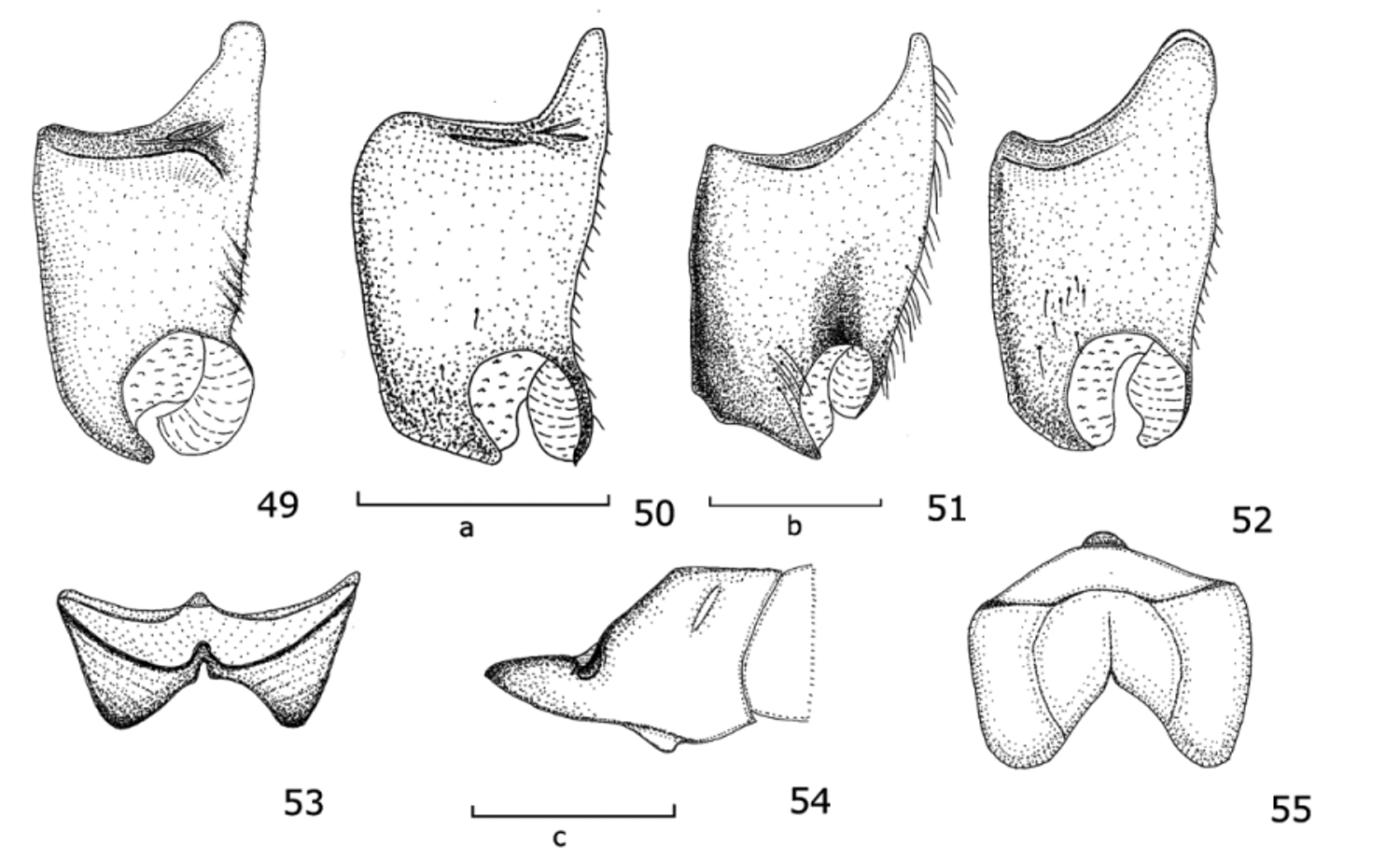
Ceriana
genus of insects
Chrysogaster
Chrysogaster is a genus of small hoverflies in the subfamily Eristalinae. They are dark or black with shiny colourful reflections and can often be seen visiting flowers in damp marshy areas where the aquatic larvae live. Species in the related genera Melanogaster, Orthonevra, Lejogaster and Riponnensia were formerly treated as members of Chrysogaster.

Baccha
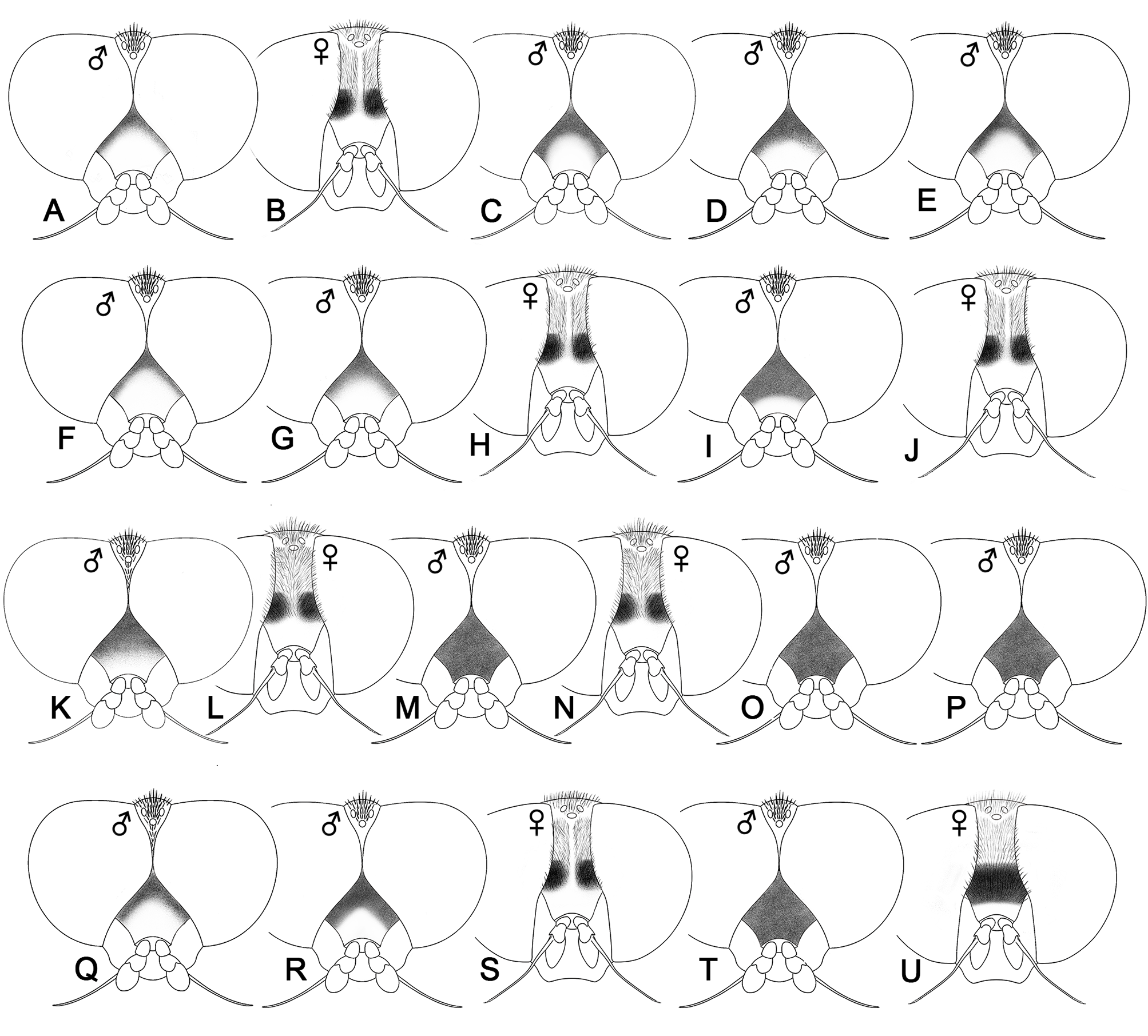
Baccha is a genus of hoverflies in the subfamily Syrphinae. They are typically moderate sized with wasp-like bodies. Their larvae are predatory, often on aphids.
Xylota
Xylota is a Holarctic genus of hoverflies similar in structure to the related genera Chalcosyrphus and Brachypalpoides. As the larvae are saprophytic they're usually found in rotting wood. The adult flies are generally associated with woodland and woodland edges and can often be seen running over the upper sides of leaves. Unlike other syrphids the adults of many species rarely visit flowers preferring instead to gather pollen from leaf surfaces.
There are over 100 described species of which 12 can be found in Europe. Seven species have been recorded in Britain. Identification of species has
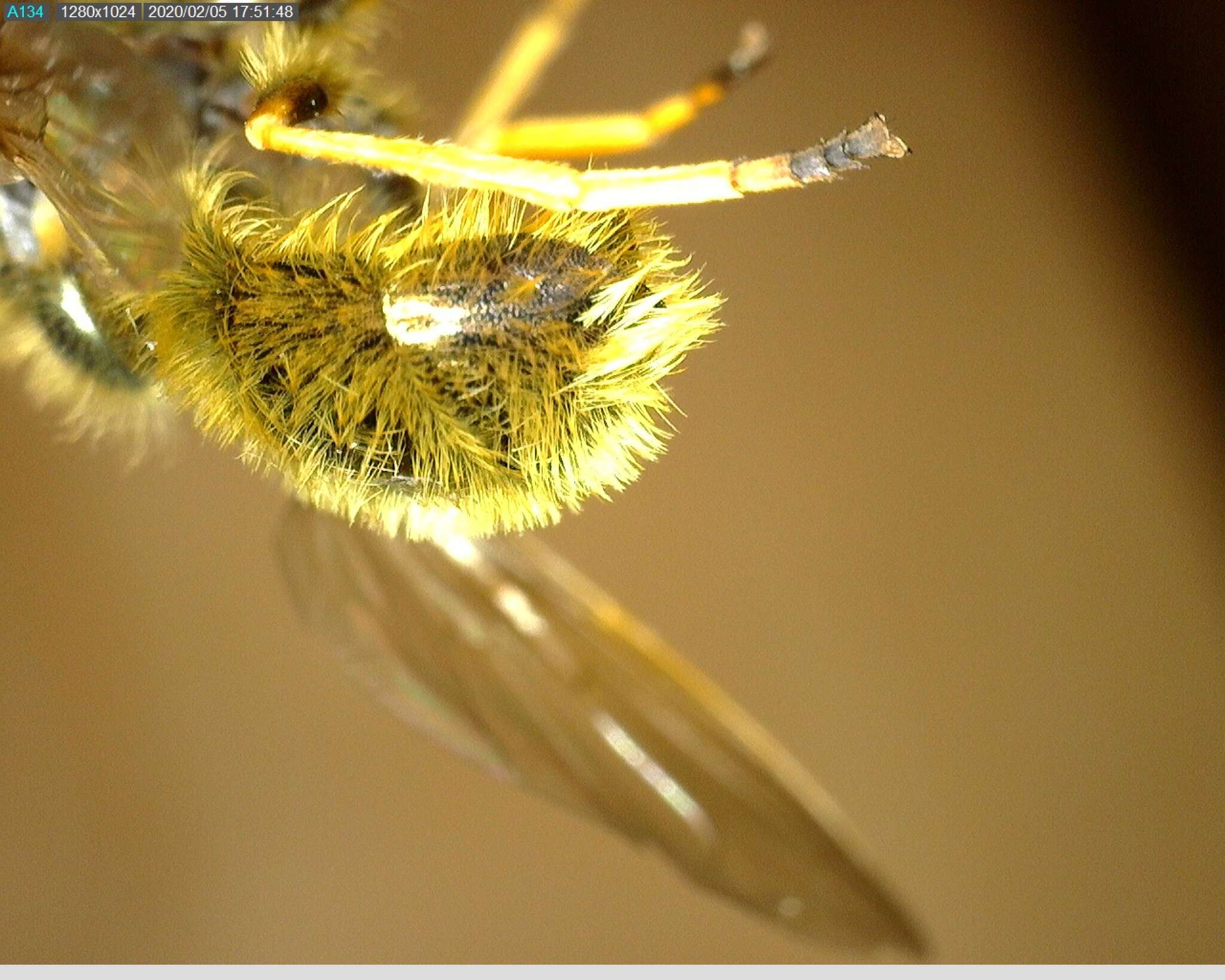
Callicera
Callicera is a Holarctic genus of hoverflies.
Melanostoma
thumb|thumbtime=1:40|Melanostoma sp., oviposition

Anasimyia
Anasimyia is a genus of wetland hoverflies with aquatic larvae. The genus was formerly regarded as a subgenus of the similar Lejops, and recently elevated to genus.
Paragus
thumb|thumbtime=0:49|Paragus sp. feeding on Tansy|Tanacetum vulgare.
Paragus is a genus of hoverflies.
Epistrophe
genus of insects

Merodon
Merodon is a large genus of bee-like hoverflies. The majority of the species are centered on the Mediterranean and it is the second largest hoverfly genus in Europe with more than 50 European species. It is distributed over the Palaearctic and Afrotropical realms, with most European species occurring in Southern and Eastern Europe. The centre of distribution of this genus appears to be Turkey, where about 65 species have been recorded. Some species occur in Africa (Morocco through East Africa and Ghana to South Africa) and the middle East, as far as Pakistan. Given the rate at which new specie

Sphaerophoria
Sphaerophoria is a genus of hoverflies. They occur worldwide but are common in North America, Europe, Asia and Australia, with over 70 described species.
Eumerus
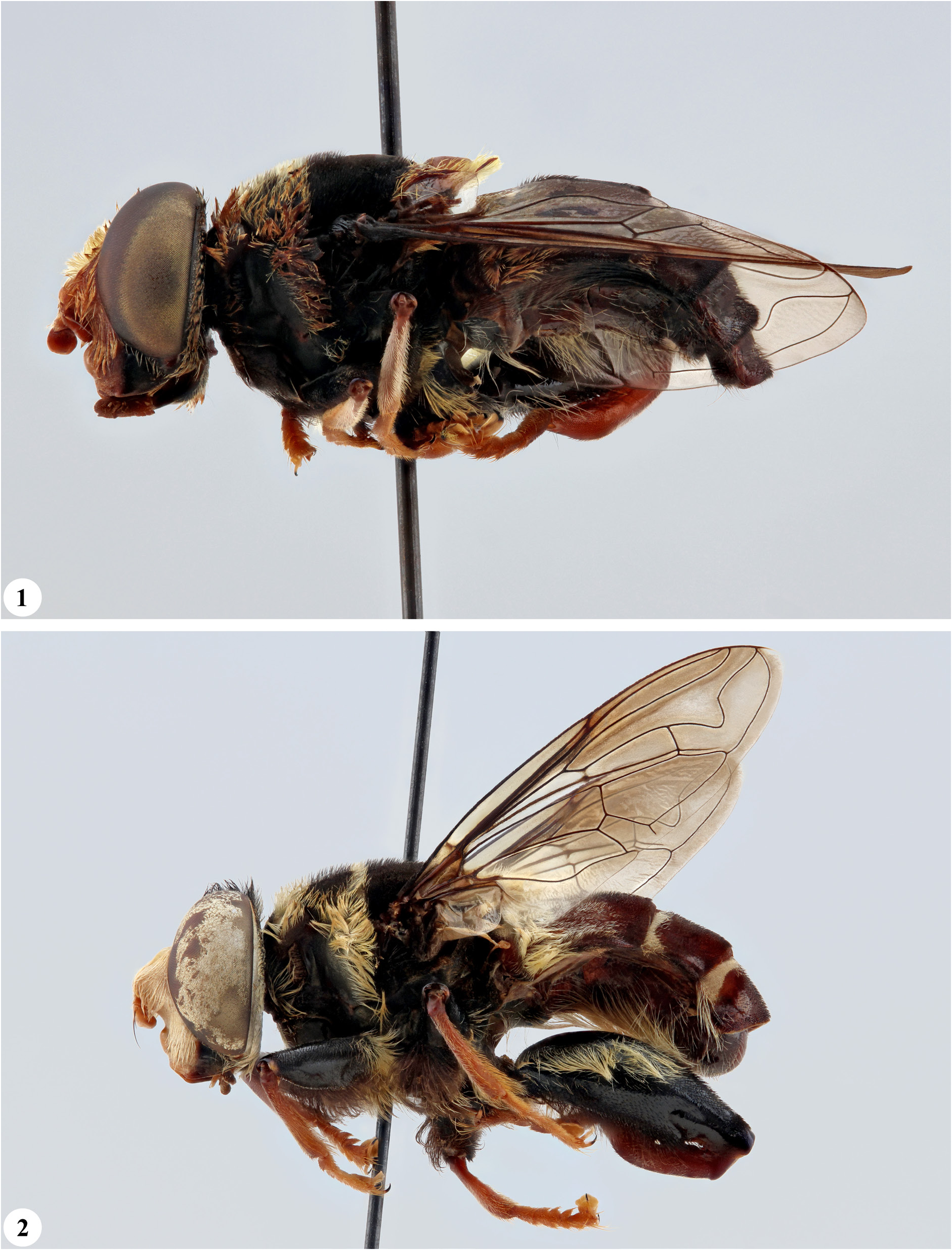
Eumerus is a genus of hoverflies (family Syrphidae), within the tribe Eumerini.
Mallota
Mallota is a widely distributed Holarctic genus of hoverfly (a member of the fly family Syrphidae), well known for their bee-like appearance.

Spilomyia
thumb|Spilomyia sayi
Spilomyia is a genus of hoverflies. Many species in the genus show Batesian mimicry of wasp models, including black and yellow patterns and modified antenna shape.

Milesia
genus of insects

Sphegina
Sphegina is a genus of small, slender hoverflies. They are widespread throughout Eurasia and North America. In flight they seem to have long hind legs which they often carry hanging down, making them resemble sphecid or ichneumonid wasps. Adult Sphegina are usually found in damp and shady habitats close to water in forested areas, and several species can often be found together. They often feed on white and yellow flowers of Apiaceae, Ranunculaceae, Asteraceae, and Rosaceae like Crataegus, Sorbus, and Sorbaria. Larvae nest in the sap of living and dead trees or in decaying cambium under tree b

Dasysyrphus
Dasysyrphus is a genus of hover flies with 50 identified species distributed worldwide (see distribution map). While the genus is relatively easy to identify, the differences between species have a more narrow range of variations. Therefore, identification of species by images of specimens alone should be made with care (See available keys below).

Temnostoma
Temnostoma is a genus of hoverflies. The larvae of some species feed on the wood of deciduous trees.

Orthonevra
Orthonevra is a genus of flies in the family Syrphidae. They are worldwide in distribution with at least 59 species identified concentrated mainly in eastern North America and Europe. Species of the genus Orthonevra are commonly called mucksuckers after the larvae which have been found in organic rich mud, i.e. muck. This genus belongs to the tribe Brachyopini that includes the prominent genera Melanogaster, Brachyopa, Neoascia and Sphegina.

Melangyna
Melangyna is a genus of hoverflies.
.jpg)
Didea
Didea, the lucent flies is a holarctic genus of black and yellow large sized flies . belonging to the hoverfly family of Diptera. The larvae feed on aboreal aphids.

Pipiza
Pipiza is a genus of hoverflies, from the family Syrphidae, in the order Diptera. Most are dark hoverflies.

Rhingia
thumb|Rhingia nasica male
Pipizella
Pipizella is a genus of Hoverflies, from the family Syrphidae, in the order Diptera.
Brachyopa
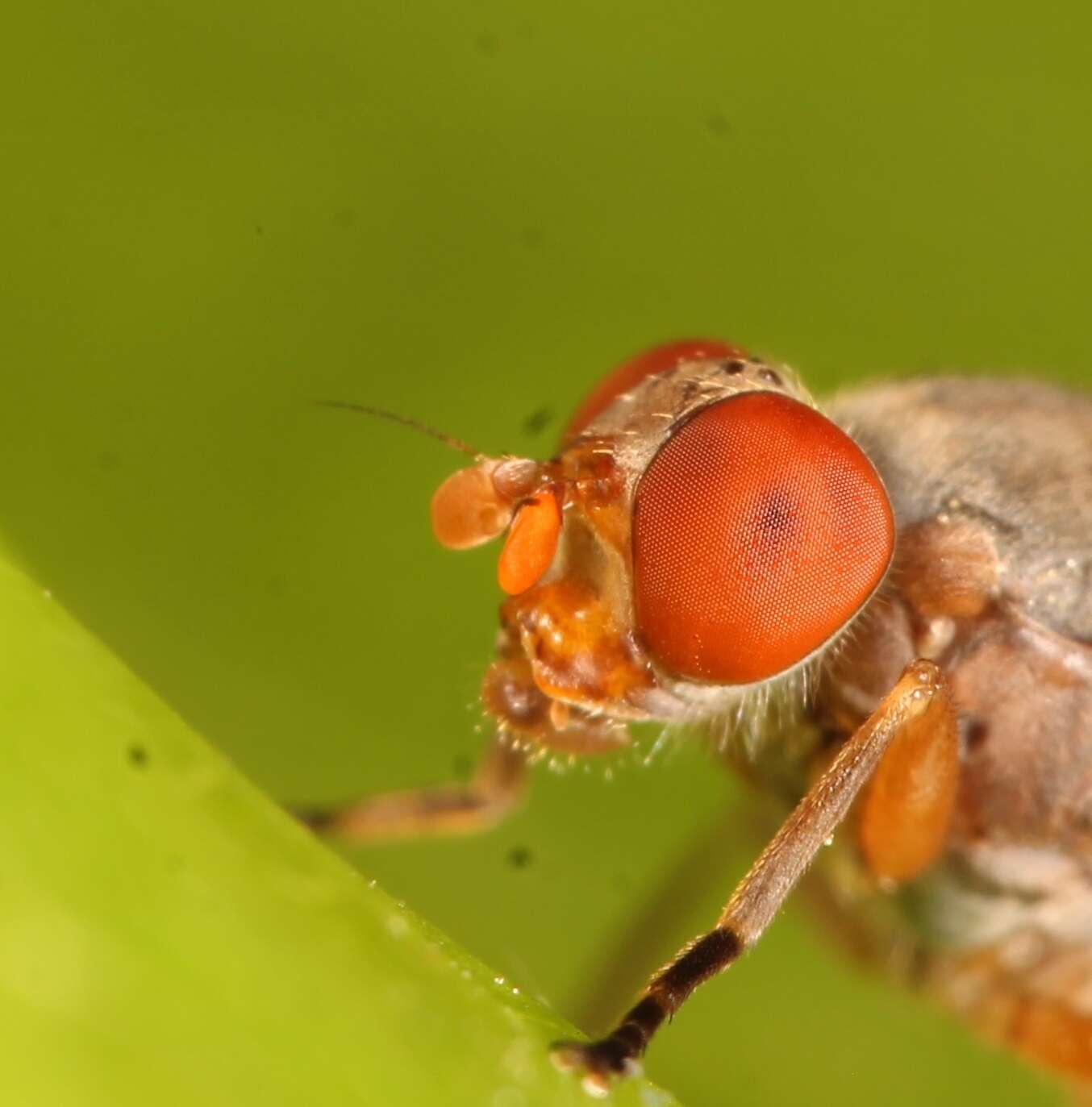
Brachyopa is a Holarctic genus of hoverflies whose grey and brown colouration is unusual for this family and these flies can easily be overlooked amongst members of other fly families. The larvae can be found under the bark of dead branches and trees in decaying sap.

Sericomyia
Sercomyia are large flies with species that are bee mimics both short pile and long pile.
Sericomyiine flower flies are common in boreal forests across the Holarctic region and southward at higher elevations into the Oriental and Neotropical regions.
Sericomyia species have larvae of the rat-tailed maggot type, often found in ponds rich in decomposing vegetation where they filter out microorganisms as their
food
Chalcosyrphus
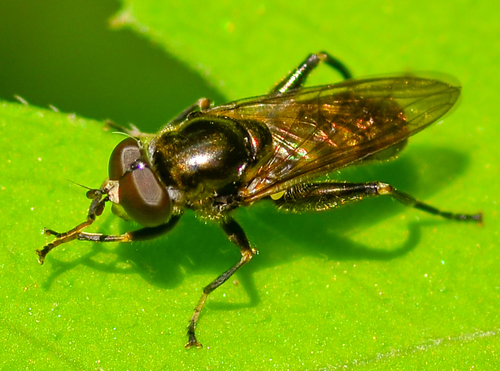
Chalcosyrphus is a genus of hoverflies in the subfamily Eristalinae. Many species exhibit some degree of mimicry of various sawflies and other hymenopterans and are often brightly coloured or metallic in hue. The adults are similar in structure and behavior to the related genus Xylota but differ in larval morphology.
They can be found throughout Europe, Asia, and North America and seem to prefer damper, boggy habitats. The larvae are saproxylic feeders in rotten wood in these habitats.
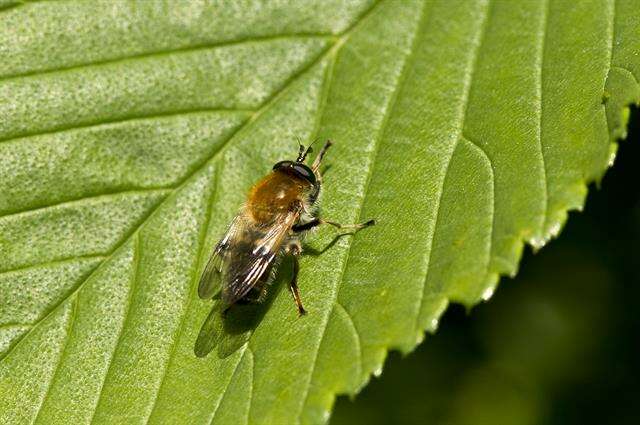
Criorhina
Criorhina is a genus of hoverflies. Medium to large sized species, black or greenish black, with or without light ground markings mimicking bumblebees. The head is much flattened and broader than the thorax. The antennae are situated upon a prominent conical frontal process, The face is moderately produced below the eyes, downward or forward, in profile. The eyes are bare. The abdomen is elliptical or very short oval. Larvae found in rot holes or decaying hardwoods

Scaeva
Scaeva is a genus of hoverflies. The taxonomy of the genus, and the related genera Simosyrphus and Ischiodon has been discussed by Láska et al. (2006)
Leucozona
Leucozona is a genus of hoverflies. Species within this genus typically have a variegated pattern of dull and bright colours on the thorax and abdominal segments such as white or even blue (Leucozona glaucia). This colouration allows the hoverfly to mimic more predaceous bees and wasps, for example Leucozona lucorum.
Toxomerus
thumb|thumbtime=181|Female Toxomerus occidentalis|Western Calligrapher on [[zinnia taking pollen and nectar. Insert shows entire visit at 3X speed. Some portions of main video shown at one-tenth speed.]]

Platycheirus
Platycheirus is a large genus of hoverflies. They are also called sedgesitters.
The genus Platycheirus was established in 1828 by Lepeletier and Serville, with the type specimen of Syrphus scutatus Meigen. This genus is primarily Holarctic in distribution, encompassing 70 species within the Nearctic region. Notably, at least 23 of these Nearctic species are also found in the Palearctic realm, with their approximately 110 species.The distribution of Platycheirus is markedly boreal, with half of the 70 Nearctic species in the Yukon, Northwest Territories, or Alaska. The genus is widespread from
Meliscaeva
Meliscaeva is a genus of hoverflies.

Blera
genus of flies
Parhelophilus
Parhelophilus is a genus of hoverflies. They are slightly smaller than flies of the genus Helophilus, and have a Holarctic distribution.
Eriozona
Eriozona is a genus of hoverflies in the subfamily Syrphinae.

Allograpta
Allograpta is a very large and diverse genus of hoverflies present throughout the world except most of the palearctic region. The adults are brightly coloured flower pollinators and most larvae have a predatory feeding mode involving soft-bodied sternorrhynchans. Certain species have diverged from this and their larvae have been found to be leaf-miners, stem-borers or pollen-feeders.

Asarkina
Asarkina is a genus of hoverfly.
Mostly found on cucurbits.

Myolepta
Myolepta is a cosmopolitan genus of hoverflies most closely related to the genus Lepidomyia

Neoascia
Neoascia is a genus of small black and yellow or mostly black flies with a narrow abdomen near the thorax. They occur mainly in damp places among low herbage. The larva of Neoascia are flattened without oral hooks and a have a short posterior spiracular process or "tail", and are saprophagous. In 1925 Curran reviewed the genus Neoascia . In this work a key is provided and ten species are described including four new species some of which have later been determined to be synonyms.
Sphiximorpha
Sphiximorpha is a genus of hoverfly.
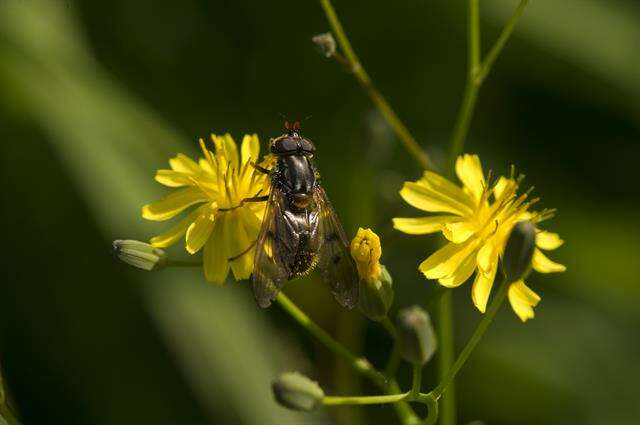
Ferdinandea
genus of hoverflies
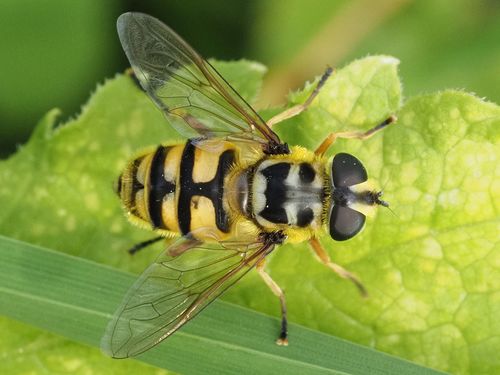
Myathropa
Myathropa is a European and North African genus of very common hoverfly. Adults may be seen on flowers from May to September. Larvae feed on bacteria in organic waterlogged detritus, often in the shallow rot holes of tree stumps.
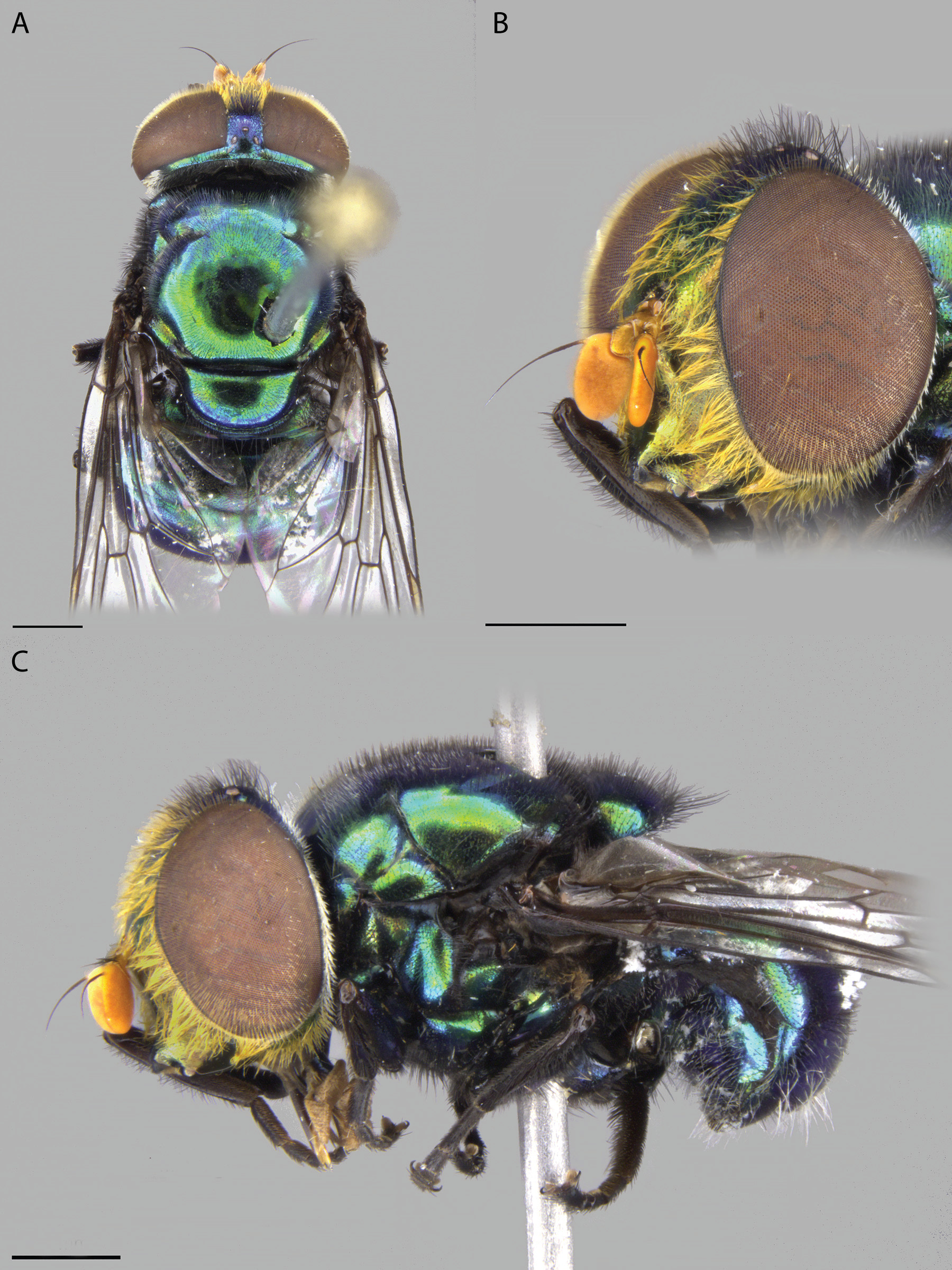
Psilota
Psilota is a genus of small black hoverflies with long wings, from the family Syrphidae, in the order Diptera. They are one of the few hoverfly genera that do not have a vena spuria in the wings. The larvae feed on tree sap.

Lejops
Lejops is a genus of hoverflies, closely related to the genera Helophilus, Quichuana and Mallota.
Lejogaster
Lejogaster is a genus of small, shiny, metallic hoverflies.
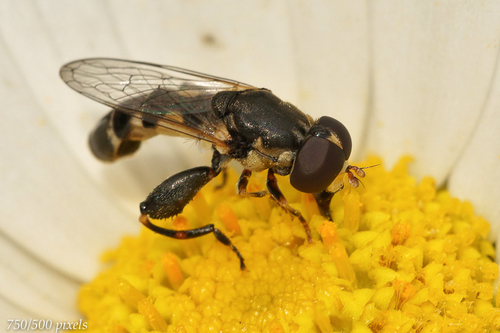
Syritta
Syritta is a genus of hoverflies, family Syrphidae.

Episyrphus
Episyrphus is a genus of hoverflies in the subfamily Syrphinae. Larvae are predatory, often on aphids.
Xanthandrus
Xanthandrus is a small genus of hoverflies.
Mesembrius
Mesembrius is a genus of hoverflies, containing over 50 described species.
Triglyphus
Triglyphus is a genus of hoverflies from the family Syrphidae in the order Diptera.