Category
page 1Human anatomy

lip
The lips are a horizontal pair of soft appendages attached to the jaws and are the most visible part of the mouth of many animals, including humans. Mammal lips are soft, movable and serve to facilitate the ingestion of food (e.g. suckling and gulping) and the articulation of sound and speech. Human lips are also a somatosensory organ, and can be an erogenous zone when used in kissing and other acts of intimacy.

human body
entire structure of a human organism

abdomen
An abdomen (also belly or stomach in vertebrates, or metasoma in arthropods) is the front part of the torso between the thorax (chest) and pelvis in humans and in other vertebrates. The area occupied by the abdomen is called the abdominal cavity. In arthropods, it is the posterior tagma of the body; it follows the thorax or cephalothorax.

back
body part

human anatomy
scientific study of the morphology of the human body

human skeleton
internal framework of the human body

Human penis
In human anatomy, the penis is an external sex organ through which males ejaculate and urinate. Together with the testes and surrounding structures, the penis functions as part of the male reproductive system.

little finger
smallest finger of the human hand

eyelid
thumb|Blood vessels of the eyelids, front view
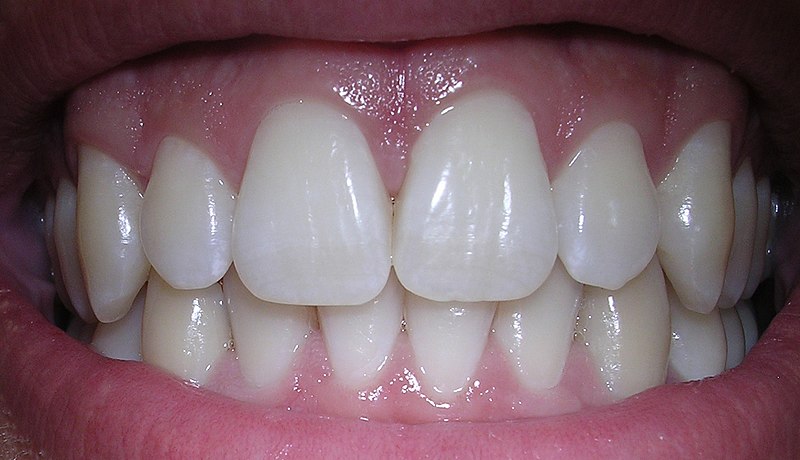
human tooth
calcified whitish structure in humans' mouths used to break down food

foreskin
In male human anatomy, the foreskin, also known as the prepuce (), is the double-layered fold of skin, mucosal and muscular tissue at the distal end of the human penis that covers the glans and the urinary meatus. The foreskin is attached to the glans by an elastic band of tissue, known as the frenulum. The outer skin of the foreskin meets with the inner preputial mucosa at the area of the mucocutaneous junction. The foreskin is mobile, fairly stretchable and sustains the glans in a moist environment. Except for humans, a similar structure known as a penile sheath appears in the male sexual or

fingerprint
thumb|A fingerprint

eardrum
In the anatomy of humans and various other tetrapods, the eardrum, also called the tympanic membrane or myringa, is a thin, cone-shaped membrane that separates the external ear from the middle ear. Its function is to transmit changes in pressure of sound from the air to the ossicles inside the middle ear, and thence to the oval window in the fluid-filled cochlea. The ear thereby converts and amplifies vibration in the air to vibration in cochlear fluid. The malleus bone bridges the gap between the eardrum and the other ossicles.

groin
thumb|Left and right inguinal regions shown in lower part of diagram

anthropometry
thumb|right|240px|The field of ergonomics employs anthropometry to optimize human interaction with equipment and workplaces.

Achilles tendon
tendon at the back of the lower leg

middle ear
part of the ear that lies between the eardrum and the oval window

Eustachian tube
tube found in the middle ear which equalises pressure and drains mucus, connecting the middle ear to the throat

human mouth
part of human anatomy

Terminologia Anatomica
the written work that is the authoritative definition of the 1998 edition of the international standard on human anatomic terminology
fontanelle
A fontanelle (or fontanel) (colloquially, soft spot) is an anatomical feature of the infant human skull comprising soft membranous gaps (sutures) between the cranial bones that make up the calvaria of a fetus or an infant. Fontanelles allow for stretching and deformation of the neurocranium both during birth and later as the brain expands faster than the surrounding bone can grow. Premature complete ossification of the sutures is called craniosynostosis.

neurocranium
In human anatomy, the neurocranium, also known as the braincase, brainpan, brain-pan, or brainbox, is the upper and back part of the skull, which forms a protective case around the brain. In the human skull, the neurocranium includes the calvaria or skullcap. The remainder of the skull is the facial skeleton.
amniotic sac
sac in which the fetus develops in amniotes
human nose
feature of the face
Glabella
The glabella, in humans, is the area of skin between the eyebrows and above the nose. The term also refers to the underlying bone that is slightly depressed, and joins the two brow ridges. It is a cephalometric landmark that is just superior to the nasion.
human reproductive system
organs involved in human reproduction
axial skeleton
the part of the skeleton that consists of the bones of the skull and trunk of a vertebrate
Alveolus
Alveolus ( , ; , ; ) is a general anatomical term for a concave cavity or pit.
anatomical terminology
Wikimedia list article
Darwin's tubercle
congenital ear condition which often presents as a thickening on the helix at the junction of the upper and middle thirds

lap
thumb|Late 18th-century Dutch people|Dutch painting of a baby asleep in its mother's lap
A lap is a surface (usually horizontal) created between the knee and hips of a biped when it is in a seated or lying down position. The lap of a parent or loved one is seen as a physically and psychologically comfortable place for a child to sit.
corona of glans penis
flare above the sulcus of the human male sex organ
scalene muscles
muscles on the sides of the neck
Body Worlds
traveling exhibition
bregma
The bregma is the anatomical point on the skull at which the coronal suture is intersected perpendicularly by the sagittal suture.
composition of the human body
body composition elements
pectoral muscles
group of muscles that connect the front of the human chest with the bones of the upper arm and shoulder, consisting of pectoralis major, pectoralis minor, and other muscles

interoception
thumb|462x462px|Interoception is involved in many different physiological systems like the cardiorespiratory system, gastrointestinal system, nociceptive system, endocrine and immune systems.

tubercle
right|250px|thumb|This view of the cactus Mammillaria marksiana shows its pattern of prominent tubercles, with the spines emanating from each tubercle's tip.
Superficial anatomy
study of the external features of the body of an animal
human vestigiality
human traits which lost their original function through evolution
Rhombus of Michaelis
aspect of the human back

dental anatomy
field of anatomy involving the study of human tooth structures

iliac crest
Top border of the hip
extensor retinaculum of the hand
anatomical term
Anatomical terms of muscle
muscles terminology
cervical rib
supernumerary rib bone
Koch's triangle
Anatomical area located in the right atrium of human heart
Visible Human Project
NIH-funded project to digitally image the human body
vena comitans
paired veins accompanying an artery
palmar aponeurosis
aponeurosis of the palm of the hand
Kiesselbach's plexus
vascular network of 4 arteries that supply the nasal septum
human trochanter
A trochanter is a tubercle of the femur near its joint with the hip bone. In humans and most mammals, the trochanters serve as important muscle attachment sites. Humans have two, sometimes three, trochanters.
Glossary of neuroanatomy
Wikimedia list article
pelvic tilt
orientation of the pelvis in respect to the thighbones and the rest of the body
superior thoracic aperture
Apollo's belt
Endocranium
The endocranium in comparative anatomy is a part of the skull base in vertebrates and it represents the basal, inner part of the cranium. The term is also applied to the outer layer of the dura mater in human anatomy.
Anatomical terms of bone
Wikimedia list article