Category
page 1Human habitats

farm
thumb|Church Farm in Norfolk, [[England]]
thumb|upright=0.9|Typical plan of a medieval English manor, showing the use of field strips

space station
spacecraft designed to remain in space for an extended period with a crew
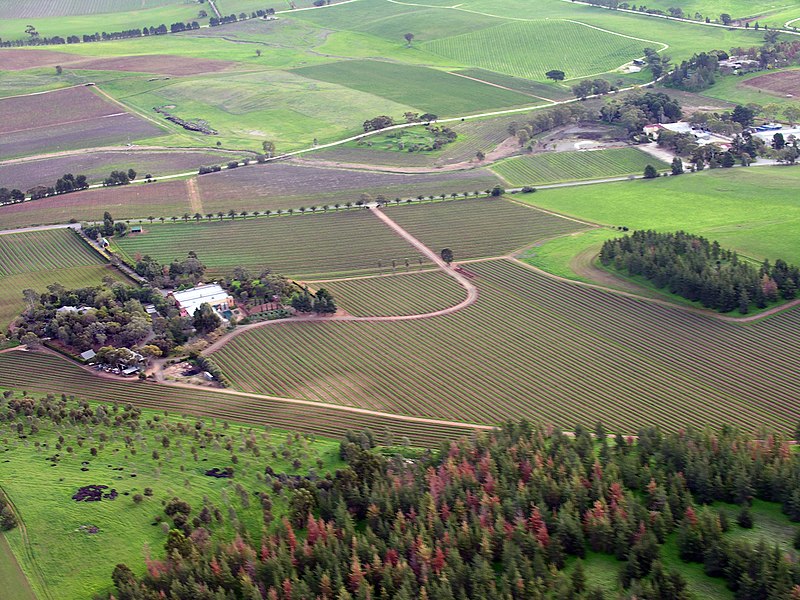
rural area
geographic area that is located outside towns and cities

home
thumb|upright=1.3|Plans for a detached house showing the social functions for each [[room]]

slum
A slum is a derogatory term for a highly populated urban residential area consisting of densely packed housing units of weak build quality and often associated with poverty. The infrastructure in slums is often deteriorated or incomplete, and they are primarily inhabited by impoverished people.
%2C%20Edinburgh%20Castle.JPG)
barracks
thumb|300px|Late 18th century barracks from the reign of George III, [[Edinburgh Castle, Scotland]]
Barracks are buildings used to accommodate military personnel and quasi-military personnel such as police. The English word originates from the 17th century via French and Italian from an old Spanish word 'soldier's tent', but today barracks are usually permanent buildings. The word may apply to separate housing blocks or to complete complexes, and the plural form often refers to a single structure and may be singular in construction.

megalopolis
thumb|A satellite image of the Pearl River Delta area in [[China]]

favela
thumb|upright=1.5|Rocinha is the largest hill favela in [[Rio de Janeiro (as well as in Brazil and the second largest slum and shanty town in Latin America). Although favelas are found in urban areas throughout Brazil, many of the more famous ones exist in Rio.]]
thumb|upright=1.5|Rio's Santa Teresa (Rio de Janeiro)|Santa Teresa neighborhood features favelas (right) contrasted with more affluent houses (left). The statue Christ the Redeemer, shrouded in clouds, is in the left background.

barangay
The barangay (; abbreviated as Brgy. or Bgy.), historically known as the barrio, is the smallest administrative division in the Philippines. Named after the precolonial polities of the same name, modern barangays are political subdivisions of cities and municipalities, and are analogous to villages, districts, neighborhoods, hamlets, suburbs, or boroughs. The term barangay is derived from balangay, a type of boat used by Austronesian peoples when they migrated to the Philippines.

megacity
thumb|upright=1.6|right|Map showing urban areas with at least ten million inhabitants in 2025, according to the Global Human Settlement Layer|GHSL

campsite
thumb|right|A campsite in the woods
thumb|A large campground for caravans in Myrtle Beach, South Carolina ([[United States)]]

arcology
An arcology or vertical city is a hypothetical mixed-use megastructure featuring high population density with the goal of autarky from the outside environment. The term was coined in 1969 by architect Paolo Soleri as a portmanteau of "architecture" and "ecology." Soleri believed that a completed arcology would provide space for a variety of residential, commercial, and agricultural facilities while minimizing individual human environmental impact.

dwelling
thumb|Houseboat, England
In law, a dwelling (also known as a residence, abode or domicile) is a self-contained unit of accommodation – such as a house, apartment, mobile home, houseboat, recreational vehicle, or other "substantial" structure – used as a home by one or more households. The concept of a dwelling has significance in relation to search and seizure, conveyancing of real property, burglary, trespass, and land-use planning.

khutor
thumb|300px|Konstantin Kryzhitsky. A Khutir in [[Little Russia, 1884]]

stanitsa
A stanitsa or stanitza ( ; ), also spelled stanytsia ( ) or stanitsa ( ), was a historical administrative unit of a Cossack host, a type of Cossack polity that existed in the Russian Empire.
gated community
residental community with controlled entrances and often a closed perimeter of walls/fences
housing cooperative
cooperative with the aim of providing its members with affordable housing

Ecumenopolis
right|thumb|A depiction of a planetwide city, which the artist considers suitable for both Trantor, a fictional ecumenopolis from Isaac Asimov's Galactic Empire, and [[Coruscant in the Star Wars franchise.]]

kraal
thumb|260px|An illustration of a kraal near Bulawayo in the 19th century.
thumb|260px|Building an African Kraal (July 1853, X, p.78)
thumb|260px|Zulu people|Zulu kraal near [[Umlazi, Natal]]
Kraal (also spelled craal or kraul) is an Afrikaans and Dutch word, also used in South African English, for an enclosure for cattle or other livestock, located within a Southern African settlement or village surrounded by a fence of thorn-bush branches, a palisade, mud wall, or other fencing, roughly circular in form. It is similar to a boma in eastern or central Africa.

smallholding
thumb|upright=1.2|alt=Diversified Crop Choices|Gender roles in agriculture|Female smallholder farmers in Kenya. In many parts of Africa and other parts of the world, women are the primary smallholders. In many contexts, women face unequal access to land, markets, knowledge, and other assets needed to maintain their farms.
thumb|Small vegetable farm in Hainan, China
World Habitat Day
day of reflection recognized by the United Nations

Mellah
alt=|thumb|The central street of the Mellah of Fez|Mellah of Fez, with distinctive domestic architecture of former Jewish houses
A mellah ( or 'saline area'; and ) is the place of residence historically assigned to Jewish communities in Morocco.

microdistrict
thumb|One of the typical Tbilisi, Georgia microdistricts
thumb|View of Namyv microdistrict in Mykolaiv, [[Ukraine]]
thumb|right|Aerial view of Väike-Õismäe, [[Tallinn, Estonia]]
thumb|Chertanovo Severnoye District, [[Moscow, Russia]]
thumb|Bragino microdistrict in Yaroslavl, Russia
thumb|Újpalota, [[Budapest, Hungary]]
A microdistrict or microraion is a residential complex—a primary structural element of the residential area construction in the Soviet Union and in some post-Soviet and former socialist states. Residential districts in most of the cities and towns in Russia and the republics of
Golden Banana
higher population density area
.jpg)
Hooverville
thumb|A Hooverville in Seattle, 1933.
Hoovervilles were shanty towns and slums built during the Great Depression by the homeless in the United States. They were named after Herbert Hoover, who was president of the United States during the onset of the Depression and was widely blamed for it. The term was coined by Charles Michelson. There were hundreds of Hoovervilles across the country during the 1930s.
space habitat
type of spacecraft, intended as a permanent settlement
housing estate
group of homes and other buildings built together as a single development

banlieue
thumb| Sarcelles, ten miles to the north of Paris, is an example of a low-income banlieue.
thumb|upright| Neuilly-sur-Seine, adjacent to Paris' sixteenth arrondissement, is an example of a high-income banlieue.
In France, a '''''' (; ) is a suburb of a large city, or all its suburbs taken collectively. Banlieues are divided into autonomous administrative entities and do not constitute part of the city proper. For instance, 80percent of the inhabitants of the Paris metropolitan area live outside the city of Paris.
residential community
administrative territorial entity of the People's Republic of China
World Cities Day
United Nations observance day
illegal construction
type of construction work

yaodong
A yaodong (窰 in native Jin Chinese, or 窰洞 yáodòng in Beijing Mandarin) is a particular form of earth shelter dwelling common in the Loess Plateau in China's north. They are generally carved out of a hillside or excavated horizontally from a central "sunken courtyard".
autonomous building
building desgined to be independent from public infrastructure

gord
Slavic fortified settlement

villa miseria
local term for for slums and shanty towns in Argentina
Homeless Workers' Movement
workers Movement in Brazil
Kiez
thumb|Stephankiez in Berlin-Moabit
Kiez () (also: Kietz) is a German word for a city neighbourhood, a relatively small community within a larger town. The word is mainly used in Berlin and northern Germany. Similar quarters are called Veedel in Cologne and Grätzl in Vienna. The more standard German term for a neighborhood in the sense of "where one lives" is Viertel ('quarter').
Boma
fortified base
anthropogenic biome
type of biome
Mars habitat
facility where humans could live on Mars
mouza
In Bangladesh, Pakistan and parts of India, a mouza or mauza (also mouja) is a type of administrative district, corresponding to a specific land area within which there may be one or more settlements. Before the 20th century, the term referred to a revenue collection unit just underneath a pargana or revenue district.
Pueblos jóvenes
shanty town
rural settlement
settlement in the areas defined as rural by a governmental office
urban unit
INSEE term for non-rural communities; continuous built-up area with no more than 200 metres between two buildings and with at least 2,000 inhabitants
household plot
legally defined farm type in all former socialist countries in CIS and CEE; small plot of land (typically less than 0.5 hectares) attached to a rural residence
bastle house
fortified house of the Anglo-Scottish border
Blikkiesdorp
Symphony Way Temporary Relocation Area in Delft, Cape Town, better known by its nickname Blikkiesdorp, is a relocation camp in South Africa made up of corrugated iron shacks. Blikkiesdorp, which is Afrikaans for "Tin Can Village", was given its name by residents because of the row-upon-row of tin-like, one-room structures throughout the settlement.
compound
cluster of buildings in an enclosure
ancestral home
place of origin of one's extended family