Category
page 1Human skin color

white people
racial classification and skin color specifier

freckle
Freckles are clusters of concentrated melaninized cells which are most easily visible on people with a fair complexion. Freckles do not have an increased number of the melanin-producing cells, or melanocytes, but instead have melanocytes that overproduce melanin granules (melanosomes) changing the coloration of the outer skin cells (keratinocytes). As such, freckles are different from lentigines and moles, which are caused by accumulation of melanocytes in a small area. Freckles can appear on all types of skin tones. Of the six Fitzpatrick skin types, they are most common on skin tones 1 and 2

melanin
thumb|Micrograph of melanin pigment (light refracting granular material—center of image) in a pigmented [[melanoma]]
thumb|Micrograph of the epidermis, with melanin labeled at left

cyanosis
Cyanosis is the change of tissue color to a bluish-purple hue, as a result of decrease in the amount of oxygen bound to the hemoglobin in the red blood cells of the capillary bed. Cyanosis is apparent usually in the body tissues covered with thin skin, including the mucous membranes, lips, nail beds, and ear lobes. Some medications may cause discoloration such as medications containing amiodarone or silver. Furthermore, mongolian spots, large birthmarks, and the consumption of food products with blue or purple dyes can also result in the bluish skin tissue discoloration and may be mistaken for
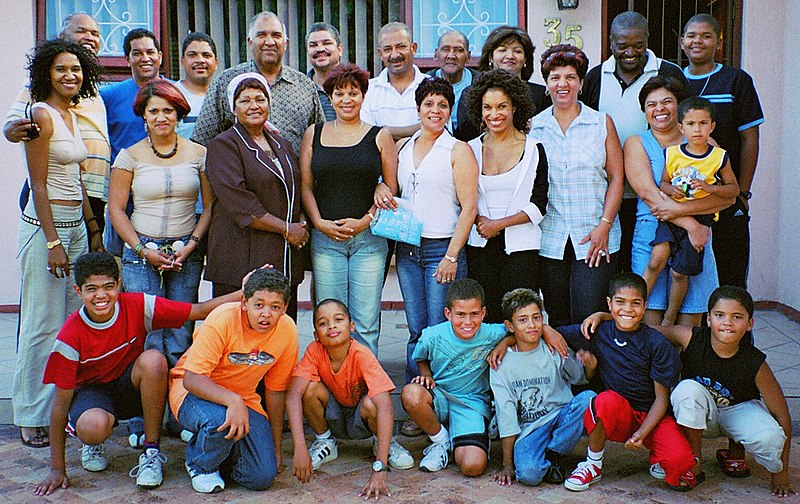
human skin color
skin color of an individual as a result of genetics
indoor tanning
tanning using an artificial source of ultraviolet light
albinism in humans
congenital disorder characterized by the complete or partial absence of pigment in the skin
Fitzpatrick scale
classification of skin color and response to UV light
melanocortin 1 receptor
mammalian protein found in Homo sapiens
age spot
age-related skin blemish caused by UV radiation
Von Luschan's chromatic scale
method of classifying skin color
carnation
heraldic tincture
persecution of people with albinism
Tanzanian et al Albianism
light skin
human skin color
olive skin
color tone of human skin roughly corresponding to Types III, IV, and V on the Fitzpatrick scale of pigmentation
dark skin
human skin color
Blue Fugates
family known for having blue skin
beauty spot
natural dark facial mark
Beidane
Beidane (; also spelled ), is an Arabic term meaning 'white' used in Mauritania to refer to lighter-skinned or "white Moors", in contrast to the term Haratine, which refers to those with a darker complexion or "black Moors". The Beidane, who are of mixed Arab and Berber ancestry, represent 30% of Mauritania's population. The language of the Beidane is Hassaniya Arabic. Al-Bidān (which literally translates to "the whites") is an endonym used within Mauritania and Western Sahara by the Bidān people to refer to themselves. The name used by outsiders to refer to the Beidane is Moors from which the

color terminology for race
describing people as black, white, etc.
White slave propaganda
American abolitionist propaganda using white-looking slaves
Melanin theory
pseudoscientific theory of black supremacy