Category
page 1IBM software

Fortran
Fortran (; formerly FORTRAN) is a third-generation, compiled, imperative programming language designed for numeric computation and scientific computing.

Eclipse
software development environment

APL
functional, symbolic programming language for operating on multidimensional arrays

SPSS
SPSS Statistics is a statistical software suite developed by IBM for data management, advanced analytics, multivariate analysis, business intelligence, and criminal investigation. Long produced by SPSS Inc., it was acquired by IBM in 2009. Versions of the software released since 2015 have the brand name IBM SPSS Statistics.

PL/I
PL/I (Programming Language One, pronounced and sometimes written PL/1) is a procedural, imperative computer programming language initially developed by IBM. It is designed for scientific, engineering, business and system programming. It has been in continuous use by academic, commercial and industrial organizations since it was introduced in the 1960s.
REXX
Rexx (restructured extended executor) is a high-level programming language developed at IBM by Mike Cowlishaw. Both proprietary and open source Rexx interpreters exist for a wide range of computing platforms, and compilers exist for IBM mainframe computers. Rexx is used for scripting, application macros and application development. As a general purpose scripting language, Rexx is considered a precursor to Tcl and Python.
IBM Db2
relational model database server
Postfix
mail transfer agent
Express.js
Express.js, or simply Express, is a back end web application framework for Node.js, released as free and open-source software under the MIT License. It is designed for building web applications and APIs. It has been called the de facto standard server framework for Node.js.
RPG
programming language from IBM
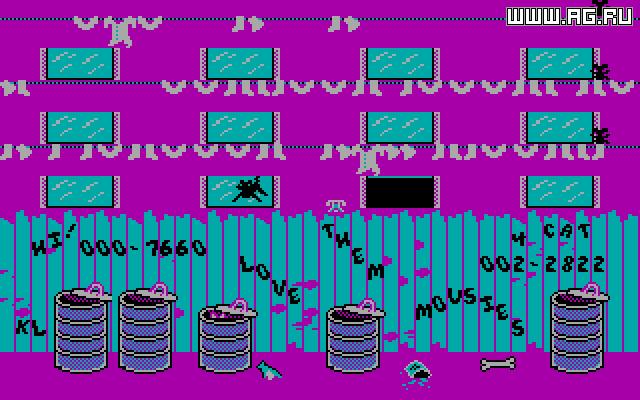
Alley Cat
1983 video game
ISAM
Indexed Sequential Access Method (ISAM) is a method for creating, maintaining, and manipulating computer files of data so that records can be retrieved sequentially or randomly by one or more keys. Indexes of key fields are maintained to achieve fast retrieval of required file records in indexed files. IBM originally developed ISAM for mainframe computers, but implementations are available for most computer systems.
Apache Derby
relational database management system

CICS
IBM CICS (Customer Information Control System) is a family of mixed-language application servers that provide online transaction management and connectivity for applications on IBM mainframe systems under z/OS and z/VSE.

Node-RED
Node-RED is a flow-based, low-code development tool for visual programming, originally developed by IBM for wiring together hardware devices, APIs and online services as part of the Internet of things.
Query by Example
devised by Moshé M. Zloof at IBM Research during the mid-1970s
Qiskit
Qiskit (Quantum Information Software Kit) is an open-source, Python-based, high-performance software stack for quantum computing, originally developed by IBM Research and first released in 2017. It provides tools for creating quantum programs (by defining quantum circuits and operations) and executing them on quantum computers or classical simulators. The name "Qiskit" refers broadly to a collection of quantum software tools. It is centered around the core Qiskit SDK, and combined with a suite of tools and services for quantum computation, like the Qiskit Runtime service that enables optimized
IBM Generalized Markup Language
markup language
Andalé Mono
typeface
IBM BASIC
programming language
IBM Public License
free software license

Gorillas
1991 video game
ISPF
In computing, Interactive System Productivity Facility (ISPF) is a software product for many historic IBM mainframe operating systems and currently the z/OS and z/VM operating systems that run on IBM mainframes. It includes a screen editor, the user interface of which was emulated by some microcomputer editors sold commercially starting in the late 1980s, including SPF/PC.
OpenAFS
OpenAFS is an open-source implementation of the Andrew distributed file system (AFS). AFS was originally developed at Carnegie Mellon University, and developed as a commercial product by the Transarc Corporation, which was subsequently acquired by IBM. At LinuxWorld on 15 August 2000, IBM announced their plans to release a version of their commercial AFS product under the IBM Public License. This became OpenAFS. Today, OpenAFS is actively developed for a wide range of operating system families including: AIX, Mac OS X, Darwin, HP-UX, Irix, Solaris, Linux, Microsoft Windows, FreeBSD, NetBSD.
IBM Common User Access
user interface standard
IBM WebExplorer
discontinued web browser for IBM OS/2
Data Language Interface
database language
Object REXX
object-oriented scripting language for the operating system OS/2
X10
programming language, part of the Productive, Easy-to-use, Reliable Computing System (PERCS) project
IBM Tivoli Storage Manager
backup and recovery software
CPLEX
IBM ILOG CPLEX Optimization Studio (often informally referred to simply as CPLEX) is an optimization software package.
IBM Advanced Program-to-Program Communication
Computer communications protocol
OpenDoc
OpenDoc is a defunct multi-platform software componentry framework standard created by Apple in the 1990s for compound documents, intended as an alternative to Microsoft's proprietary Object Linking and Embedding (OLE). It is one of Apple's earliest experiments with open standards and collaborative development methods with other companies. OpenDoc development was transferred to the non-profit Component Integration Laboratories, Inc. (CI Labs), owned by a growing team of major corporate backers and effectively starting an industry consortium. In 1992, the AIM alliance was launched by Apple, IBM
VisualAge
VisualAge is a family of computer integrated development environments from IBM, which supports multiple programming languages. VisualAge was first released in October 1993. It was discontinued on April 30, 2007, and its web page was removed in September 2011. VisualAge was also marketed as VisualAge Smalltalk, and in 2005, Instantiations, Inc. acquired the worldwide rights to this product. IBM has stated that XL C/C++ is the followup product to VisualAge.
IBM Advanced Peer-to-Peer Networking
computer network protocol
IBM High Availability Cluster Multiprocessing
Clustering software from IBM
Autocoder
Autocoder is any of a group of assemblers for a number of IBM computers of the 1950s and 1960s.
The first Autocoders appear to have been the earliest assemblers to provide a macro facility.
EGL
common language and programming model across languages, frameworks, and runtime platforms

IBM Granite
2023 text-generating language model
list of IBM products
Wikimedia list article
Speedcoding
Speedcoding, Speedcode or SpeedCo was the first high-level programming language created for an IBM computer. The language was developed by John W. Backus in 1953 for the IBM 701 to support computation with floating point numbers.
OpenJ9
Eclipse OpenJ9 (originally published as IBM J9) is a high performance, scalable, Java virtual machine (JVM) implementation that is fully compliant with the Java Virtual Machine Specification.
EasyWriter
EasyWriter was the first word processor for the Apple II. It was written by John Draper and released in 1979.
XEDIT
thumb|right|An Informatics General computer programmer using XEDIT on an IBM 3279 terminal
thumb|An early version of XEDIT from 1982, as displayed on a 3270 terminal emulator.
XEDIT is a visual editor for VM/CMS, primarily using block mode IBM 3270 terminals. It also works on line-mode terminals.
Lilian date
calendar date format

Rational Rhapsody
software
IBM Rational DOORS
IBM Engineering Requirements Management DOORS (Dynamic Object Oriented Requirements System) (formerly Telelogic DOORS, then Rational DOORS) is a requirements management tool. It is a client–server application, with a Windows-only client and servers for Linux, Windows, and Solaris. There is also a web client, DOORS Web Access.
Eclipse Che
open-source IDE