Category
page 1Ideologies

ideology
An ideology is a set of beliefs or values attributed to a person or group of persons, especially those held for reasons that are not purely about belief in certain knowledge, in which "practical elements are as prominent as theoretical ones". Formerly applied primarily to economic, political, or religious theories and policies, in a tradition going back to Karl Marx and Friedrich Engels, more recent use treats the term as mainly condemnatory.

transhumanism
Transhumanism is a philosophical movement that advocates the enhancement of the human condition by developing and making widely available new and future technologies to enhance longevity, cognition, and well-being. Influenced by seminal works of science fiction, the transhumanist vision of a transformed future humanity has many supporters and detractors from a wide range of perspectives, including philosophy and religion. Some critics argue that transhumanism amounts to little more than a "rebranding" of eugenics.
elitism
Elitism is the notion that individuals who form an elite—a select group with desirable qualities such as intellect, wealth, power, fame, physical attractiveness, notability, special skills, experience, lineage—are more likely to be constructive to society and deserve greater influence or authority. The term elitism may be used to describe a situation in which power is concentrated in the hands of a limited number of people. Beliefs that are in opposition to elitism include egalitarianism, anti-intellectualism (against powerful institutions perceived to be controlled by elites), populism, and t
globalism
Globalism has multiple meanings. In political science, it is used to describe "attempts to understand all of the interconnections of the modern world—and to highlight patterns that underlie (and explain) them". While primarily associated with world-systems, it can be used to describe other global trends. The concept of globalism is also classically used to focus on ideologies of globalisation (the subjective meanings) instead of its processes (the objective practices); in this sense, "globalism" is to globalisation what "nationalism" is to nationalisation.
assisted reproductive technology
methods used to achieve pregnancy by artificial or partially artificial means
classless society
society in which no one is born into a social class
The Californian Ideology
1995 essay on media theory and Silicon Valley politics
Ideocracy
Ideocracy (a portmanteau word combining "ideology" and kratos, Greek for "power") is "governance of a state according to the principles of a particular (political) ideology; a state or country governed in this way". It is government based on a monistic ideology—as distinct from an authoritarian state, which is characterized by strong central power and limited political freedoms. An ideocratic state can either be totalitarian (citizens being forced to follow an ideology) or populist (citizens voluntarily following an ideology).
language ideology
concept of language having or being influenced by ideology
nihonjinron
Nihonjinron (: treatises on Japaneseness) is a genre of ethnocentric nationalist literary work that focuses on issues of Japanese national and cultural identity. Nihonjinron posits concepts such as Japanese being a "unique isolate, having no known affinities with any other race", and has been described as racist.
political myth
ideological explanation for a political phenomenon that is believed by a social group
secular religion
communal belief system that often rejects or neglects the supernatural
technological utopianism
ideology based on the premise that advances in science and technology could and should bring about a utopia
economic ideology
system of propositions concerning how economies work
ideological repression
forceful activities against competing ideologies and philosophies
Fascism and ideology
history of fascist ideology
political religion
familialism
Familialism or familism is a philosophy that puts priority to family. The term familialism has been specifically used for advocating a welfare system wherein it is presumed that families will take responsibility for the care of their members rather than leaving that responsibility to the government. The term familism relates more to family values. This can manifest as prioritizing the needs of the family higher than that of individuals. Yet, the two terms are often used interchangeably.
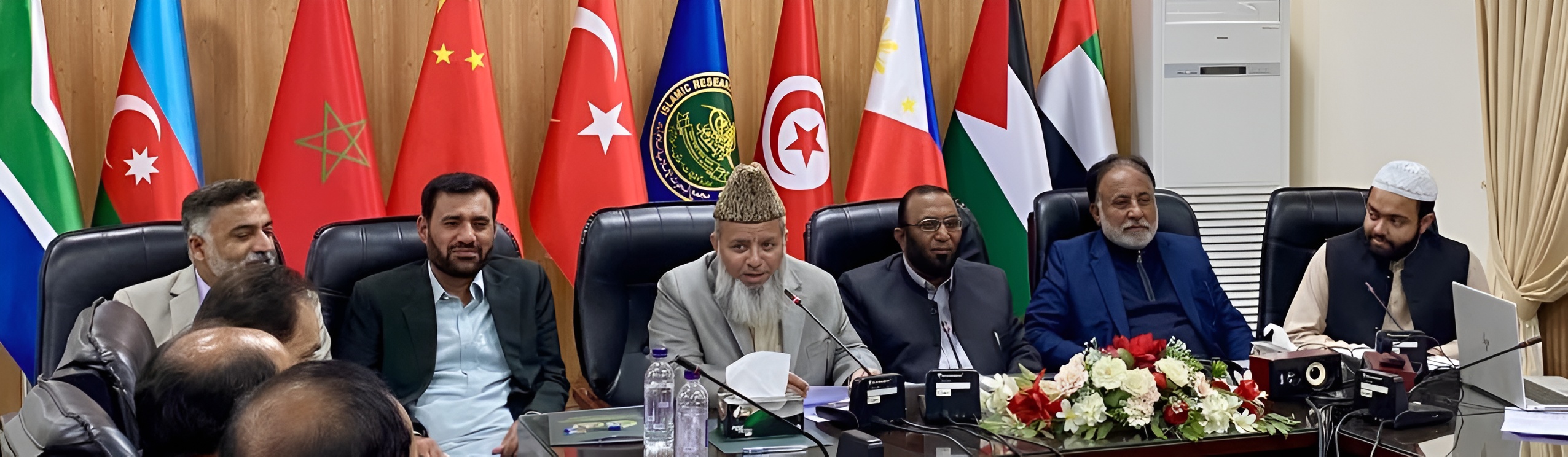
Council of Islamic Ideology
governmental organisation in Pakistan
Ethnocacerism
The ethnocacerist movement (, also sometimes referred to as the or "Peruvian Nationalist Movement") is a Peruvian ethnic nationalist movement that espouses an ideology called ethnocacerism (). The movement seeks to establish a dictatorship of the proletariat led by the country's Indigenous communities and their descendants. It draws on the ideas and history of several Indigenous and anti-colonial movements, including those of Juan Velasco Alvarado, Evo Morales, Gamal Abdel Nasser, Muammar Gaddafi, and Che Guevara. Ethnocacerism is considered an Indigenist ideology and is currently represented
Russian Idea
political and religious concept on Russian identity
Ideology and Ideological State Apparatuses (work level)
1970 essay by Louis Althusser
Neo-Capitalism
Neo-capitalism is an economic ideology which blends some elements of capitalism with other systems. This form of capitalism was new compared to the capitalism in the era before World War II.
techno-progressivism
Techno-progressivism, or tech-progressivism, is a stance of active support for the convergence of technological change and social change. Techno-progressives argue that technological developments can be profoundly empowering and emancipatory when they are regulated by legitimate democratic and accountable authorities to ensure that their costs, risks and benefits are all fairly shared by the actual stakeholders to those developments. One of the first mentions of techno-progressivism appeared within extropian jargon in 1999 as the removal of "all political, cultural, biological, and psychologic
punk ideologies
overview about punk ideologies
Achievement ideology
Concept in sociology
Perspectives on capitalism
Han chauvinism
ethnocentric attitudes among ethnic Han within China
right-wing antiglobalism
ethno-nationalist political stance
critique of ideology
overview about the critique of ideology
TESCREAL
TESCREAL is a neologism proposed by computer scientist Timnit Gebru and philosopher Émile P. Torres. An acronym, it stands for Transhumanism, Extropianism, Singularitarianism, (modern) Cosmism, Rationalists (the internet community, not to be confused with other uses of the term), Effective Altruism, and Longtermism. Gebru and Torres argue that these ideologies should be treated as an "interconnected and overlapping" group with shared origins. They claim these constitute a movement that allows its proponents to use the threat of human extinction to justify expensive or detrimental projects and
Sadae
'''''' () is a Korean term which is used in pre-modern contexts. is a Confucian concept, based on filial piety, that describes a reciprocal hierarchical relationship between a senior and a junior, such as a tributary relationship. The term is used as a descriptive label for bilateral foreign relations between Imperial China and Joseon dynasty Korea. Korea's toward China was first employed by Silla in the 7th century, but it was not fully implemented until the Confucianization of Korea in the early Joseon dynasty. Korea's toward China from the 7th century to the 13th century was only nominal.
standard language ideology
attitudes biased toward an abstract, consistent, institutionally maintained language based on the written standard and the spoken acrolect
Almohad doctrine
series of reforms following the Almohad revolt
separate spheres
gendered separation of public and private spheres
sadaejuui
REDIRECT Sadae#Sadaejuui: 20th-century reinterpretation
Technocentrism
Technocentrism is a value system that is centered on technology and its ability to control and protect the environment. Technocentrics argue that technology can address ecological problems through its problem-solving ability, efficiency, and its managerial means. Specifically, these capabilities allow humans control over nature, allowing them to correct or negotiate environmental risks or problems. Although technocentrics may accept that environmental problems exist, they do not see them as problems to be solved by a reduction in industry. Rather, environmental problems are seen as problems to