Category
page 1Imperial Japanese Army

Unit 731
Unit 731 , officially known as the Manchu Detachment 731 and also referred to as the Kamo Detachment and the Ishii Unit, was a secret research facility operated by the Imperial Japanese Army between 1933 and 1945. It was located in the Pingfang district of Harbin, in the Japanese puppet state of Manchukuo, and maintained multiple branches across mainland China and Southeast Asia.
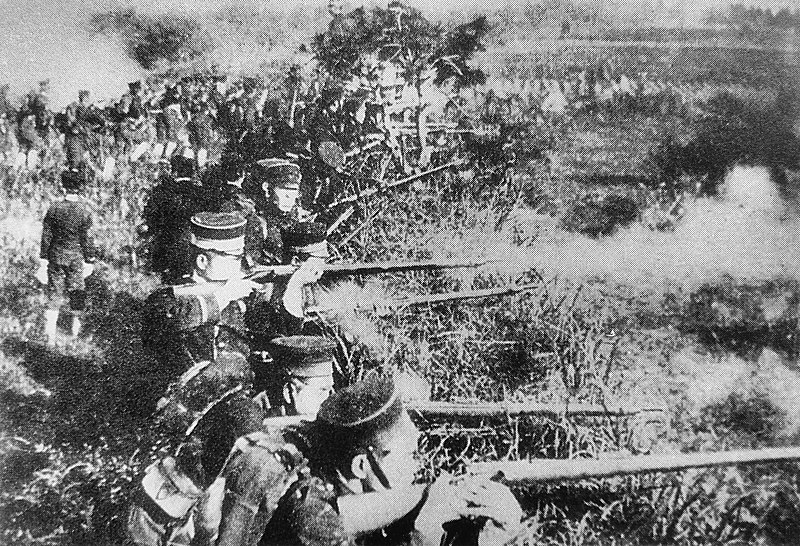
Imperial Japanese Army
ground-based armed forces of Japan, from 1868 to 1945

Kempeitai
The , was the military police of the Imperial Japanese Army (IJA). The organization also shared civilian secret police that specialized in clandestine and covert operation, counterinsurgency, counterintelligence, human intelligence (HUMINT), interrogated suspects who might be Allied soldiers, spies or members of a resistance movement, maintained security of prisoner of war camps, raided to capture high-value targets, and provided security at important government and military locations at risk of being sabotaged within Japan and its occupied territories. It was notorious for its brutality and r
The Man in the High Castle (TV series)
The Man in the High Castle is an American dystopian alternate history television series created for the streaming service Amazon Prime Video, depicting a parallel universe where the Axis powers of Nazi Germany and the Empire of Japan rule the world after their victory in World War II. It was created by Frank Spotnitz and produced by Amazon Studios, Ridley Scott's Scott Free Productions, Headline Pictures, Electric Shepherd Productions, and Big Light Productions. It is based on Philip K. Dick's 1962 novel.
February 26 Incident
failed 1936 coup d'état in Japan
Japanese war crimes
Japanese war crimes of World War II
Banzai charge
term used by the Allied forces to refer to Japanese human wave attacks
.jpg)
Ōkunoshima
is a small island in the Inland Sea of Japan. It is considered to be part of the city of Takehara, Hiroshima Prefecture. It is accessible by ferry from Tadanoumi and Ōmishima. There are campsites, walking trails and places of historical interest on the island. It is often called because of the large population of free-ranging domestic rabbits that roam the island. The rabbits have been habituated and will approach humans.
Imperial Japanese Air Force
aerial warfare branch of the Imperial Japanese Army
Imperial Japanese Army Academy
Japanese military academy (1874-1945)
Ministry of the Army
former Japanese government ministry (1872–1945)
Imperial Japanese Army General Staff Office
agency charged with overseeing the Imperial Japanese Army
Chichijima incident
Atrocity in the Pacific Theater of World War II
Imperial Way Faction
political faction in the Imperial Japanese Army active in the 1920s and 1930s

Tōseiha
The Tōseiha or '''' was a loose political coalition in the Imperial Japanese Army active in the 1920s and 1930s. The term Tōseiha was not a self-designated name; it was a pejorative label coined by their rivals in the revolutionary Kōdōha (Imperial Way Faction) to describe the generally conservative officers who opposed their spiritual radicalism and aggressive anti-modernization ideals. Often associated with leaders such as Lieutenant General Tetsuzan Nagata (until his assassination in 1935) and Hideki Tojo, the coalition was primarily alleged to favor maintaining Japanese imperialism under t
Ranks of the Imperial Japanese Army
Wikimedia list article
Tachikawa
1924-1945 aircraft manufacturer in Japan
Army War College
staff college of the Imperial Japanese Army
Hamamatsu Air Base
Japan Air Self-Defense Force airbase
Military Academy incident
1934 failed Japanese coup

Takasago Volunteers
soldiers in the Imperial Japanese Army recruited from Taiwanese aboriginal tribes

Imperial Rescript to Soldiers and Sailors
1882 Japanese military ethics code
Manchukuo Film Association
japanese-Manchurian film studio
TERA rifle
Japanese takedown rifles for paratroopers of the Imperial Japanese Atmy
Unit Ei 1644
Japanese biological warfare facility (1939–1945)

senninbari
right|thumb|Women stitching for men going to war in China, 1937
A or one thousand stitch is a belt or strip of cloth stitched 1,000 times and given as a Shinto amulet by Japanese women and imperial subjects to soldiers going away to war.
Yokohama Specie Bank
dissolved bank in Japan
Senjinkun military code
literary work
Epidemic Prevention and Water Purification Department
department of the Imperial Japanese Army from 1936 to the dissolution of the Army in 1945
Tomogashima
thumb|250px|right|Jinoshima, Okinoshima, and Awaji Island
thumb|Views of Tomogashima (1798)
Unit 9420
Disease Research Unit of Japanese Army

Inspectorate General of Military Training
training division in the Imperial Japanese Army
Mount Hakkōda disaster
1902 mountaineering disaster
Unit 1855
Japanese human experimentation unit in China (1938–1945)
Type 97 ShinHoTo Chi-Ha
medium tank
Unit 8604
Unit of Imperial Japanese Army
Japanese Special Attack Units
special attack units used by the Japanese military near the end of World War II
Double Leaf Society
Japanese military secret society of the 1920s
Nakano School
Japanese military training center
Tsūshōgō
were unit code names used by the Imperial Japanese Army (IJA) during World War II.
Noborito Research Institute
military development laboratory run by the Imperial Japanese Army

Zhongma Fortress
Japanese army prison camp
2600th Anniversary Celebrations of the Japanese Empire
1940 event in Japan
Osaka Arsenal
F Kikan
military intelligence operation established by the IGHQ in September 1941
Kameido Incident
1923 massacre of social activists in Japan
uniforms of the Imperial Japanese Army
uniforms worn by personnel of the Imperial Japanese Armed Forces
comfort bag