Category
page 1Imperialism studies

Vladimir Lenin
founding leader of the Soviet Union (1870–1924)

Kwame Nkrumah
Ghanaian politician (1909–1972)

developed country
country with a developed industry and infrastructure

developing country
nation with a low living standard relative to other countries

neoliberalism

Nikolai Bukharin
Russian revolutionary and politician (1888–1938)
Third World
category of countries on socio economic base

banana republic
political science term for a politically unstable country

neocolonialism
Neocolonialism is the control by a state (usually, a former colonial power) over another nominally independent state (usually, a former colony) through indirect means. The term neocolonialism was first used after World War II to refer to the continuing dependence of former colonies on foreign countries, but its meaning soon broadened to apply, more generally, to places where the power of developed countries was used to produce a colonial-like control. Some scholars have argued that neocolonialism operates through global economic governance, including international financial institutions and tr

First World
conceptual country classification

Immanuel Wallerstein
American sociologist and economic historian (1930–2019)

Antonio Negri
Italian political philosopher (1933–2023)
Second World
geopolitical classification

Samir Amin
Egyptian-French economist and political theorist (1931-2018)

Neo-Marxism
Neo-Marxism is a collection of Marxist schools of thought originating from 20th-century approaches to amend or extend Marxism and Marxist theory, typically by incorporating elements from other intellectual traditions such as critical theory, psychoanalysis, or existentialism. Neo-Marxism comes under the broader framework of the New Left. In a sociological sense, neo-Marxism adds Max Weber's broader understanding of social inequality, such as status and power, to Marxist philosophy.
Global North and Global South
socio-economic and political divide
dependency theory
notion that resources flow from a periphery of poor underdeveloped states to a core of wealthy states; contends that poor states are impoverished and rich ones enriched by the way poor states are integrated into the world system
world-systems theory
multidisciplinary, macro-scale approach to world history and social change that stresses that the world-system should be the primary unit of social analysis

John Atkinson Hobson
English economist, social scientist and critic of imperialism (1858-1940)

Mirsaid Sultan-Galiev
Soviet politician (1892-1940)
Andre Gunder Frank
German-American economic historian and sociologist who promoted dependency theory after 1970 and world-systems theory after 1984 (1929–2005)
fourth world
extension of the three-world model
Ernest Mandel
Belgian economist and Marxist philosopher (1923–1995)
Imperialism, the Highest Stage of Capitalism
book by Vladimir Lenin
primitive accumulation of capital
economical concept
Walter Rodney
Guyanese Marxist, Pan-Afrianist, and historian (1942-1980)
Michael Hardt
American philosopher (born 1960)
Paul Sweezy
American economist (1910–2004)
Giovanni Arrighi
Italian economist and sociologist (1937-2009)
John Bellamy Foster
Sociology professor and Marxist writer
Paul A. Baran
American Marxist economist (1909–1964)
Three Worlds Theory
Maoist interpretation and formulation of international relations

Third-Worldism
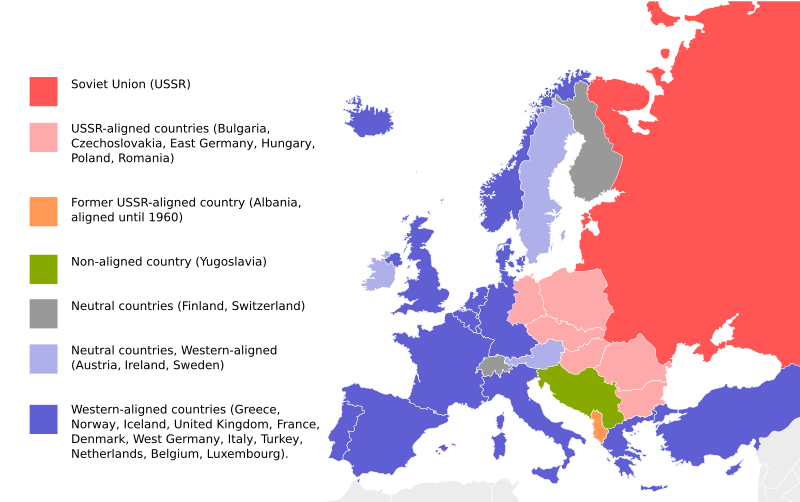
thumb|500x500px|The "three worlds" of the Cold War era, as of the period between 30 April and 24 June 1975. Neutral and non-aligned countries shown in grey.
social imperialism
governments that engage in imperialism meant to preserve the domestic social peace
Open Veins of Latin America
1971 essay by Eduardo Galeano
crisis theory
Marxian theory of causes and consequences of the tendency for the rate of profit to fall in a capitalist system
Golden billion
term, in the Russian-speaking world, referring to the relatively wealthy people in industrially developed nations, or the West

Alexander J. Motyl
American historian

Empire
book by Antonio Negri and Michael Hardt

Charles Bettelheim
French historian and economist (1913-2006)
periphery country
country with a less developed economy than semi-periphery and core countries
Singer–Prebisch thesis
Economic conjecture
core country
industrialized capitalist countries
Informal Empire
spheres of influence of an empire arising without formal annexation
Neo-Gramscianism
Neo-Gramscianism is a critical theory approach to the study of international relations (IR) and the global political economy (GPE) that explores the interface of ideas, institutions and material capabilities as they shape the specific contours of the state formation. The theory is heavily influenced by the writings of Antonio Gramsci. Neo-Gramscianism analyzes how the particular constellation of social forces, the state and the dominant ideational configuration define and sustain world orders. In this sense, the neo-Gramscian approach breaks the decades-old stalemate between the realist school
Illicit financial flows
form of illegal capital flight
semi-periphery countries
industrializing countries which are positioned between the periphery and core countries

The Accumulation of Capital
1913 economics book by Rosa Luxemburg
International inequality
inequality between nations' wealth
Most Affected People and Areas
neologism that means disproportionately affected groups and territories

Monopoly Capital
book by Paul A. Baran and Paul Sweezy
Third World Socialism
variant of the ideology striving for social justice, common in countries that were not part of either the Western or Eastern camps during the Cold War
Lumpenbourgeoisie
Lumpenbourgeoisie is a term used in colonial sociology to describe members of the middle class and upper class (merchants, lawyers, industrialists, etc.) who have little collective self-awareness or economic base and who support the colonial masters. It is often attributed to Andre Gunder Frank in 1972, although the term is already present in several texts by Lukács (1943), Koestler (1945), C. Wright Mills (1951) and also in Paul Baran's The Political Economy of Growth (1957). Nonetheless, the term was popularized by Frank's book Lumpenbourgeoisie and Lumpendevelopment: Dependency, Class and P
Ultra-imperialism
Ultra-imperialism (occasionally hyperimperialism and formerly super-imperialism) is a potential, comparatively peaceful phase of capitalism, meaning after or beyond imperialism. It was described mainly by Karl Kautsky. Post-imperialism is sometimes used as a synonym of ultra-imperialism, although it can have distinct meanings.
Kuruma Samezō
Japanese economist
state cartel theory
theory

Stephen Hymer
Canadian economist (1934–1974)

Killing Hope
1995 non-fiction work by William Blum

Arghiri Emmanuel
Franco-Greek economist
theory of imperialism
theory of capitalism and globalization