Category
page 1Indian chronicles

Purana
Puranas () are a vast genre of Hindu literature that include a wide range of topics, especially legends and other traditional lore. The Puranas are known for the intricate layers of symbolism depicted within their stories. Composed originally in Sanskrit and in other South Asian languages, several of these texts are named after major Hindu deities such as Devi, Vishnu, Shiva, and Brahma. The Puranic genre of literature is found in both Hinduism and Jainism.

Baburnama
thumb|350px|An awards ceremony in Ibrahim Khan Lodi|Sultan Ibrahim's court before being sent on an expedition to [[Sambhal]]
The Bāburnāma (; ) is the memoirs of Ẓahīr-ud-Dīn Muhammad Bābur (1483–1530), founder of the Mughal Empire and a great-great-great-grandson of Timur. It is written in the Chagatai language, known to Babur as Türki "Turkic", the spoken language of the Timurids.

Akbarnama
The Akbarnama () is the official chronicle of the reign of Akbar, the third Mughal Emperor (), commissioned by Akbar himself and written by his court historian and biographer, Abul Fazl. It was written in Persian, which was the literary language of the Mughals, and includes vivid and detailed descriptions of his life and times. It followed the Baburnama, the more personal memoir by his grandfather, Babur, founder of the dynasty. It was produced in the form of lavishly illustrated manuscripts.
.%20Circa%207th%20century%20CE%2C%20Kashmir.jpg)
Rajatarangini
Rājataraṅgiṇī (Sanskrit: राजतरङ्गिणी, romanized: rājataraṅgiṇī, IPA: [ɾɑː.d͡ʑɐ.t̪ɐˈɾɐŋ.ɡi.ɳiː], ) is a metrical legendary and historical chronicle of the north-western part of the Indian subcontinent, particularly the kings of Kashmir. It was written in Sanskrit by Kashmiri historian Kalhana in the 12th century CE.

Ain-i-Akbari
thumb|200px|The Court of Akbar, an illustration from a manuscript of the Akbarnama
The Ain-i-Akbari (), or the "Administration of Akbar", is a detailed document regarding the administration of the Mughal Empire under Emperor Akbar, written by his court historian, Abu'l Fazl, in the Persian language between 1589 and 1596. It forms Volume III and the final part of the much larger document, the Akbarnama (Account of Akbar), also by Abu'l-Fazl, and is itself in three volumes.
Tabaqat-i Nasiri
13th century Persian historical text

Tuzk-e-Jahangiri
thumb|Abul Hasan and Manohar, with Jahangir in the Darbar, from the Jahangir-nama, . [[Gouache on paper.]]

Padshahnama
Padshahnama or Badshah Nama (; ) is a group of works written as the official history of the reign of the Mughal Emperor Shah Jahan I. Unillustrated texts are known as Shahjahannama, with Padshahnama used for the illustrated manuscript versions. These works are among the major sources of information about Shah Jahan's reign. Lavishly illustrated copies were produced in the imperial workshops, with many Mughal miniatures. Although military campaigns are given the most prominence, the illustrations and paintings in the manuscripts of these works illuminate life in the imperial court, depicting we
buranji
Buranjis (Ahom language: ancient writings) are the state historical chronicles and manuscripts of the Ahom kingdom (fl. 1228–1826). These were written initially in the Ahom Language and from the 16th century additionally in the Assamese language. The Buranjis are an example of historical literature which is rare in India—they bear resemblance to Southeast Asian traditions of historical literature instead. The Buranjis are generally found in manuscript form (locally called puthi), written on sanchipat; a number of these manuscripts have been compiled and published especially in the Assamese lan
Muntakhab-ut-Tawarikh
thumb|Muntakhab-ut-Tawarikh, Persian text, published in Calcutta, 1865
Muntakhab-ut-Tawarikh (منتخب التواریخ) or '''''Tarikh-i-Bada'uni (تاریخ بداؤنی), Selection of Chronicles''''' by `Abd al-Qadir Bada'uni (1540–1605) is a book describing the early Mughal history of India, covering the period from the days of Ghaznavid reign until the fortieth regnal year of Mughal Emperor Akbar.
Tarikh-i-Sher Shahi
book by Abbas Sarwani
Shahjahannama
The Shahjahannama (; ) is a genre of works written about the Mughal Emperor Shah Jahan. Padshahnama is a term for lavishly illuminated versions.
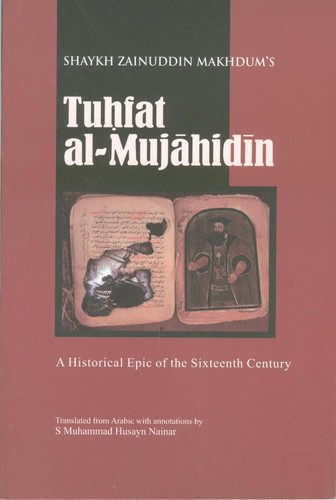
Tuhfat al-Mujahidin
Literally work by Zayn al-Dīn al-Malībarī
Khulasat-ut-Tawarikh
Khulasat-ut-Tawarikh (, "Epitome of History") is a Persian language chronicle written by Sujan Rai Bhandari in the Mughal Empire of present-day India. It deals with the history of Hindustan (northern Indian subcontinent), and it also contains details about the contemporary Mughal Empire. Sujan Rai completed the book in 1695 CE, during the reign of Aurangzeb. An insertion about Aurangzeb's death was later added to the original copy by a transcriber.
Tarikh-i-Dawudi
The Tārīkh-i-Dāwūdī () is a 16th-century Persian language document recording the administration of various Pashtun dynasties in South Asia. It was written by a historian named Abdullah. It starts with the Sultan Bahlul Khan Lodi of the Lodi dynasty of Delhi and ends with Sultan Daud Khan Karrani of the Karrani dynasty of Bengal. Information relating to the Afghan Sur dynasty can also be found in the book. Other than these Afghan dynasties, the book also contains poetry as well as a history of the Jaunpur Sultanate. The book is named after, dedicated to and was written at the court of Daud Khan
Jawami ul-Hikayat
Wikimedia list article
Krista Purana
book by Thomas Stephens