Category
page 1Indian nationalists
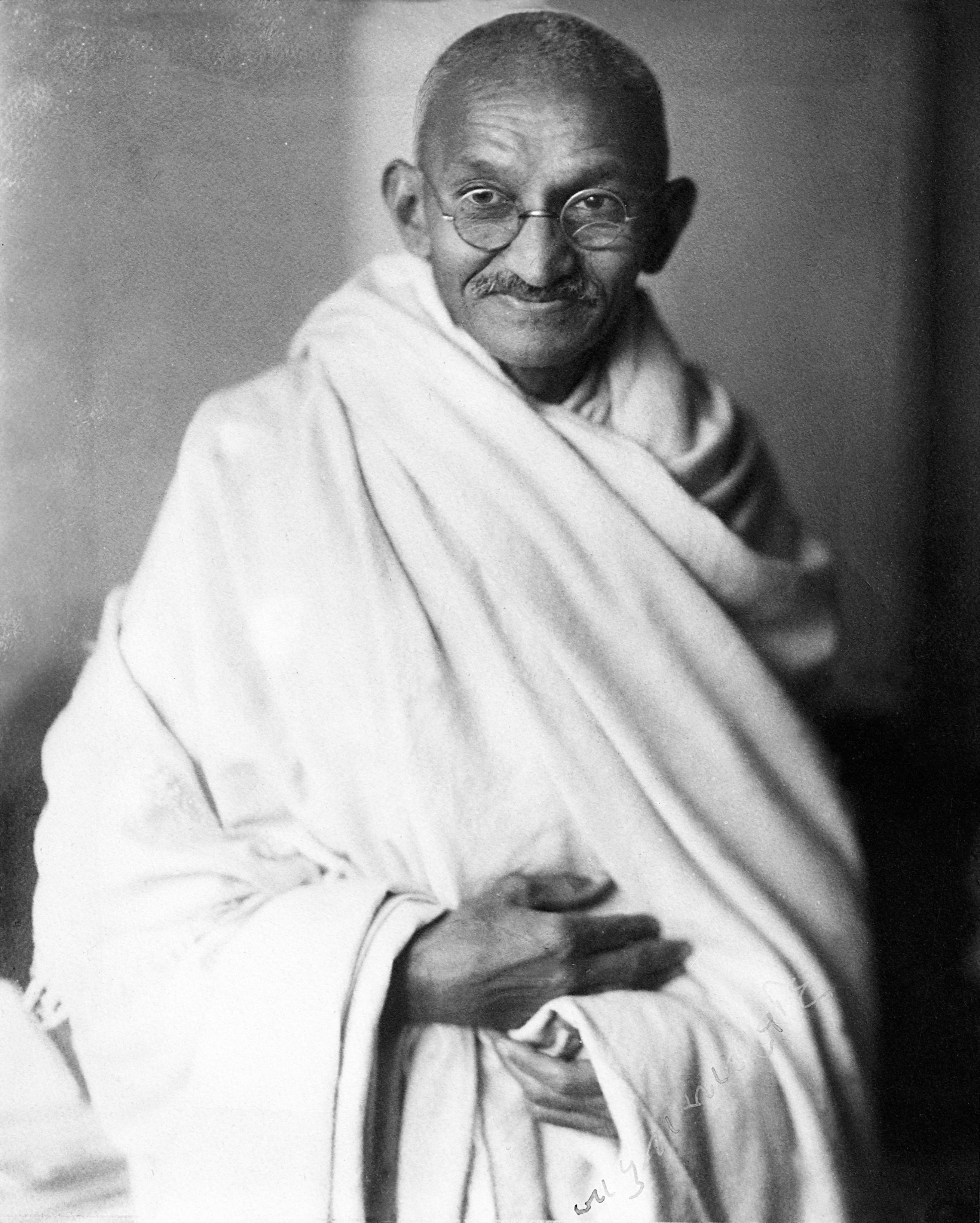
Mahatma Gandhi
Mohandas Karamchand Gandhi was an Indian lawyer, anti-colonial nationalist and political ethicist who employed nonviolent resistance to lead the successful campaign for India's independence from British rule, and to later inspire movements for civil rights and freedom across the world. The honorific Mahātmā, first applied to him in 1914 in South Africa, is now used throughout the world.

Jawaharlal Nehru
Jawaharlal Nehru was an Indian anti-colonial nationalist, secular humanist, social democrat, and statesman who was a central figure in India during the middle of the 20th century. Nehru was a principal leader of the Indian nationalist movement in the 1930s and 1940s. Upon India's independence in 1947, he served as the country's first prime minister for 16 years. Nehru promoted parliamentary democracy, secularism, and science and technology during the 1950s, powerfully influencing India's arc as a modern nation. In international affairs, he steered India clear of the two blocs of the Cold War. A well-regarded author, he wrote books such as Letters from a Father to His Daughter (1929), An Autobiography (1936) and The Discovery of India (1946), that have been read around the world.

Narendra Modi
Narendra Damodardas Modi is an Indian politician who has served as the prime minister of India since 2014. Modi was the chief minister of Gujarat from 2001 to 2014 and is the member of parliament (MP) for Varanasi. He is a member of the Bharatiya Janata Party (BJP) and of the Rashtriya Swayamsevak Sangh (RSS), a right-wing Hindutva paramilitary volunteer organisation. He is the longest-serving prime minister outside the Indian National Congress.

B. R. Ambedkar
Bhimrao Ramji Ambedkar was an Indian jurist, economist, social reformer and politician who chaired the committee that drafted the Constitution of India based on the debates of the Constituent Assembly of India and the first draft of Sir Benegal Narsing Rau. Ambedkar served as Law and Justice minister in the first cabinet of Jawaharlal Nehru. He later renounced Hinduism and converted to Buddhism, inspiring the Dalit Buddhist movement.

Sardar Vallabhbhai Patel
Indian barrister, leader of the Indian National Congress and founding father of the Republic of India (1875-1950)

Subhas Chandra Bose
Indian nationalist leader (1897-1945)

Abul Kalam Azad
Indian politician and writer (1888–1958)

Bal Gangadhar Tilak
Indian self-rule activist (1856–1920)

Bhagat Singh
Indian revolutionary (1907–1931)

Abdul Ghaffar Khan
Pashtun independence activist against British rule in India

C. Rajagopalachari
Indian politician and activist (1878–1972)

Lala Lajpat Rai
Indian author and politician (1865-1928)

Chandra Shekhar Azad
Indian activist and socialist and revolutionary, freedom fighter and social reformer (1906–1931)
Vengalil Krishnan Krishna Menon
Indian politician (1896-1974)
K.Kamarajar
Indian politician (1903-1975)
M. S. Golwalkar
Second Sarsanghchalak of the Rashtriya Swayamsevak Sangh
Sayajirao Gaekwad III
Indian Maharaja (1863–1939)
Ashfaqulla Khan
Indian poet and fighter for independence (1900-1927)
Rajnarayan Basu
Indian writer

Sardar Ajit Singh
Indian dissident
Suhasini Ganguly
Indian freedom fighter (1909–1965)
Abdul Samad Khan Achakzai
Nationalist, political leader (1907–1973)
Basanta Kumar Biswas
Indian revolutionary
Maghfoor Ahmad Ajazi
Indian freedom fighter and political activist (1900-1966)
Elvish Yadav
Indian YouTuber
Hemchandra Kanungo
Indian Bengali revolutionary
Haripada Chattopadhyay
Indian politician
Vakkom Majeed
Political leader (1909-2000)
Birendranath Sasmal
Indian politician and nationalist barrister (1881-1934)
Abraham Barak Salem
Indian activist