Category
page 1Indigenous American philosophy
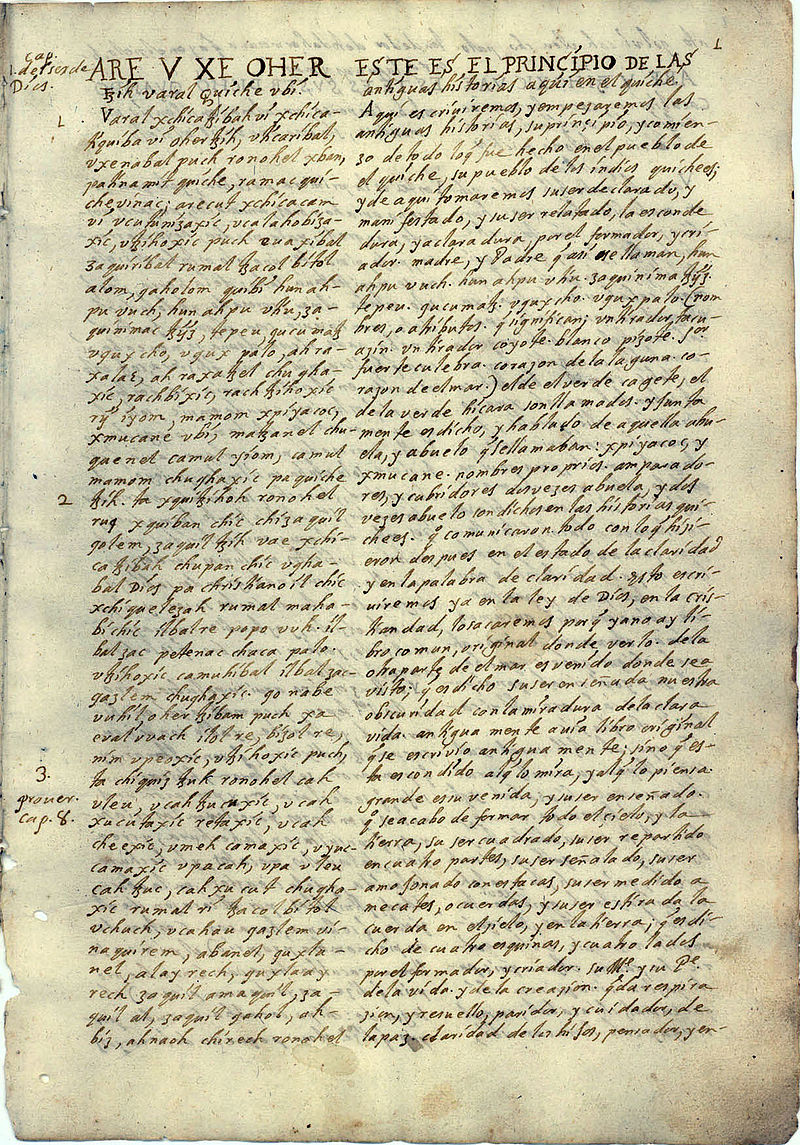
Popol Vuh
sacred text of the Maya
Dresden Codex
Pre-columbian Maya astronomic manuscript from Chichen Itza, Mexico

Winona LaDuke
author and activist

John Trudell
Native American rights activist, musician, poet, and actor (1946-2015)

Huaca
thumb|300px|Coricancha museum marker graphically explaining the Inca Wakas and Seqes system
thumb|300px|Coricancha museum marker describing the Inca Wakas and Seqes system
In the Quechuan languages of South America, a huaca or '''wak'a' is an object that represents something revered, typically a monument of some kind. The term huaca can refer to natural locations, such as immense rocks. Some huacas have been associated with veneration and ritual. The Quechua people traditionally believed every object has a physical presence and two camaquen'' (spirits), one to create it and another to animate
Huarochirí Manuscript
manuscript
Indigenous American philosophy
philosophies of the first inhabitants of the Americas
tonal
belief found in many indigenous Mesoamerican cultures that a person upon being born acquires a close spiritual link to an animal, a link that lasts throughout the lives of both creatures
Yanantin
thumbnail|Visualization of dualism in Chavín culture
Pacaritambo
mythical place in Incan mythology
Ayni
Ayni (Quechua and Aymara; also spelled Ayniy or Aini) can refer to either the concept of reciprocity or mutualism among people of the Andean mountain communities or the practice of this concept. As a noun, the law of ayni states that everything in the world is connected, and is the only commandment that rules daily life in many communities like the Q'ero. As a verb, this often refers to the cooperation between the members of a community when one member gives to another, he or she is entitled to receive something back. Well-known practitioners of Ayni include the Quechuas and Aymara, as well as
ethnophilosophy
Ethnophilosophy is the study of indigenous philosophical systems. The implicit concept is that a specific culture can have a philosophy that is not applicable and accessible to all peoples and cultures in the world; however, this concept is disputed by traditional philosophers. It has been criticised as an aspect of ethnology, rather than philosophy which is undertaken by the individual.