Category
page 1Indigenous peoples in Chile

Mapuche
The Mapuche ( , ), also known as Araucanians, are a group of Indigenous inhabitants of south-central Chile and southwestern Argentina, including parts of Patagonia. The collective term refers to a wide-ranging ethnicity composed of various groups who share a common social, religious, and economic structure, as well as a common linguistic heritage as Mapudungun speakers. Their homelands once extended from Choapa Valley to the Chiloé Archipelago and later spread eastward to Puelmapu, a land comprising part of the Argentine pampa and Patagonia. Today, the Mapuche represent 77.16% of Chile’s indig

Quechua people
ethnic group indigenous to South America
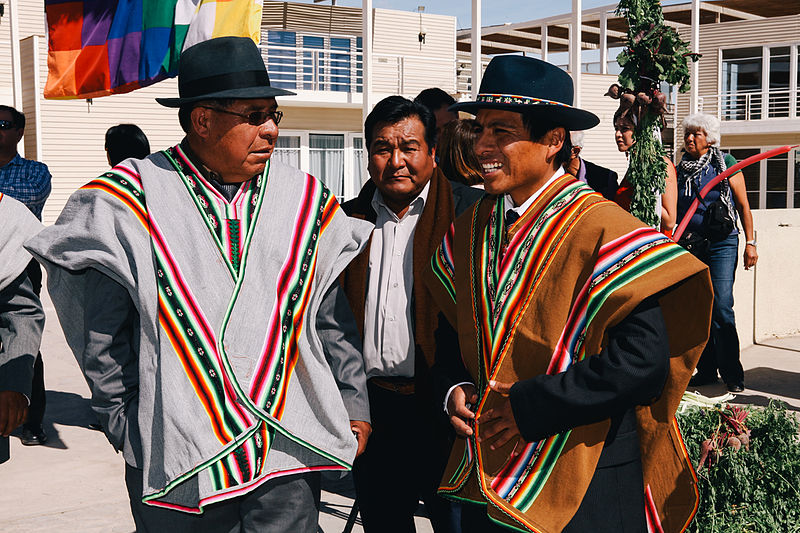
Aymara
indigenous people in the Andes and Altiplano regions of South America
Tehuelche
indigenous people from Patagonia
Rapa Nui people
native Polynesian inhabitants of Easter Island, Chile

Kawésqar
thumb|right|220px|A Kawésqar woman selling handicrafts to tourists in Villa Puerto Edén, Chile.
The Kawésqar, also known as the Kaweskar, Alacaluf, Alacalufe or Halakwulup, are an Indigenous people who live in Chilean Patagonia, specifically in the Brunswick Peninsula, and Wellington, Santa Inés, and Desolación islands northwest of the Strait of Magellan and south of the Gulf of Penas. Their traditional language is known as Kawésqar, a word that means “person” or “human being”; it is endangered as few native speakers survive.
Atacameños
indigenous people from the Atacama Desert

Wichís
The Wichí are an indigenous people of South America. They comprise a large group of tribes inhabiting the headwaters of the Bermejo and Pilcomayo rivers in Argentina and Bolivia.
Chono people
ethnic group

Diaguitas
The Diaguita people are a group of South American Indigenous people native to the Chilean Norte Chico and the Argentine Northwest. Western or Chilean Diaguitas lived mainly in the Transverse Valleys that incise semi-arid mountains. Eastern or Argentine Diaguitas lived in the provinces of La Rioja and Catamarca and part of the provinces of Salta, San Juan and Tucumán. The term Diaguita was first applied to peoples and archaeological cultures by Ricardo E. Latcham in the early 20th century.

Pehuenche
thumb|Flag

Picunche
The Picunche (a Mapudungun word meaning "North People"), also referred to as picones by the Spanish, were a Mapudungun-speaking people living to the north of the Mapuches or Araucanians (a name given to those Mapuche living between the Itata and Toltén rivers) and south of the Choapa River and the Diaguitas. Until the Conquest of Chile the Itata was the natural limit between the Mapuche, located to the south, and Picunche, to the north. During the Inca attempt to conquer Chile the southern Picunche peoples that successfully resisted them were later known as the Promaucaes.
Chango people
ethnic group
Colla People
The Qulla (Quechuan for south, Hispanicized and mixed spellings: Colla, Kolla) are an Indigenous people of western Bolivia, northern Chile, and the western portions of Jujuy and Salta provinces in Argentina. The 2004 Complementary Indigenous Survey reported 53,019 Qulla households living in Argentina. They moved freely between the borders of Argentina and Bolivia. While mostly living in arid highlands, their easternmost lands are part of the yungas, an altitude forests at the edge of the Amazon rainforest.
Patagon
thumb|200px|right|1840s (fanciful) illustration of a Patagon chief from near the Strait of Magellan, bedecked in costume of war; from ''Voyage au pôle Sud et dans l'Océanie...'' by French explorer [[Jules Dumont d'Urville]]
The Patagons or Patagonian giants were a mythical race of giant humans rumoured to be living in Patagonia described in early European accounts. They were said to have exceeded at least double normal human height, with some accounts giving heights of or more. Tales of these people maintained a hold upon European conceptions of the region for nearly 300 years.
Huarpe people
The Huarpes or Warpes are an Indigenous people of Argentina, living in the Cuyo region. Some scholars assume that in the Huarpe language, this word means "sandy ground", but according to Arte y Vocabulario de la lengua general del Reino de Chile, written by Andrés Febrés in Lima in 1765, the word Cuyo comes from Araucanian cuyum puulli, meaning "sandy land" or "desert country".
Cunco people
ethnic subgroup native to southern Chile
Capayán
The Capayán were an Indigenous people, now extinct, that lived in Argentine territory.
indigenous peoples in Chile
part of population of Chile
Poya people
South American people
Yanaconas
Yanakuna were originally individuals in the Inca Empire who left the ayllu system and worked full-time at a variety of tasks for the Inca, the quya (Inca queen), or the religious establishment. A few members of this serving class enjoyed high social status and were appointed officials by the Sapa Inca. They could own property and sometimes had their own farms, before and after the conquest. The Spanish continued the yanakuna tradition developing it further as yanakuna entered Spanish service as Indian auxiliaries or encomienda Indians.
Moluche people
The Moluche ("people from where the sun sets" or "people from the west") or Nguluche are an Indigenous people of Chile. Their language was a dialect of Mapudungun, a Mapuche language. At the beginning of the Conquest of Chile by the Spanish Empire the Moluche lived in what came to be known as Araucanía. The Moluche were called Araucanos ("Araucanians") by the Spanish.
Caucahue
Caucahue is an ethnonym used by the Chono, the Huilliche and Spanish of Chiloé for a group of canoe-faring people that inhabited the archipelagoes south of the Gulf of Penas. The term is one of the various ethnonyms recorded by the Spanish in the 18th century in the fjords and channels of Patagonia. The Caucahue spoke a different language from the Chono. Archaeologist Ricardo Alvarez posits that the Caucahue and other groups appeared relatively late in colonial records because this was the time when contact became more common. Alvarez also posits the Caucahue disappeared from the historical re