Category
page 1Indo-European peoples
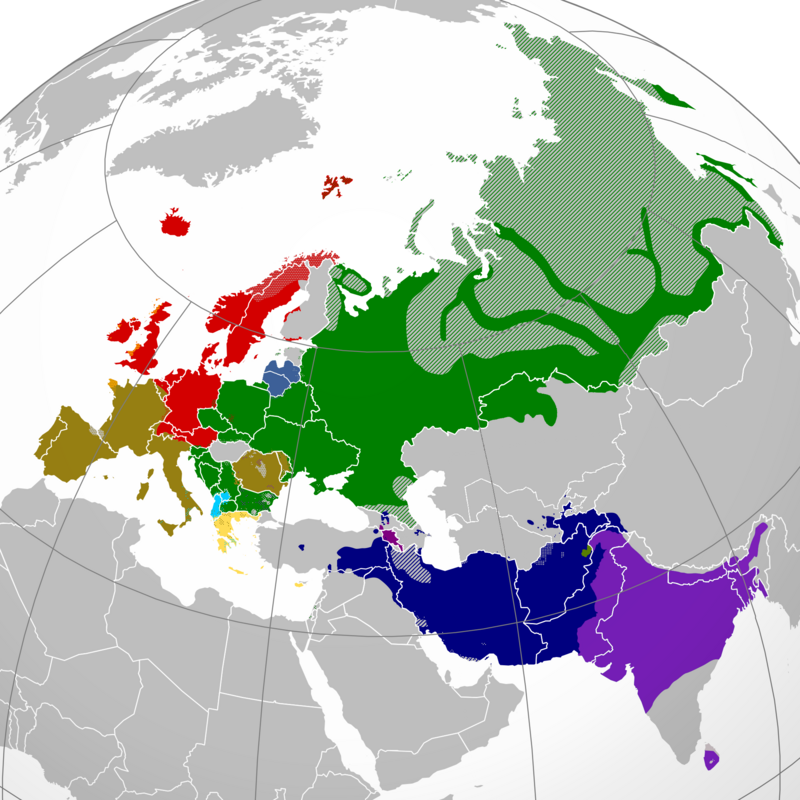
Indo-European
language family native to western and southern Eurasia— Europe, Iran and India

Armenians

Greeks
The Greeks or Hellenes (; , ) are an ethnic group and nation native to Greece, Cyprus, southern Albania, Turkey, southern parts of Italy, parts of Egypt, and to a lesser extent, other countries surrounding the Eastern Mediterranean and Black Sea. They also form a significant diaspora (), with many Greek communities established around the world.
.svg)
Slavs
The Slavs or Slavic people are groups of people who speak Slavic languages. Slavs are geographically distributed throughout the northern parts of Eurasia; they predominantly inhabit Central Europe, Eastern Europe, Southeastern Europe, and Northern Asia, though there is a large Slavic minority scattered across the Baltic states and Central Asia, and a substantial Slavic diaspora in the Americas, Western Europe, and Northern Europe.
alt=|thumb|Contemporary map of the Slavic people|Slavic speaking countries of [[Europe.

Germanic people
Indo-European ethnolinguistic group

Albanians
The Albanians are an ethnic group and nation native to the Balkan Peninsula who share a common Albanian ancestry, culture, history and language. They are the main ethnic group of Albania and Kosovo, and they also live in the neighboring countries of North Macedonia, Montenegro, Greece, and Serbia, as well as in Italy, Croatia, Bulgaria, and Turkey. Albanians also constitute a large diaspora with several communities established across Europe and other continents.

Thracians
thumb|250px|Bronze head of Seuthes III from his tomb The Thracians (; ; or Θρήϊκες in Ionic Greek) were an Indo-European speaking people who inhabited large parts of Southeast Europe in ancient history. Thracians resided mainly in Southeast Europe in modern-day Bulgaria, Romania, North Macedonia, northern Greece and European Turkey, but also in north-western Anatolia (Asia Minor) in Turkey.

Illyrians
thumb|upright=1.3|right|Illyrian tribes in the 1st–2nd centuries AD
The Illyrians (, ; ) were a group of Indo-European-speaking people who inhabited the western Balkan Peninsula in ancient times. They constituted one of the three main Paleo-Balkan populations, along with the Thracians and Greeks.
.jpg)
Tocharians
The Tocharians or Tokharians ( ; ) were speakers of the Tocharian languages, a group of Indo-European languages known from around 7,600 documents from the 6th and 7th centuries, found on the northern edge of the Tarim Basin (modern-day Xinjiang, China). The name "Tocharian" was given to these languages in the early 20th century by scholars who identified their speakers with a people known in ancient Greek sources as the Tókharoi (), who inhabited Bactria from the 2nd century BC. This identification is now generally considered erroneous, but the name "Tocharian" remains the most common term for
Balts
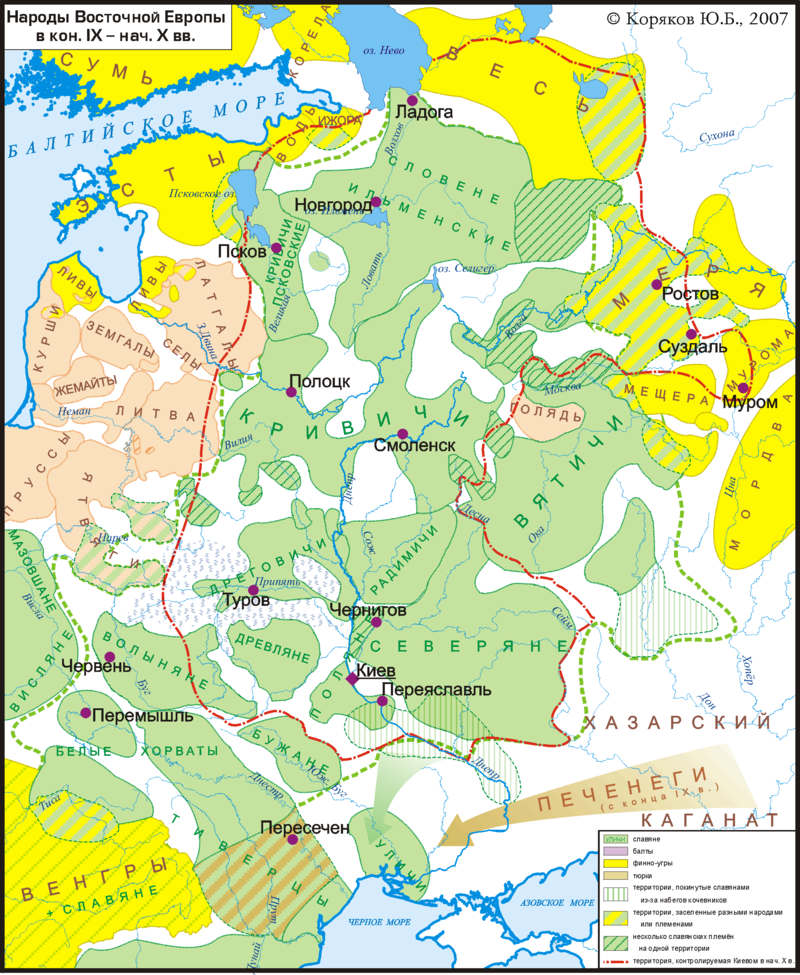
The Balts or Baltic peoples (, ) are a group of peoples inhabiting the eastern coast of the Baltic Sea who speak Baltic languages. Among the Baltic peoples are modern-day Lithuanians (including Samogitians) and Latvians (including Latgalians) — all East Balts — as well as the Old Prussians, Curonians, Sudovians, Skalvians, Yotvingians and Galindians — the Western Balts — whose languages and cultures are now extinct, but made a large influence on the living branches, especially on literary Lithuanian language.

Gaels
The Gaels are a group of Insular Celtic ethnic groups native to Ireland, parts of Scotland, and the Isle of Man, and historically, Iceland and the Faroe Islands. They are associated with the Gaelic languages: a branch of the Celtic languages comprising Irish, Manx, and Scottish Gaelic.

Proto-Indo-Europeans
The Proto-Indo-Europeans are a postulated prehistoric ethnolinguistic group of Eurasia who spoke Proto-Indo-European (PIE), the reconstructed common ancestor of the Indo-European language family.

Yuezhi
The Yuezhi were an ancient people first described in Chinese histories as nomadic pastoralists living in an arid grassland area in the western part of the modern Chinese province of Gansu, during the 1st millennium BC. After a major defeat at the hands of the Xiongnu in 176 BC, the Yuezhi split into two groups migrating in different directions: the Greater Yuezhi and Lesser Yuezhi. This started a complex domino effect that radiated in all directions and, in the process, set the course of history for much of Asia for centuries to come.
Italic peoples
peoples who are or were native speakers of an Italic language, and are or were related to one of them
Adriatic Veneti
ancient people

Lusitanians
The Lusitanians were an Indo-European-speaking people living in the far west of the Iberian Peninsula, in present-day central Portugal and the regions of Extremadura and Castilla y León of Spain. It is uncertain whether the Lusitanians were Celts or Celticized Iberians, related to the Lusones. After its conquest by the Romans, the land was subsequently incorporated as a Roman province named after them (Lusitania).

Wusun
The Wusun ( ) were an ancient semi-nomadic steppe people mentioned in Chinese records from the 2nd century BC to the 5th century AD.

Phrygians
thumb|Phrygians

Indo-Iranians
thumb|Map displaying the origins of the Proto-Indo-Iranian (Ā́rya/Aryan) Sintashta culture as a migration of peoples from the Bronze Age European [[Corded Ware culture through the Fatyanovo-Balanovo culture]]
thumb|The Sintashta-Petrovka culture (red) expanded into the [[Andronovo culture (orange) in the 2nd millennium BC, overlapping the Oxus civilization (green) in the south; it includes the area of the earliest chariots (pink).]]

Dardani
The Dardani (; ; ) or Dardanians were a Paleo-Balkan people, who lived in a region that was named Dardania after their settlement there. They were among the oldest Balkan peoples, and their society was very complex. The Dardani were the most stable and conservative ethnic element among the peoples of the central Balkans, retaining an enduring presence in the region for several centuries.

Kangju
Kangju (; Eastern Han Chinese: kʰɑŋ-kɨɑ < *khâŋ-ka (c. 140 BCE)) was the Chinese name of a kingdom in Central Asia during the first half of the first millennium CE. The name Kangju is now generally regarded as a variant or mutated form of the name Sogdiana. According to contemporaneous Chinese sources, Kangju was the second most powerful state in Transoxiana, after the Yuezhi. Its people, known in Chinese as the Kāng (康), were evidently of Indo-European origins, spoke an Eastern Iranian language, and had a semi-nomadic way of life. The Sogdians may have been the same people as those of Kangju
Vistula Veneti
historical ethnical group

Seres
thumb|400px|A mid-15th century Republic of Florence|Florentine world map based on the 1st (modified conic) projection in [[Jacobus Angelus's 1406 Latin translation of Maximus Planudes's late-13th century rediscovered Greek manuscripts of Ptolemy's 2nd-century Geography. Serica is shown in the far northeast of the world.]]
Ordos culture
archaeological culture
Anatolians
Indo-European ethnolinguistic group
.svg)
Paeonians
thumb|350px|Paeonians and the Kingdom of Macedon.