Category
page 1Inorganic pigments

malachite
Malachite () is a copper carbonate hydroxide mineral, with the formula Cu2CO3(OH)2. This opaque, green-banded mineral crystallizes in the monoclinic crystal system, and most often forms botryoidal, fibrous, or stalagmitic masses, in fractures and deep, underground spaces, where the water table and hydrothermal fluids provide the means for chemical precipitation. Individual crystals are rare, but occur as slender to acicular prisms. Pseudomorphs after more tabular or blocky azurite crystals also occur.
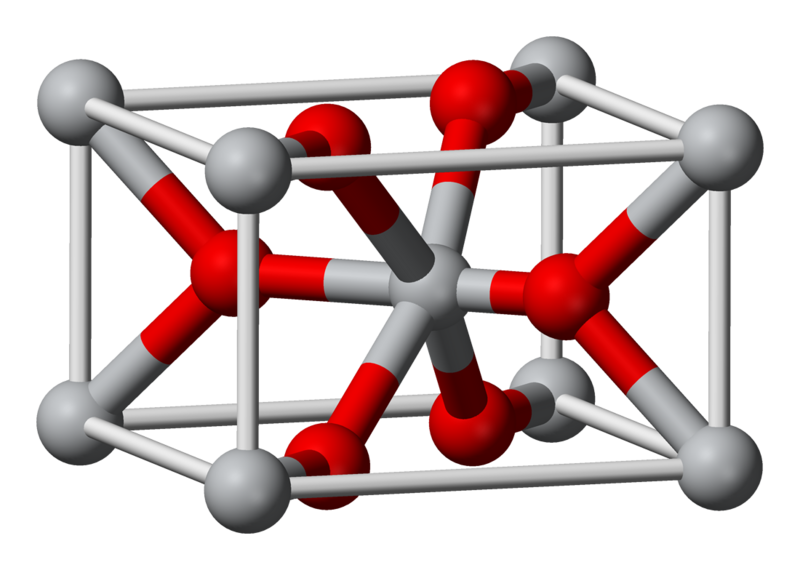
titanium dioxide
chemical compound

zinc oxide
ZnO is a white powder insoluble in water

barium sulfate
inorganic compound

realgar
Realgar ( ), also known as arsenic blende, ruby sulphur or ruby of arsenic, is an arsenic sulfide mineral with the chemical formula . It is a soft mineral occurring in monoclinic crystals, or in granular, compact, or powdery form, often in association with the related mineral, orpiment (). It is orange-red in color, and burns with a bluish flame releasing fumes of arsenic and sulfur. It is trimorphous with pararealgar and bonazziite.

Prussian blue
dark blue pigment

orpiment
Orpiment, also known as yellow arsenic blende, is a deep-colored, orange-yellow arsenic sulfide mineral with formula . It is found in volcanic fumaroles, low-temperature hydrothermal veins, and hot springs and may be formed through sublimation.

ultramarine
Ultramarine is a deep blue pigment which was originally made by grinding lapis lazuli into a powder. Its lengthy grinding and washing process makes the natural pigment quite valuable—roughly ten times more expensive than the stone it comes from. Between the 14th and 15th centuries, it was as expensive as gold in Europe.
manganese dioxide
chemical compound

vermilion
thumb|The Venetian painter Titian used vermilion for dramatic effect. In the Assumption of the Virgin (1516–18), the vermilion robes draw the eye to the main characters.
thumb|A Chinese "cinnabar red" carved lacquer box from the Qing dynasty (1736–1795), [[National Museum of China, Beijing]]
lead(II,IV) oxide
chemical compound
dichromium trioxide
chemical compound

carbon black
chemical substance
antimony trioxide
chemical compound
white lead
chemical compound
glauconite
Glauconite is an iron potassium phyllosilicate (mica group) mineral of characteristic green color which is very friable and has very low weathering resistance.
cadmium sulfide
chemical compound
cobalt blue
color
Egyptian blue
color

verdigris
Verdigris () is a common name for any of a variety of somewhat toxic copper salts of acetic acid, which range in colour from green to a bluish-green depending on their chemical composition. Once used as a medicine and pharmaceutical preparation, verdigris occurs naturally, creating a patina on copper, bronze, and brass, and is the main component of a historic green pigment used for artistic purposes from antiquity until the late 20th century, including in easel painting, polychromatic sculptures, and illumination of maps. However, due to its instability, its popularity declined as other green
zinc phosphate
chemical compound
calcium chromate
chemical compound
cerulean
{| align="right"
|+ Cerulean as a quaternary color on the RYB color wheel
|
|-
|
|-
|
|}
cupric arsenite
yellowish-green pigment no longer in wide use
Lithopone
Lithopone, C.I. Pigment White 5, is a mixture of inorganic compounds, widely used as a white pigment powder. It is composed of a mixture of barium sulfate and zinc sulfide. These insoluble compounds blend well with organic compounds and confer opacity. It was made popular by the cheap production costs, greater coverage. Related white pigments include titanium dioxide, zinc oxide ("zinc white"), zinc sulfide, and white lead.
cobalt(II) phosphate
chemical compound
strontium chromate
chemical compound
-oxide-sample.jpg)
viridian
thumb|right|Chromium(III) oxide sample
thumb|Viridian (Pigment Green 18), left 3 smears; and Phthalocyanine Green (Pigment Green 7), right 3 smears
Viridian is a blue-green pigment, a hydrated chromium(III) oxide, of medium saturation and relatively dark in value. It is composed of a majority of green, followed by blue. The first recorded use of viridian as a color name in English was in the 1860s. Viridian takes its name from the Latin , meaning "green". The pigment was first prepared in mid-19th-century Paris and remains available from several US manufacturers as prepared artists' colors in
barium metaborate
chemical compound
Naples yellow
lead-antimonate yellow inorganic pigment used in paintings
chrome yellow
chemical compound and pigment
minium
naturally occurring mineral form of lead tetroxide
cadmium pigments
class of pigments that have cadmium as one of the chemical components
chrome orange
chemical compound
cobalt green
chemical compound

YInMn Blue
inorganic blue pigment

bismuth vanadate
chemical compound
zaffre
Zaffre (also spelt Zaffer in American English, see spelling differences), a prescientific, or alchemical substance, is a deep blue pigment obtained by roasting cobalt ore, and is made of either an impure form of cobalt oxide or impure cobalt arsenate. During the Victorian Era, zaffre was used to prepare smalt and to stain glass blue.
aureolin
Aureolin (sometimes called cobalt yellow) is a pigment sparingly used in oil and watercolor painting. Its color index name is PY40 (40th entry on list of yellow pigments). It was first made in 1831 by Nikolaus Wolfgang Fischer in Breslau characterizing it as "Doppelsalze" or double-salts and its chemical composition is potassium cobaltinitrite. He characterized it again and wrote more extensively about it in 1842, naming it "Salpetrichtsaures Kobaltoxydkali". In 1851–1852, Edouard Saint-Evre synthesized cobalt yellow independently. He is credited with the introduction of cobalt yellow as an ar
manganese violet
chemical compound
green earth
green/brown pigment obtained from minerals
Venetian ceruse
cosmetic product
zinc white
white pigment
minium
pigment
purple of Cassius
inorganic pigment
Persian red
color
dicerium trisulfide
chemical compound
Han purple and Han blue
artificial barium copper silicate pigments developed in ancient China during the Han dynasty
lead-tin yellow
yellow pigment, of historical importance in oil painting
Payne's grey
dark blue-grey colour used in painting
list of inorganic pigments
Wikimedia list article
titanium white
white pigment invented in the 20th century
titanium yellow
nickel antimony titanium yellow pigment