Category
page 1Insect suborders

Caelifera
The Caelifera are a suborder of orthopteran insects. They include the grasshoppers and grasshopper-like insects, as well as other superfamilies classified with them: the ground-hoppers (Tetrigoidea) and pygmy mole crickets (Tridactyloidea). The latter should not be confused with the mole crickets (Gryllotalpidae), which belong to the other Orthopteran suborder Ensifera.

Heteroptera
The Heteroptera are a group of about 40,000 species of insects in the order Hemiptera. They are sometimes called "true bugs", though that name more commonly refers to the Hemiptera as a whole. "Typical bugs" might be used as a more unequivocal alternative, since the heteropterans are most consistently and universally termed "bugs" among the Hemiptera. "Heteroptera" is Greek for "different wings": most species have forewings with both membranous and hardened portions (called hemelytra); members of the primitive sub-group Enicocephalomorpha have completely membranous wings.

Apocrita
Apocrita is a suborder of insects in the order Hymenoptera. It includes wasps, bees, and ants, and consists of many families. It contains the most advanced hymenopterans and is distinguished from Symphyta by the narrow "waist" (petiole) formed between the first two segments of the actual abdomen; the first abdominal segment is fused to the thorax, and is called the propodeum. Therefore, it is general practice, when discussing the body of an apocritan in a technical sense, to refer to the mesosoma and metasoma (or gaster) rather than the "thorax" and "abdomen", respectively. The evolution of a

Brachycera
The Brachycera are a suborder of the order Diptera. It is a major suborder consisting of around 120 families. Their most distinguishing characteristic is reduced antenna segmentation.
Nematocera
thumb|Swarming nematocera flies.
The Nematocera (nemato+cera meaning "thread-horns") are a suborder of elongated flies with thin, segmented antennae and mostly aquatic larvae. This group is paraphyletic, containing all flies except for those of the suborder Brachycera (the name meaning "short-horns"), which includes species such as the housefly or the common fruit fly. Thus, the equivalent clade to Nematocera would be the whole of Diptera, with Brachycera as a "subclade". Families in Nematocera include mosquitoes, crane flies, gnats, black flies, and multiple families commonly known as midges.

Polyphaga
Polyphaga is the largest and most diverse suborder of beetles. It comprises 144 families in 16 superfamilies, and displays an enormous variety of specialization and adaptation, with over 350,000 described species, or approximately 90% of the beetle species discovered thus far.

Ensifera
Ensifera is a suborder of insects that includes the various types of crickets and their allies, including true crickets, camel crickets, bush crickets or katydids, grigs, wētā, and Cooloola monsters. This and the suborder Caelifera (grasshoppers and their allies) make up the order Orthoptera. Ensifera is believed to be a more ancient group than Caelifera, with its origins in the Carboniferous period, the split having occurred at the end of the Permian period. Unlike the Caelifera, the Ensifera contain numerous members that are partially carnivorous, feeding on other insects, as well as plants.

Adephaga
thumb|Image by Harold Maxwell-Lefroy - Adephaga
The Adephaga (from Greek ἀδηφάγος, adephagos, "gluttonous") are a suborder of beetles, and with more than 40,000 recorded species in 10 families, the second-largest of the four beetle suborders. Members of this suborder are collectively known as adephagans. The largest family is Carabidae (ground beetles) which comprises most of the suborder with over 40,000 species. Adephaga also includes a variety of aquatic beetles, such as predaceous diving beetles and whirligig beetles.

Auchenorrhyncha
The Auchenorrhyncha suborder of the Hemiptera contains most of the familiar members of what was called the "Homoptera" – groups such as cicadas, leafhoppers, treehoppers, planthoppers, and spittlebugs. The aphids and scale insects are the other well-known "Homoptera", and they are in the suborder Sternorrhyncha.

Sternorrhyncha
The Sternorrhyncha suborder of the Hemiptera contains the aphids, whiteflies, and scale insects, groups which were traditionally included in the now-obsolete order "Homoptera". The name "Sternorrhyncha" refers to the rearward position of the mouthparts relative to the head.
Archostemata
The Archostemata are the smallest suborder of beetles, consisting of 50 living species in five families and over 200 described fossil species. They are an ancient lineage with a number of primitive characteristics. Antennae may be thread-shaped (filiform) or like a string of beads (moniliform). This suborder also contains the only beetles where both sexes are paedogenic, Micromalthus debilis. Modern archostematan beetles are considered rare, but were more diverse during the Mesozoic.
Myxophaga
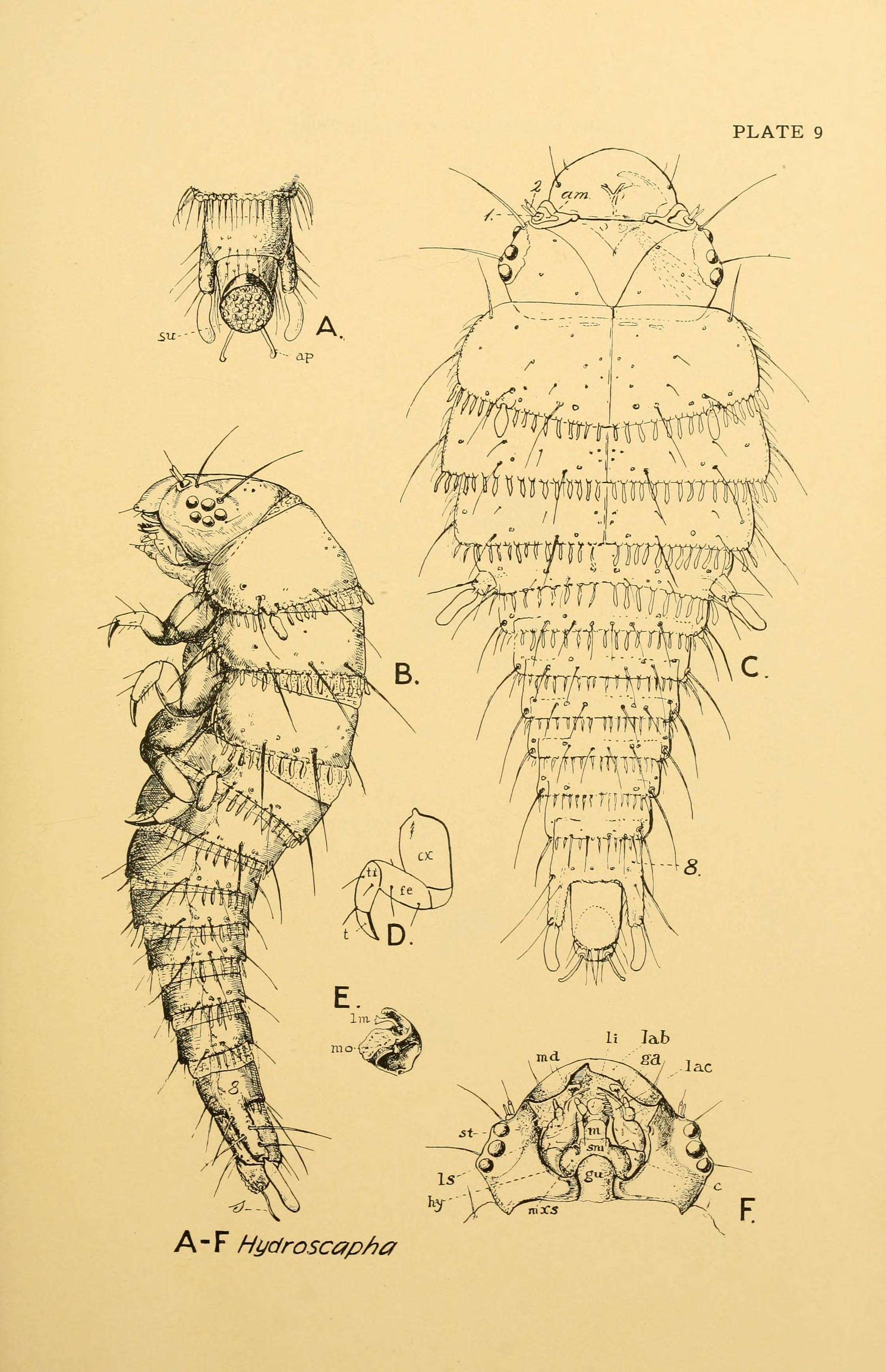
Myxophaga is the second-smallest suborder of the Coleoptera after Archostemata, consisting of roughly 65 species of small to minute beetles in four families. The members of this suborder are aquatic and semiaquatic, and feed on algae.
Glossata
Glossata (Fabricius, 1775) is a suborder of the Lepidoptera, containing all members that have a coilable proboscis; i.e., it includes all butterflies and the vast majority of moth species. The only non-Glossatan moths are in the suborders Aglossata, Heterobathmiina, and Zeugloptera.

Epiprocta
Epiprocta, also called Epiproctophora, is one of the two extant suborders of the Odonata, which contains living dragonflies (Anisoptera), as well as Epiophlebioptera, which has a single known living genus Epiophlebia. Crown group Epiprocta first appeared during the Early Jurassic. It was proposed in 1992 by Heinrich Lohmann to accommodate the inclusion of the Anisozygoptera. The latter has been shown to be not a natural suborder, but rather a paraphyletic collection of lineages, so it has been combined with the previous suborder Anisoptera, the well-known dragonflies, into the Epiprocta. The o
Verophasmatodea
The Euphasmatodea, also known by its junior synonym Verophasmatodea is a suborder of the Phasmatodea, which contains the vast majority of the extant species of stick and leaf insects, excluding the Timematodea. The oldest record of Euphasmatodea is Araripephasma from the Crato Formation of Brazil, dating to the Aptian stage of the Early Cretaceous.
Terebrantia
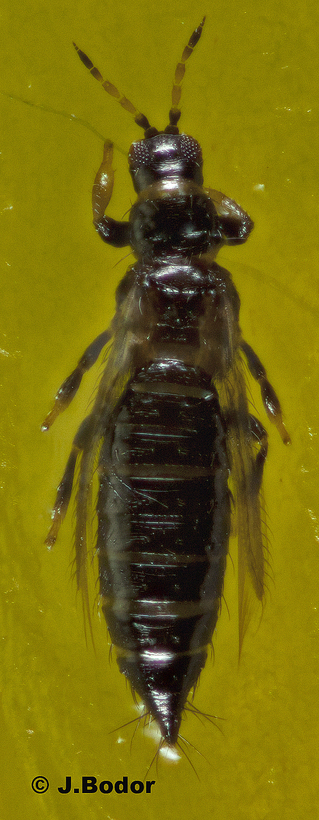
Terebrantia is a suborder of thrips (order Thysanoptera). Order Thysanoptera includes 5,500 species classified into two suborders distinguished by the ovipositor. Terebrantia have a well-developed conical ovipositor, while the Tubulifera do not. It contains 13 families, five of which are only known from fossils. Members of Terebrantia mainly feed on plants. All have two larval instars followed by two pupal instars.
Monura
REDIRECT Dasyleptus
Coleorrhyncha
Coleorrhyncha or Peloridiomorpha, also known as moss bugs or beetle bugs, are a suborder of Hemiptera and represent an ancient lineage of moss-feeding insects. They show some similarities to the Heteroptera but have been considered distinct. It has a single extant family, the Peloridiidae. They are in length, and feed on moss and liverworts. They have wings in some species which are reduced in others but all species are flightless and live in damp moss habitats and are associated with the distribution of Nothofagus trees in Australia, New Zealand, New Caledonia, and South America, which all we
Protocoleoptera
The Protocoleoptera are a paraphyletic group of extinct beetles, containing the earliest and most primitive lineages of beetles. They represented the dominant group of beetles during the Permian, but were largely replaced by modern beetle groups during the following Triassic. Protocoleopterans typically possess prognathous (horizontal) heads, distinctive elytra with regular window punctures, cuticles with tubercles or scales, as well as a primitive pattern of ventral sclerites, similar to the modern archostematan families Ommatidae and Cupedidae. They are thought to have been xylophagous and w
Integripalpia
The Integripalpia are a suborder of Trichoptera, the caddisflies. The name refers to the unringed nature of maxillary palp's terminal segment in the adults. Integripalpian larvae construct portable cases out of debris during the first larval instar, which are enlarged through subsequent instars. These cases are often very specific in construction at both the family and genus level.
Trogiomorpha
Trogiomorpha is one of the three major suborders of barklice, booklice, and parasitic lice in the order Psocodea (formerly Psocoptera), alongside Troctomorpha and Psocomorpha. There are about eight families and more than 430 described species in Trogiomorpha. Trogiomorpha is widely agreed to be the earliest diverging of the three suborders, and retains the most primitive characteristics.
thumb|Trogium pulsatorium
Psocomorpha
Psocomorpha is a suborder of barklice in the order Psocodea (formerly Psocoptera). There are more than 20 families and 5,300 described species in Psocomorpha.
thumb|Xanthocaecilius sommermanae
Troctomorpha
Troctomorpha is one of the three major suborders of Psocodea (formerly Psocoptera)(barklice, booklice, and parasitic lice), alongside Psocomorpha and Trogiomorpha. There are more than 30 families and 5,800 described species in Troctomorpha. The order includes parasitic lice, which are most closely related to the booklice family Liposcelididae.
Arctoperlaria
Arctoperlaria is a suborder of stoneflies, found globally. The Plecoptera Species File divides this suborder as follows:
Annulipalpia
The Annulipalpia, also known as the "fixed-retreat makers", are a suborder of Trichoptera, the caddisflies. The name of the suborder refers to the flexible terminal segment of the adult maxillary palps, which often has many tiny rings.
Hemerobiiformia
The Hemerobiiformia are a suborder of insects in the order Neuroptera that include most of the lacewings, antlions and their allies. The phylogeny of the Neuroptera was explored in 2014 using mitochondrial DNA sequences. The results indicate that the traditional Hemerobiiformia are paraphyletic, meaning that not all the members of the clade are considered to belong to it, in particular since it would include all the Myrmeleontiformia, with which the Hemerobiiformia were traditionally contrasted. The Osmyloidea, usually included in Hemerobiiformia, actually seem to represent a more ancient line
Archidermaptera
Archidermaptera is an extinct suborder of earwigs in the order Dermaptera. It is one of two extinct suborders of earwigs, and contains two families (Protodiplatyidae and Dermapteridae) known only from Late Triassic to Early Cretaceous fossils. There has been found that there are researched to be 3 families of Archidermaptera with the Turanoviidae being added. The suborder is classified on the basis of general similarities. The Archidermaptera share with modern earwigs tegmenized forewings, though they lack the distinctive forceps-like cerci of modern earwigs, have external ovipositors, and pos
Pisciforma
Pisciforma is a suborder of mayflies in the order Ephemeroptera. There are at least 410 described species in Pisciforma.
Pannota
Pannota is a suborder of mayflies. One of the differences between this suborder and its sister group Schistonota concerns the degree of fusion of the wing pads in the final-stage nymph; in Schistonota, the degree of fusion along the mesothorax is more than half the fore-wing length while in Pannota the degree of fusion is less than half that length. Other differences between the two groups include the morphology of the gills and also behavioural differences. Schistonota nymphs are mostly active swimmers, burrowers and sprawlers, while Pannota nymphs are more passive, slow-moving crawlers.
Prosorrhyncha
The name Prosorrhyncha is a name (proposed by Sorensen et al. 1995) for a suborder of Hemiptera, comprising a grouping of the traditional taxon "Heteroptera" plus its sister taxon, the family Peloridiidae (often classified as a suborder itself). There is no agreement on the status of this taxon, as there are two competing classifications regarding this branch of the Hemiptera; while some hemipterists follow this classification (link below), it has by no means been accepted universally. See the Heteroptera article for the detailed discussion, and a comparison of the two taxoboxes.
Timematodea
Timematodea is a small suborder of stick insects, believed to be the earliest diverging living branch of the group. It contains only one living genus, Timema, known from the western United States, as well as two fossil genera, Granosicorpes and Tumefactipes from the early Late Cretaceous (Cenomanian) aged Burmese amber of Myanmar, all three of which are assigned to the family Timematidae. Another genus, Electrotimema, from Eocene aged Baltic amber, has also been assigned to the suborder, but its precise placement is uncertain, as the diagnostic features of the tarsi were cited inconsistently,
Schistonota
Schistonota is a suborder of mayflies. One of the differences between this suborder and its sister group, Pannota, concerns the degree of fusion of the wing pads in the final-stage nymph; in Schistonota, the degree of fusion along the mesothorax is more than half the fore-wing length while in Pannota the degree of fusion is less than half that length. Other differences between the two groups include the morphology of the gills and also behavioural differences. Schistonota nymphs are mostly active swimmers, burrowers or sprawlers, while Pannota nymphs are more passive, slow-moving crawlers.