Category
page 1Internet architecture

router
device that connects computer networks
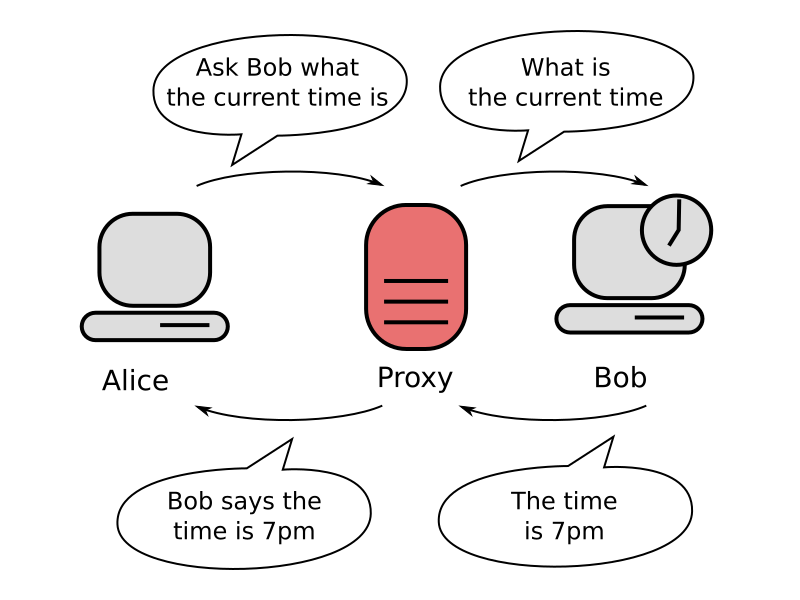
proxy server
computer server that makes and receives requests on behalf of a user

routing
Routing is the process of selecting a path for traffic in a network or between or across multiple networks. Broadly, routing is performed in many types of networks, including circuit-switched networks, such as the public switched telephone network (PSTN), and computer networks, such as the Internet.
gateway
hardware or software components that connect between two network systems

localhost
In computer networking, localhost is a hostname that refers to the current computer used to access it. The name localhost is reserved for loopback purposes.
It is used to access the network services that are running on the host via the loopback network interface. Using the loopback interface bypasses any local network interface hardware.
quality of service
traffic prioritization and measure of network performance

Border Gateway Protocol
protocol for communicating routing information on the Internet

darknet
thumb|Surface web in relation to deep web and dark web
private network
network using private IP addresses

subnet
thumb|300px|right|Creating a subnet by dividing the host identifier

multicast
right|250px
autonomous system
collection of connected Internet Protocol (IP) routing prefixes under the control of one or more network operators
Classless Inter-Domain Routing
method for IP address allocation and routing

unicast
thumb|Unicast is data transmission from a single sender (red) to a single receiver (green). Other devices on the network (yellow) do not participate in the communication.
time to live
mechanism that limits the lifespan of data in a computer or network
routing table
data table stored in a router or a networked computer; lists the routes (and sometimes distances) to particular network destinations
media type
two-part identifier for file formats and format contents transmitted on the Internet
Anycast
Anycast is a network addressing and routing methodology in which a single IP address is shared by devices (generally servers) in multiple locations. Routers direct packets addressed to this destination to the location nearest the sender, using their normal decision-making algorithms, typically the lowest number of BGP network hops. Anycast routing is widely used by content delivery networks such as web and name servers, to bring their content closer to end users.
DomainKeys Identified Mail
email authentication method designed to detect email spoofing
IP over Avian Carriers
proposal to carry IP traffic by birds
internet backbone
vital infrastructure of the networks of the Internet
loopback
Loopback (also written loop-back) is the routing of electronic signals or digital data streams back to their source without intentional processing or modification. It is primarily a means of testing the communications infrastructure.
Sender Policy Framework
simple email-validation system designed to detect email spoofing
IPv4 address exhaustion
depletion of the pool of unallocated IPv4 addresses

Internet Architecture Board
committee of the Internet Engineering Task Force and an advisory body of the Internet Society
Resource Reservation Protocol
computer network protocol
IEEE 802.1aq
IEEE standard for Shortest Path Bridging
last mile
phrase used by the communications industries to refer to the final leg of network delivery
EncroChat
EncroChat was a Europe-based communications network and service provider that offered modified smartphones allowing encrypted communication among subscribers. It was used primarily by organised crime members to plan criminal activities.

peering
In computer networking, peering is a voluntary interconnection of administratively separate Internet networks for the purpose of exchanging traffic between the "down-stream" users of each network. Peering is settlement-free, also known as "bill-and-keep" or "sender keeps all", meaning that neither party pays the other in association with the exchange of traffic; instead, each derives and retains revenue from its own customers.
differentiated services
computer networking architecture for classifying traffic and applying different routing policies to each classification of traffic
colocation centre
data center rented out to multiples clients concurrently, utilizing common power and cooling
Teredo tunneling
transition technology that gives full IPv6 connectivity for IPv6-capable hosts that are on the IPv4 Internet but have no native connection to an IPv6 network
multihoming
Multihoming is the practice of connecting a host or a computer network to more than one network. This can be done in order to increase reliability or performance.
classful network
early system for organizing the IPv4 address space
end-to-end principle
design principle for computer networking
OpenURL
An OpenURL is similar to a web address, but instead of referring to a physical website, it refers to an article, book, patent, or other resource within a website.
connectionless communication
data transmission method in packet switching networks in which each data unit is individually addressed and routed

COinS
thumb | right | alt=A window of a referrer is open on a wikipedia article using citation templates with embedded COinS tags | An example of referrers acting on a Wikipedia article using citation templates with embedded COinS tags
ContextObjects in Spans (COinS) is a method to embed bibliographic metadata in the HTML code of web pages. This allows bibliographic software to publish machine-readable bibliographic items and client reference management software to retrieve bibliographic metadata. The metadata can also be sent to an OpenURL resolver. This allows, for instance, searching for a copy o
Tier 1 network
internet service provider with direct connectivity to the Internet without paying other ISPs to connect to their networks
Bufferbloat
Bufferbloat is the undesirable latency that comes from a router or other network equipment buffering too many data packets. Bufferbloat can also cause packet delay variation (also known as jitter), as well as reduce the overall network throughput. When a router or switch is configured to use excessively large buffers, even very high-speed networks can become practically unusable for many interactive applications like voice over IP (VoIP), audio streaming, online gaming, and even ordinary web browsing.
integrated services
architecture of quality of service of computer networking

supernetwork
thumb|500px|An example of route aggregation as a part of CIDR
thumb|Route aggregation example from above in the binary format
Opte Project
representation of the breadth of the Internet using visual graphics

Application-Layer Protocol Negotiation
Transport Layer Security extension for application layer protocol negotiation
connection-oriented communication
network mode where a semi-permanent session is set up before data transfer, and data is delivered in the order it was sent
Locator/Identifier Separation Protocol
"map-and-encapsulate" Internet protocol
default route
type of packet forwarding rule for networks
Mbone
thumb|Mbone session directory (sd), February 1996
Mbone (short for "multicast backbone") was an experimental backbone and virtual network built on top of the Internet for carrying IP multicast traffic on the Internet. It was developed in the early 1990s and required specialized hardware and software. Since the operators of most Internet routers have disabled IP multicast due to concerns regarding bandwidth tracking and billing, the Mbone was created to connect multicast-capable networks over the existing Internet infrastructure.
end system
computers connected to a computer network
Herbert Van de Sompel
Belgian librarian and information scientist
longest prefix match
string-searching algorithm used in IP routing
Internet transit
service of allowing network traffic to cross or "transit" a computer network, typically providing internet service to downstream networks.
6bone
The 6bone was a testbed for Internet Protocol version 6; it was an outgrowth of the IETF IPng project that created the IPv6 protocols intended to eventually replace the current Internet network layer protocols known as IPv4. The 6bone was started outside the official IETF process at the March 1996 IETF meetings, and became a worldwide informal collaborative project, with eventual oversight from the "NGtrans" (IPv6 Transition) Working Group of the IETF.
Resource Public Key Infrastructure
internet routing security framework