Category
page 1Internet layer protocols
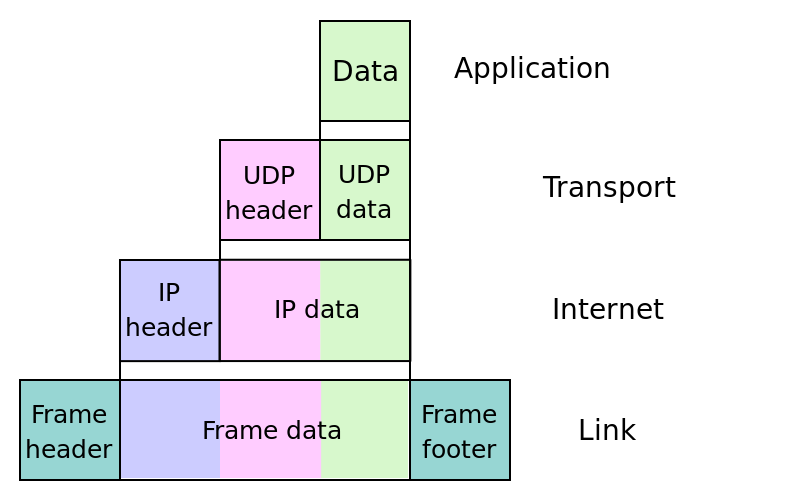
Internet Protocol
communication protocol that allows connections between networks

IPv6
Internet Protocol version 6 (IPv6) is the most recent version of the Internet Protocol (IP), the communications protocol that provides an identification and location system for computers on networks and routes traffic across the Internet. IPv6 was developed by the Internet Engineering Task Force (IETF) to deal with the long-anticipated problem of IPv4 address exhaustion, and was intended to replace IPv4. In December 1998, IPv6 became a Draft Standard for the IETF, which subsequently ratified it as an Internet Standard on 14 July 2017.

IPv4
Internet Protocol version 4 (IPv4) is the first version of the Internet Protocol (IP) as a standalone specification. It is one of the core protocols of standards-based internetworking methods in the Internet and other packet-switched networks. IPv4 was the first version deployed for production on SATNET in 1982 and on the ARPANET in January 1983. It is still used to route most Internet traffic today, even with the ongoing deployment of Internet Protocol version 6 (IPv6), its successor.
IPv4 uses a 32-bit address space which provides 4,294,967,296 (232) unique addresses, but large blocks are re

Internet Control Message Protocol
core protocol of the Internet Protocol suite, mainly used on IPv4 networks to indicate error messages in network operations
Internet Group Management Protocol
Primary protocol for establishing multicast group memberships on IPv4 networks. ICMPv6 is used for IPv6 networks.
Internet Control Message Protocol for IPv6
Internet Control Message Protocol version 6 (ICMPv6) is the implementation of the Internet Control Message Protocol (ICMP) for Internet Protocol version 6 (IPv6). ICMPv6 is an integral part of IPv6 and performs error reporting and diagnostic functions.

Internet layer
group of internetworking methods in the TCP/IP suite
Locator/Identifier Separation Protocol
"map-and-encapsulate" Internet protocol