Category
page 1Internet privacy

virtual private network
virtual network extending a single private network across a public network like the Internet, appearing to users as a private network

HTTP cookie
An HTTP cookie is a small block of data created by a web server while a user is browsing a website and placed on the user's computer or other device by the user's web browser. Cookies are placed on the device used to access a website, and more than one cookie may be placed on a user's device during a session.

intranet
thumb|Schematic depicting an intranet
An intranet is a computer network for sharing information, easier communication, collaboration tools, operational systems, and other computing services within an organization, usually to the exclusion of access by outsiders. The term is used in contrast to public networks, such as the Internet, but uses the same technology based on the Internet protocol suite.
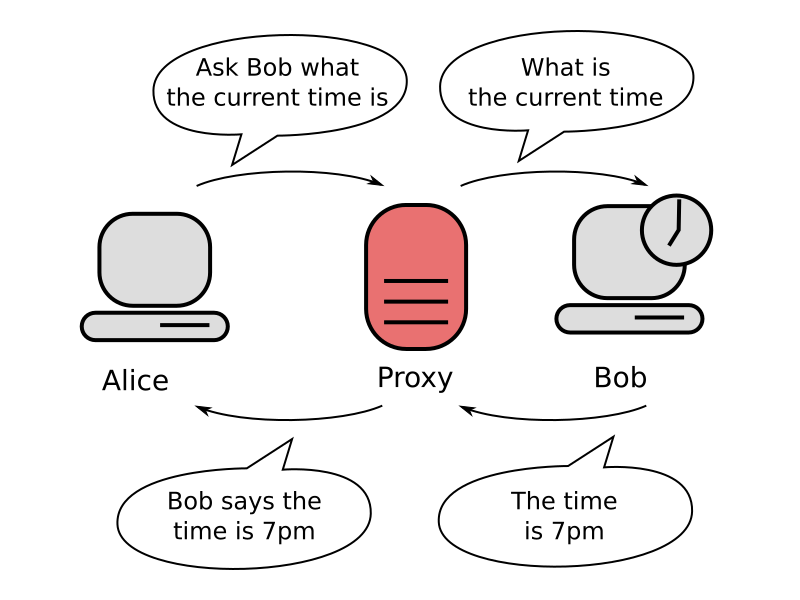
proxy server
computer server that makes and receives requests on behalf of a user

doxing
thumb|A fictional example of a doxing post on social media. In this case, the victim's personal name and address are shown.
right to be forgotten
legal concept

WikiScanner
WikiScanner (also known as Wikipedia Scanner) was a publicly searchable database that linked anonymous edits on Wikipedia to the organizations where those edits apparently originated. It did this by cross-referencing the edits with data on the owners of the associated block of IP addresses, though it did not investigate edits made under a username. It was created by Virgil Griffith and released on August 13, 2007.
privacy mode
privacy feature in some web browsers
end-to-end encryption
cryptographic paradigm involving uninterrupted protection of data traveling between two communicating parties
digital footprint
one's unique set of traceable digital activities
Internet privacy
personal privacy concerning the storing, repurposing, provision to third parties, and displaying of information pertaining to oneself via Internet
online identity
social identity that an Internet user establishes in online communities and websites
DNS hijacking
malicious situation created or unwanted manner provided data from a Domain Name Server (DNS)
2014 celebrity nude photo leak
August 2014 computer security incident which led to the leaking of celebrity photographs

cypherpunk
A cypherpunk is one who advocates the widespread use of strong cryptography and privacy-enhancing technologies as a means of effecting social and political change. The cypherpunk movement originated in the late 1980s and gained traction with the establishment of the "Cypherpunks" electronic mailing list in 1992, where informal groups of activists, technologists, and cryptographers discussed strategies to enhance individual privacy and resist state or corporate surveillance. Deeply libertarian in philosophy, the movement is rooted in principles of decentralization, individual autonomy, and free
deep packet inspection
processing that examines network data
web beacon
method using server metrics for a served unobtrusive file to ascertain whether a page has been loaded and by whom
DNS over HTTPS
protocol to run DNS queries over HTTPS
criticism of Facebook
media coverage of the shortcomings of Facebook's market dominance
device fingerprint
information collected about a remote computing device for the purpose of full or partial identification
friend-to-friend
A friend-to-friend (F2F) computer network is a type of peer-to-peer network in which users only make direct connections with people they know. Passwords or digital signatures can be used for authentication.

CryptoParty
CryptoParty (Crypto-Party) is a grassroots global endeavour to introduce the basics of practical cryptography such as the Tor anonymity network, I2P, Freenet, key signing parties, disk encryption and virtual private networks to the general public. The project primarily consists of a series of free public workshops.
privacy concerns regarding Google
online service
Minds
open source social networking service
Privoxy
Privoxy is a free non-caching web proxy with filtering capabilities for enhancing privacy, manipulating cookies and modifying web page data and HTTP headers before the page is rendered by the browser. Privoxy is a "privacy enhancing proxy", filtering web pages and removing advertisements. Privoxy can be customized by users, for both stand-alone systems and multi-user networks. Privoxy can be chained to other proxies and is frequently used in combination with Squid among others and can be used to bypass Internet censorship.
email encryption
encryption of email messages to protect the content from being read by entities other than the intended recipients
real-time bidding
means by which advertising inventory is bought and sold on a per-impression basis, via programmatic instantaneous auction
online shaming
Internet slang
web storage
client-side data storage in web browsers
reputation management
the act of influencing, controlling, enhancing, or concealing of an individual's or group's reputation
Mix network
routing protocol
HTTP ETag
communications protocol
DeGoogle
The DeGoogle movement (also called the de-Google movement) is a grassroots campaign that has spawned as privacy advocates urge users to stop using Google products entirely due to growing privacy concerns regarding the company.
secure communication
anonymous communicating between two entities
Internet censorship circumvention
various processes to unblock censored materials on the Internet
web tracking
practice by which operators of websites collect, store and share information about a particular user's activity on the World Wide Web
local shared object
piece of data that websites using Adobe Flash may store on a user’s computer
Do Not Track
HTTP header field that requests web applications to disable individual user tracking
privacy concerns with social networking services
data privacy, involving the right of mandating personal privacy concerning storing, re-purposing, provision to third parties, and displaying of information pertaining to oneself via the Internet
canvas fingerprinting
browser fingerprinting technique
opportunistic encryption
system that, when connecting to another system, attempts to encrypt the communications channel, otherwise falling back to unencrypted communications
PRQ
PRQ is a Swedish Internet service provider and web hosting company created in 2004.
behavioral retargeting
form of online targeted advertising
big data ethics
ethics of mass data analytics
data haven
refuge for uninterrupted or unregulated data
Split tunneling
Computer networking concept
search engine privacy
subset of internet privacy that deals with user data being collected by search engines
Upstream collection
term used by the National Security Agency (NSA) of the United States
Opportunistic Wireless Encryption
extension to IEEE 802.11 (Wi-Fi)
ICMP tunnel
connection between two remote computers
mobile virtual private network
type of virtual private network for mobile devices
DNS leak
security flaw revealing DNS requests
digitalcourage
Digitalcourage – known until November 2012 as FoeBuD () – is a German privacy and digital rights organisation. Under the motif of preserving "a world worth living in the digital age", Digitalcourage campaigns for civil and human rights, consumer protection, privacy, freedom of information and related issues. The group has links with organisations such as the German Working Group against Data Retention () and the Chaos Computer Club, and it is a member of the umbrella organisation European Digital Rights.
domain privacy
domain name registrar service
identity verification service
e.g. Authenticating.com
Messaging Layer Security
cryptographic protocol for group communications
Andrew Lee
American entrepreneur