Category
page 1Internet security
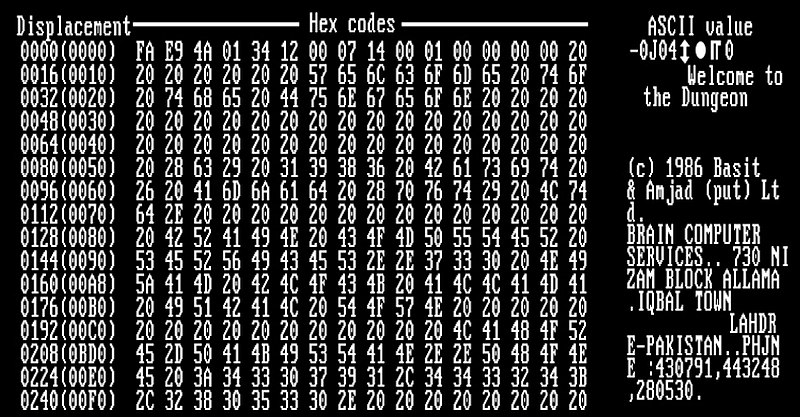
computer virus
type of computer program that, when executed, replicates itself by modifying other computer programs and inserting its own code

Hacker
thumb|upright=1.35|Participants in the Coding da Vinci hackathon, [[Berlin, Germany, April 26–27, 2014|alt=A group of people working on laptop computers at a common table]]

Tor
daemon and utilities for an anonymizing network

botnet
thumb|Stacheldraht botnet diagram showing a DDoS attack (Note this is also an example of a type of client–server model of a botnet.)
A botnet is a group of Internet-connected devices, each of which runs one or more bots. Botnets can be used to perform distributed denial-of-service (DDoS) attacks, steal data, send spam, and allow the attacker to access the device and its connection. The owner can control the botnet using command and control (C&C) software. The word "botnet" is a portmanteau of the words "robot" and "network". The term is usually used with a negative or malicious connotation.

Heartbleed
Heartbleed is a security bug in some outdated versions of the OpenSSL cryptography library, which is a widely used implementation of the Transport Layer Security (TLS) protocol. It was introduced into the software in 2012 and publicly disclosed in April 2014. Heartbleed could be exploited regardless of whether the vulnerable OpenSSL instance is running as a TLS server or client. It resulted from improper input validation (due to a missing bounds check) in the implementation of the TLS heartbeat extension. Thus, the bug's name derived from heartbeat. The vulnerability was classified as a buffer

Cloudflare
Cloudflare, Inc. is an American technology company headquartered in San Francisco, California, that provides a range of internet services, including content delivery network (CDN) services, cloud cybersecurity, DDoS mitigation, and ICANN-accredited domain registration. The company's services act primarily as a reverse proxy between website visitors and a customer's hosting provider, improving performance and protecting against malicious traffic.
NordVPN
NordVPN is a Lithuanian VPN service founded in 2012. NordVPN is developed by Nord Security (formerly Nordsec Ltd), a cybersecurity software company that was initially supported by Tesonet, a Lithuanian startup accelerator and business incubator. NordVPN states it operates in Panama, but Nord Security is incorporated in Amsterdam, the Netherlands. Its offices are located in Lithuania, the United Kingdom, Panama, and the Netherlands.
internet security
branch of computer security specifically related to Internet, often involving browser security and the World Wide Web
IP address spoofing
creating IP packets using forged IP addresses in headers
open proxy
proxy server accessible to any Internet user
bug bounty program
deals offered for reporting software bugs
DNS hijacking
malicious situation created or unwanted manner provided data from a Domain Name Server (DNS)
2014 celebrity nude photo leak
August 2014 computer security incident which led to the leaking of celebrity photographs
Shellshock
security bug in the Unix Bash shell
IP address blocking
access restrictions based on client IP addresses
DNS over HTTPS
protocol to run DNS queries over HTTPS

WebAuthn
Web Authentication (WebAuthn) is a web standard published by the World Wide Web Consortium (W3C).
It defines an API that websites use to authenticate with WebAuthn credentials (passkeys) and outlines what WebAuthn authenticators should do.
It solves many of the issues of traditional password-based authentication by verifying the user's identity with digital signatures.
Although WebAuthn is often touted as a complete replacement for passwords, most websites that implement it continue to use passwords in some capacity.
DNS spoofing
cyberattack in which corrupt DNS data is introduced into the DNS resolver's cache, causing the name server to return an incorrect result record, e.g. an IP address, diverting traffic to the attacker
DNS over TLS
protocol to encrypt DNS queries using TLS
Have I Been Pwned?
consumer security website and email alert system
XZ Utils backdoor
backdoor discovered in 2024
Surfshark
virtual private network provider
Automated Certificate Management Environment
protocol for automating interactions between certificate authorities and web servers
POODLE
POODLE (which stands for "Padding Oracle On Downgraded Legacy Encryption") is a security vulnerability which takes advantage of the fallback to SSL 3.0. If attackers successfully exploit this vulnerability, on average, they only need to make 256 SSL 3.0 requests to reveal one byte of encrypted messages. Bodo Möller, Thai Duong and Krzysztof Kotowicz from the Google Security Team discovered this vulnerability; they disclosed the vulnerability publicly on October 14, 2014 (despite the paper being dated "September 2014"). On December 8, 2014, a variation of the POODLE vulnerability that affected
port knocking
sending a specific sequence of requests to closed ports to open a port on a firewall

server-side request forgery
type of computer exploit where an attacker abuses the functionality of a server causing it to access or manipulate information in the realm of that server that would otherwise not be directly accessible to the attacker
browser security
application of internet security to web browsers
Internet censorship circumvention
various processes to unblock censored materials on the Internet
Dirty COW
computer security vulnerability
HTTP Public Key Pinning
Internet security mechanism delivered via an HTTP header which allows HTTPS websites to resist impersonation by attackers using mis-issued or otherwise fraudulent certificates
Nym Mixnet
virtual private network
Fastly
Fastly, Inc. is an American company based in San Francisco, which describes itself as a cloud computing company. Fastly provides content delivery network services, image optimization, and load balancing services. Fastly's cloud security services include denial-of-service attack protection, bot mitigation, and a web application firewall.
Rustock botnet
type of botnet
Storm botnet
Computer botnet
Certificate transparency
Internet security standard for auditing digital certificates by creating public logs recording certificates issued by publicly trusted certificate authorities, allowing efficient identification of mistakenly or maliciously issued certificates
Mozilla Monitor
Firefox Monitor warns you if your email address has been exposed in an online data breach.
warrant canary
method of indirect notification of a subpoena, informing users that there has not been a secret subpoena as of a particular date; if the canary is not updated/removed, users are to assume that the host has been served with such a subpoena
2021 Microsoft Exchange Server data breach
series of cyberattacks exploiting Microsoft's email and calendar server software
Sality
Sality is the classification for a family of malicious software (malware) infecting Microsoft Windows system files. Sality was first discovered in 2003 and has advanced into a dynamic, enduring, full-featured form of malicious code. Systems infected with Sality may communicate over a peer-to-peer (P2P) network to form a botnet to relay spam, proxy communications, exfiltrate sensitive data, compromise web servers, and/or coordinate distributed computing tasks to process intensive tasks (e.g., password cracking). Since 2010, certain variants of Sality have also incorporated rootkit functions as
security as a service
business model in which a service provider integrates their security services into a corporate infrastructure on a subscription basis more cost effectively than most individuals or corporations can provide on their own
GMO GlobalSign
GlobalSign is a certificate authority and a provider of internet identity and security products. As of January 2015, Globalsign was the 4th largest certificate authority in the world, according to Netcraft.
BGP hijacking
attack on Internet routing infrastructure
Cloudbleed
Cloudbleed was a Cloudflare buffer overflow disclosed by Project Zero on February 17, 2017. Cloudflare's code disclosed the contents of memory that contained the private information of other customers, such as HTTP cookies, authentication tokens, HTTP POST bodies, and other sensitive data. As a result, data from Cloudflare customers was leaked to all other Cloudflare customers that had access to server memory. This occurred, according to numbers provided by Cloudflare at the time, more than 18,000,000 times before the problem was corrected. Some of the leaked data was cached by search engines.
Internet Authentication Service
component of Windows Server that provides centralized user authentication, authorization and accounting
Atlas VPN
virtual private network provider
Gumblar
Gumblar is a malicious JavaScript trojan horse file that redirects a user's Google searches, and then installs rogue security software. Also known as Troj/JSRedir-R this botnet first appeared in 2009.
Project Shield
anti-distributed-denial-of-service (anti-DDoS) service
Mastering the Internet
Mass surveillance project led by GCHQ
DNS rebinding
type of computer attack
Penta Security
Web, data and IoT security firm
Cyber security awareness
knowledge of end users about the cyber security threats and the risks their actions may introduce
ZeroAccess botnet
windows-platform based Trojan horse computer malware