Category
page 1Iran–United States relations
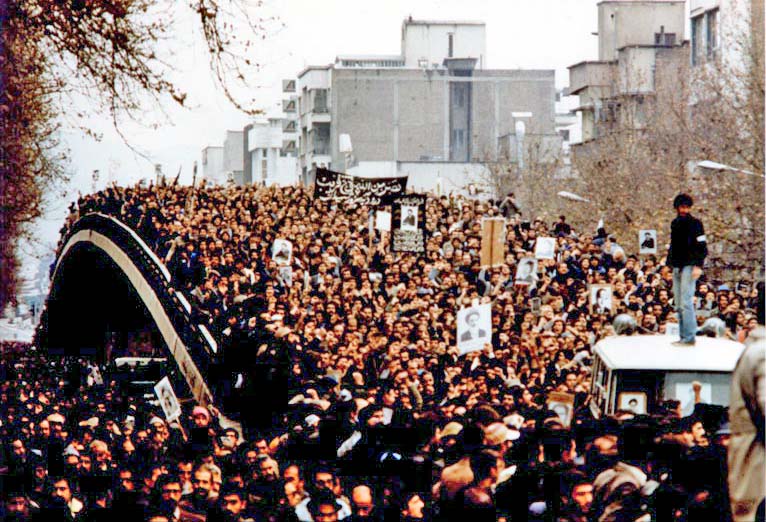
Iranian Revolution
The Iranian Revolution, also known as the Islamic Revolution, culminated in the overthrow of the Pahlavi dynasty in 1979. The revolution led to the replacement of the Imperial State of Iran by the Islamic Republic of Iran, as the monarchical government of Shah Mohammad Reza Pahlavi was superseded by Ruhollah Khomeini, an Islamist cleric who had headed one of the rebel factions. The ousting of Mohammad Reza Pahlavi, the last Shah of Iran, formally marked the end of Iran's historical monarchy.
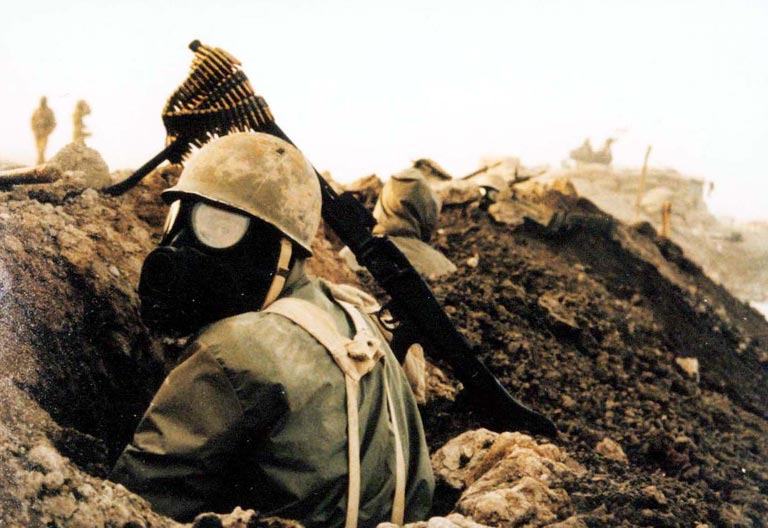
Iran–Iraq War
The Iran–Iraq War began with the Iraqi invasion of Iran in September 1980. After eight years of conflict, both countries accepted a ceasefire deal brokered by the United Nations, which became effective in August 1988. The war caused around 500,000 deaths, making it the deadliest conventional war ever fought between regular armies of developing countries.

Islamic Revolutionary Guard Corps
The Islamic Revolutionary Guard Corps (IRGC), also known domestically as Sepah or Pasdaran and internationally as Iranian Revolutionary Guards, is a multi-service primary force of the Iranian Armed Forces. It consists of five service branches: Ground Forces, Aerospace Force, Navy, Quds Force, and Basij. It is led by a commander-in-chief, who is appointed by and reports to the Supreme Leader of Iran.
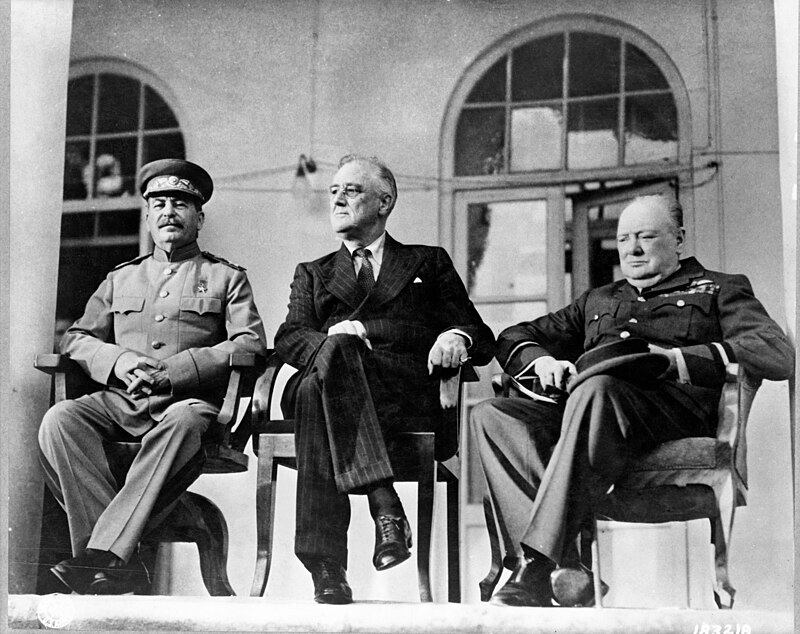
Tehran Conference
strategy meeting of the leaders of the USSR, the USA, and the UK in Tehran in 1943 during World War 2

2025–2026 Iranian protests
The 2025–2026 Iranian protests are a series of nationwide demonstrations against the government of Iran that began on 28 December 2025 amid a deepening economic crisis. The unrest followed a sharp depreciation of the Iranian rial, rising inflation, and widespread shortages linked to international sanctions and government mismanagement. This event has been the largest uprising in Iran since the 1979 Islamic Revolution, spreading to more than 200 cities across the country. The ensuing crackdown, reportedly carried out under orders by Ali Khamenei and senior officials to use live fire on protesters, resulted in massacres that left thousands of protesters dead, making them the largest massacres in modern Iranian history.

nuclear program of Iran
nuclear research sites and processing facilities of Iran

1953 Iranian coup d'état
On 19 August 1953, Prime Minister of Iran Mohammad Mosaddegh was overthrown in a coup d'état that strengthened the rule of Mohammad Reza Pahlavi, the Shah of Iran. In the months preceding the coup, Mosaddegh had consolidated power by orchestrating an unconstitutional referendum to dissolve parliament that was widely described as fraudulent, and he later refused to step down after the Shah exercised his constitutional authority to dismiss him as prime minister. It was instigated by the United Kingdom (MI6), under the name Operation Boot and the United States (CIA), under the name TP-AJAX Project or Operation Ajax. A key motive was to protect British oil interests in Iran after Mosaddegh nationalized the country's oil industry.

détente
thumb|Leonid Brezhnev (left), [[Viktor Sukhodrev (center), and Richard Nixon (right) during Brezhnev's 1973 visit to Washington, D.C., a high-water mark in détente between the United States and the Soviet Union]]

Iran hostage crisis
The Iran hostage crisis began on November 4, 1979, when 66 Americans, including diplomats and other civilian personnel, were taken hostage at the Embassy of the United States in Tehran, with 52 of them being held until January 20, 1981. The incident occurred after the Muslim Student Followers of the Imam's Line stormed and occupied the building in the months following the Iranian Revolution. With support from Ruhollah Khomeini, who had led the Iranian Revolution and would eventually establish the present-day Islamic Republic of Iran, the hostage-takers demanded that the United States extradite Iranian king Mohammad Reza Pahlavi, who had been granted asylum by the Carter administration for cancer treatment. Notable among the assailants were Hossein Dehghan, Mohammad Ali Jafari, and Mohammad Bagheri. The hostage crisis contributed to a dramatic decline in Iran–United States relations. After 444 days, it came to an end with the signing of the Algiers Accords between the Iranian and American governments; Iran's king had died in Cairo, Egypt, on July 27, 1980.

Iran Air Flight 655 shootdown
1988 airliner shootdown
People's Mojahedin Organization of Iran
political-militant organization

Stuxnet
Stuxnet is a malicious computer worm first uncovered on 17 June 2010 and thought to have been in development since at least 2005. Stuxnet targets supervisory control and data acquisition (SCADA) systems and is believed to be responsible for causing substantial damage to the Iran nuclear program after it was first installed on a computer at the Natanz Nuclear Facility in 2009. Although neither the United States nor Israel has openly admitted responsibility, multiple independent news organizations claim Stuxnet to be a cyberweapon built jointly by the two countries in a collaborative effort know

axis of evil
group of countries identified collectively as enemies by U.S. President George W. Bush during the 2000s
assassination of Qasem Soleimani
2020 US drone strike in Baghdad, Iraq

Joint Comprehensive Plan of Action
International agreement on the nuclear program of Iran
Executive Order 13769
United States Executive Order limiting refugees from Muslim-majority countries
Iran-United States relations
informal diplomatic relationship between the United States and Iran

2026 Strait of Hormuz crisis
Shipping traffic through the Strait of Hormuz, a major maritime choke point for world energy trade, has been largely blocked by Iran since 28 February 2026, when the United States and Israel launched an air war against Iran and assassinated its supreme leader Ali Khamenei. In retaliation, Iran launched missile and drone attacks on Israel, US military bases, and US-allied Gulf states. The Iranian Revolutionary Guard (IRGC) issued warnings forbidding passage through the strait, has boarded and attacked merchant ships, and has laid sea mines in the strait. Since 13 April, the US has blockaded Iranian ports, leading to a "dual blockade" of the strait. Until the US–Israeli war against Iran, the Strait of Hormuz was open and about 25% of the world's seaborne oil trade and 20% of the world's liquefied natural gas (LNG) passed through it.
1983 Beirut barracks bombing
Suicide bombing attack
Death to America
anti-American political slogan
Jundallah
militant Sunni organization in Iran
Great Satan
epithet used by the Iranian government, referring to the United States
international sanctions against Iran
Economic, trade, scientific and military sanctions imposed on Iran by the international community
State Sponsors of Terrorism
US government’s list of countries alleged to repeatedly support international terrorism
Canadian Caper
Rescue of US diplomats from Iran, 1980

P5+1
thumb|245px|The foreign ministers of the P5+1 nations, the High Representative of the European Union for Foreign Affairs, and the Iranian foreign minister in November 2013, when the [[Joint Plan of Action, an interim agreement on the Iranian nuclear program, was adopted in Geneva]]
thumb|245px|The representatives from the P5+1 countries and the European Union and [[Iran announcing the nuclear agreement framework in Lausanne on 2 April 2015. The framework became the basis for the Joint Comprehensive Plan of Action (JCPOA), which was agreed on 15 July 2015, from left to right: Chinese ambassador
Scott Ritter
former US military and UN inspector, now author, geopolitical analyst and convicted sex offender
Operation Praying Mantis
1988 United States naval offensive against Iran during the Iran-Iraq War
Shahram Amiri
nuclear scientist (1977–2016)

2026 Iran war ceasefire
On 8 April 2026, the United States and Iran agreed to a two-week ceasefire in the 2026 Iran war, mediated by Pakistan. Iran had rejected the draft proposal for a 45-day two-phased ceasefire framework introduced on 5 April by Pakistan, instead proposing its own 10-point plan for a peace agreement. The proposal was developed as part of ongoing mediation efforts involving regional and international actors during the 2025–2026 negotiations. Since its declaration, the ceasefire has been violated by both sides. On 21 April, President Trump said that he extended the Iran truce to allow time for an Iranian proposal to be submitted at Pakistan's request. On April 22, US officials said that Trump has given Iran three to five days to engage in negotiations and resolve alleged infighting within the government before resuming attacks.
National Council of Resistance of Iran
political wing of the People's Mojahedin Organization of Iran
2019–20 attack on the United States embassy in Baghdad
storming of the United States embassy in Baghdad, beginning starting on 31 December 2019
Persian Corridor
supply route in World War II
Embassy of the United States, Tehran
former United States Embassy in Tehran, Iran
United Nations Security Council Resolution 457
United Nations Security Council resolution
2024 Iranian missile strikes in Iraq and Syria
15 January 2024 missile strikes in Iraq and Syria
Countering America's Adversaries Through Sanctions Act
2017 U.S. law sanctioning Iran, North Korea and Russia
United Nations Security Council Resolution 461
United Nations Security Council resolution
2026 United States military buildup in the Middle East
largest military buildup in the Middle East since the 2003 invasion of Iraq
Khobar Towers bombing
terrorist bombing of the Khobar Towers, US military housing, in Khobar, Saudi Arabia
attacks on US bases during the Gaza war
ongoing military conflict in Middle East
United States sanctions against Iran
Economic, trade, scientific and military sanctions imposed on Iran by the United States government
National Council of Iran
loosely based umbrella group of the exiled opposition to Iran's Islamic Republic government
2025–2026 Iran–United States negotiations
United Nations Security Council Resolution 616
United Nations Security Council resolution
Arab–Israeli alliance
political alliance in West Asia
Safari Club
alliance of intelligence services

Twelve-Day War ceasefire

2021 Erbil missile attacks
Missile attacks on Erbil, Kurdistan Region, Iraq

December 2019 United States airstrikes in Iraq and Syria
2019 war event against Iraqi group Kata'ib Hezbollah

United States withdrawal from Iran Deal
2018 US withdrawal from the Iran nuclear deal

CRINK
thumb|upright=1.3|
CRINK (China, Russia, Iran, and North Korea) is an acronym coined in 2023 by Western analysts to refer to the grouping of China, Russia, Iran, and North Korea that they perceive as a "loose alliance" of anti-Western and anti-imperialist nations.
Algiers Accords
Set of agreements between the United States and Iran to resolve the Iran hostage crisis
Kingdom Assembly of Iran
political party
2019 K-1 Airbase Attack
rocket attack on the K-1 Air Base in Kirkuk province in Iraq
2022 Erbil rocket attacks
missile attacks on Erbil, Kurdistan Region, Iraq
Iran and the Russo-Ukrainian war
response of Iran to the 2022 Russian invasion of Ukraine
William J. Fallon
United States admiral
Embassy of Iran, Washington, D.C.
Imperial State of Iran's diplomatic mission to the United States which was severed in 1979
Joint Plan of Action
2013 agreement on the nuclear program of Iran