Category
page 1Iridaceae

Iridaceae
Iridaceae () is a family of plants in order Asparagales, taking its name from the irises. It has a nearly global distribution, with 69 accepted genera with a total of about 2500 species. It includes a number of economically important cultivated plants, such as species of Freesia, Gladiolus, and Crocus, as well as the crop saffron.
.jpg)
Crocosmia
Crocosmia (), also known as montbretia (), is a small genus of flowering plants in the iris family, Iridaceae. It is native to the grasslands of southern and eastern Africa, ranging from South Africa to Sudan. One species is endemic to Madagascar.

Gladiolus imbricatus
species of plant
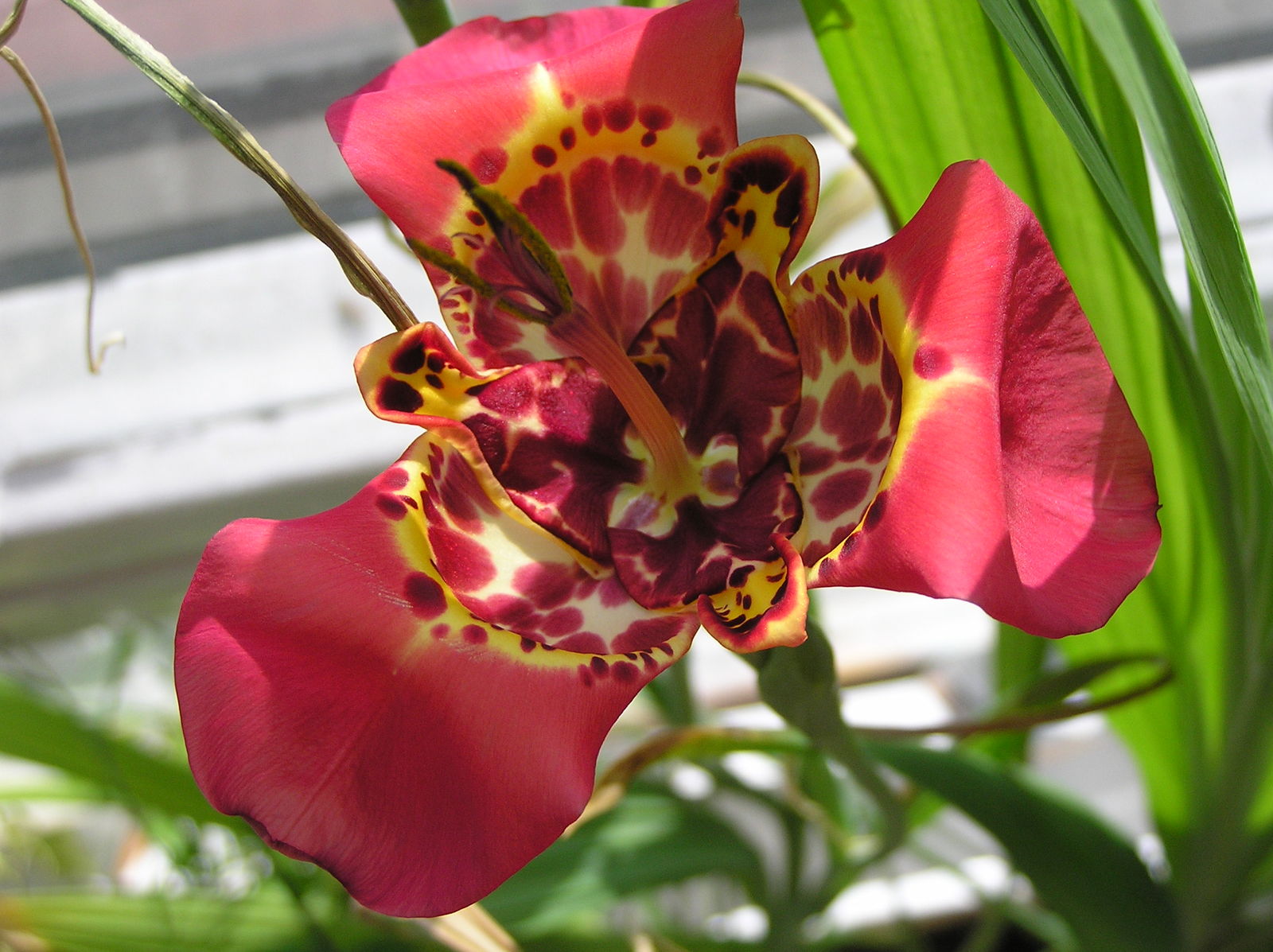
Tigridia
Tigridia , is a genus of bulbous or cormous flowering plants belonging to the family Iridaceae. With common names including peacock flowers, tiger flowers, jaguar flowers, or shell flowers, they have large showy flowers; and one species, Tigridia pavonia, is often cultivated for this. The approximately 60 species in this family grow in the Americas, from Mexico down to Chile.

Aristea
thumb|Aristea spiralis

Crocosmia × crocosmiiflora
nothospecies of plant

Dietes
Dietes is a genus of six rhizomatous plant species of the iris family Iridaceae, first described collectively in 1866. Common names for the different species include wood iris, fortnight lily, African iris, Japanese iris and butterfly iris. Globally, these common names may differ from region to region, and may also apply to one or more species within Dietes.

Watsonia
genus of flowering plants in the iris family Iridaceae
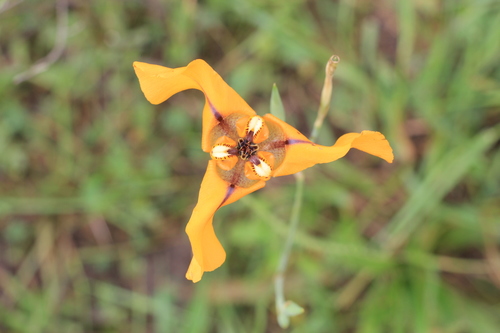
Cypella
Cypella is a genus of herbaceous, perennial and bulbous plants in the family Iridaceae. It is distributed in South America, from Peru and Brazil to Northern Argentina. The genus name is likely derived from the Greek word kyphella, meaning "hollow of the ear", and alludes to the shape of the inner tepals.

Chasmanthe
Chasmanthe is a genus of flowering plants in the family Iridaceae, first described in 1932. It is endemic to Cape Province in South Africa. It is widely grown as an ornamental plant and is naturalized in various locations.

Lapeirousia
thumb|400px|Vast expanse of the southern Namib|Namib Desert (specifically the area lying to the west of [[Obib Mountain near Rosh Pinah) carpeted with thousands of L. barklyi and featuring also a fairy circle (foreground)]]
Lapeirousia is a genus in the plant family Iridaceae. It is endemic to sub-Saharan Africa, about a third of the species occurring in fynbos.
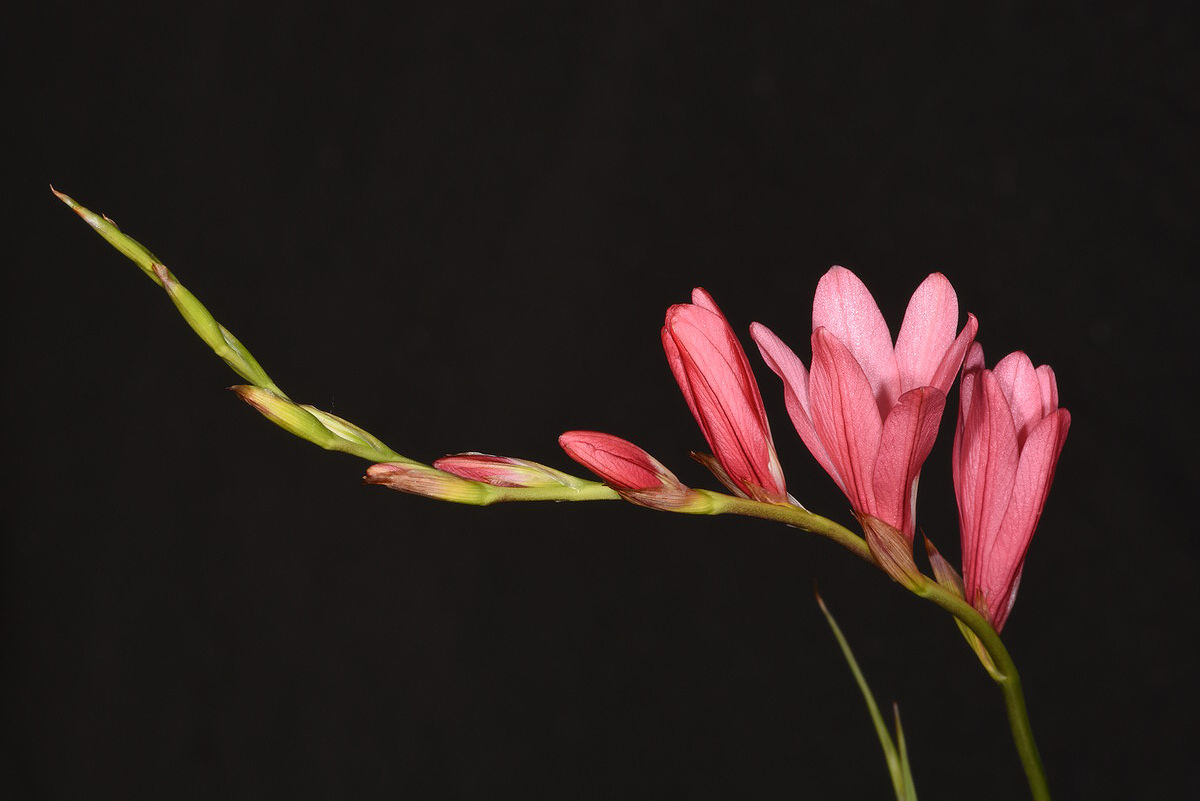
Tritonia
genus of plants
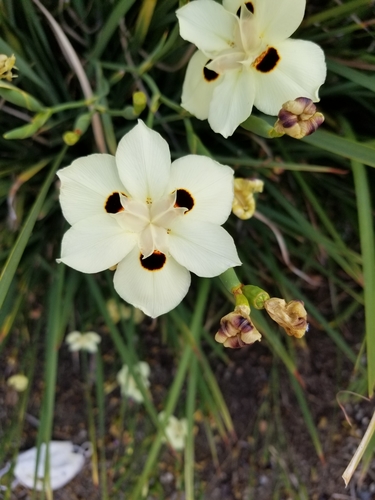
Dietes bicolor
species of plant

Witsenia maura
Witsenia is a genus of flowering plants in the family Iridaceae, first described as a genus in 1782. There is only one known species, Witsenia maura, endemic to Cape Province in western South Africa.
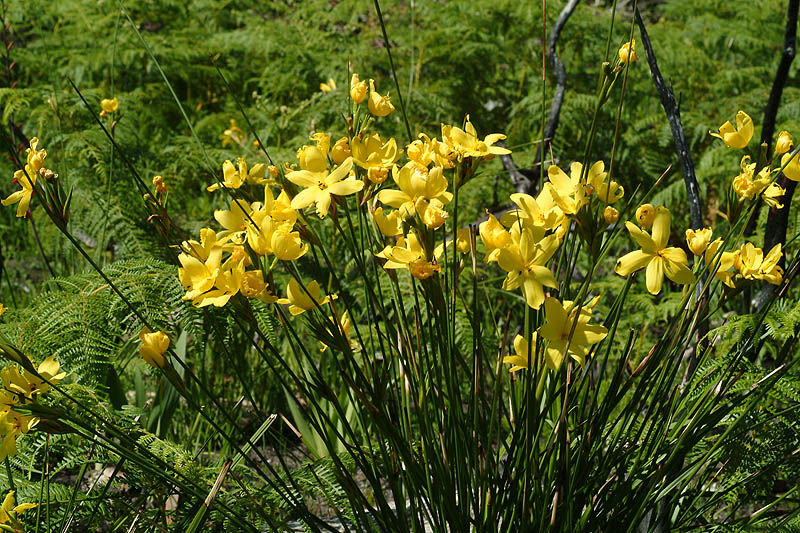
Bobartia
Bobartia is a genus of evergreen, perennial and bulbous plants in the iris family (Iridaceae). The genus comprises 15 species distributed in South Africa. The genus name is a tribute to German botanist Jakob Bobart.
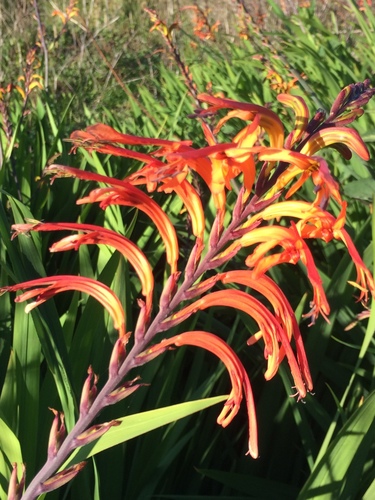
Chasmanthe floribunda
species of African flowering plant

Tigridia pavonia
species of plant

Ferraria
Ferraria is a genus of monocotyledonous flowering plants in the family Iridaceae, native to tropical and southern Africa. They are herbaceous corm-bearing plants growing to 30–45 cm tall. Some species have an unpleasant scent similar to rotting meat and are pollinated by flies, while others have a pleasant scent. The genus name is a tribute to Italian Jesuit Botanist and botanical artist Giovanni Baptista Ferrari.
thumb|right|Ferraria uncinata They are grown as ornamental plants in gardens in subtropical regions.
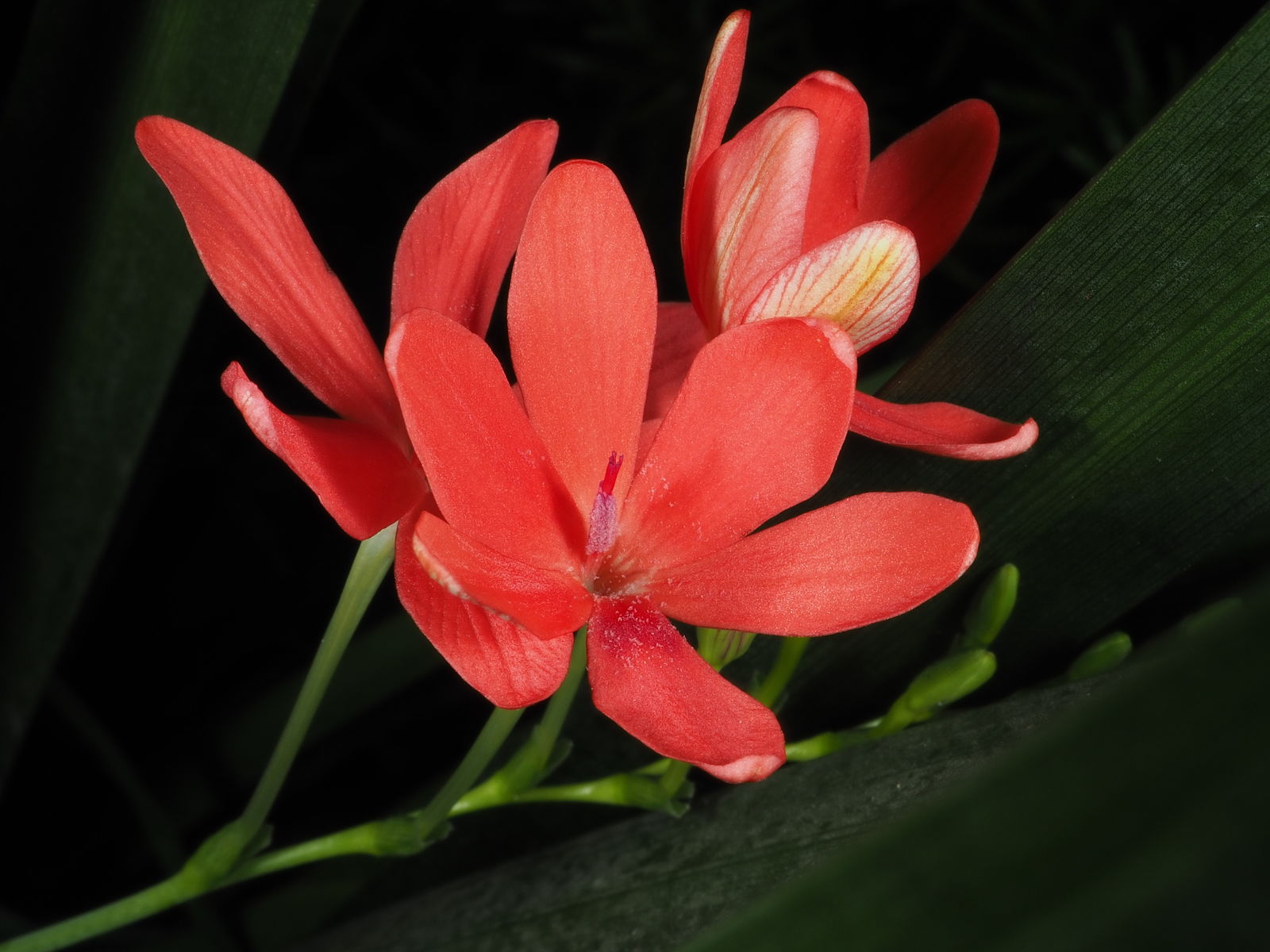
Hesperantha coccinea
species of plant

Hesperantha
Hesperantha is a genus of cormous flowering plants in the family Iridaceae. The genus name is derived from the Greek words hesperos, meaning "evening", and anthos, meaning "flower".

Crocosmia aurea
species of plant

Devia xeromorpha
species of plant
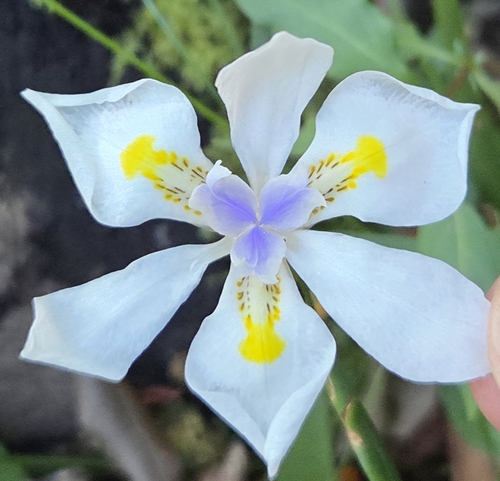
Dietes iridioides
species of plant
_fullsize.jpg)
Alophia
Alophia is a small genus of perennial, herbaceous and bulbous plants in the family Iridaceae. The genus comprise five known species that occur from the South-central United States as well as in Mexico, Central America, and parts of South America.
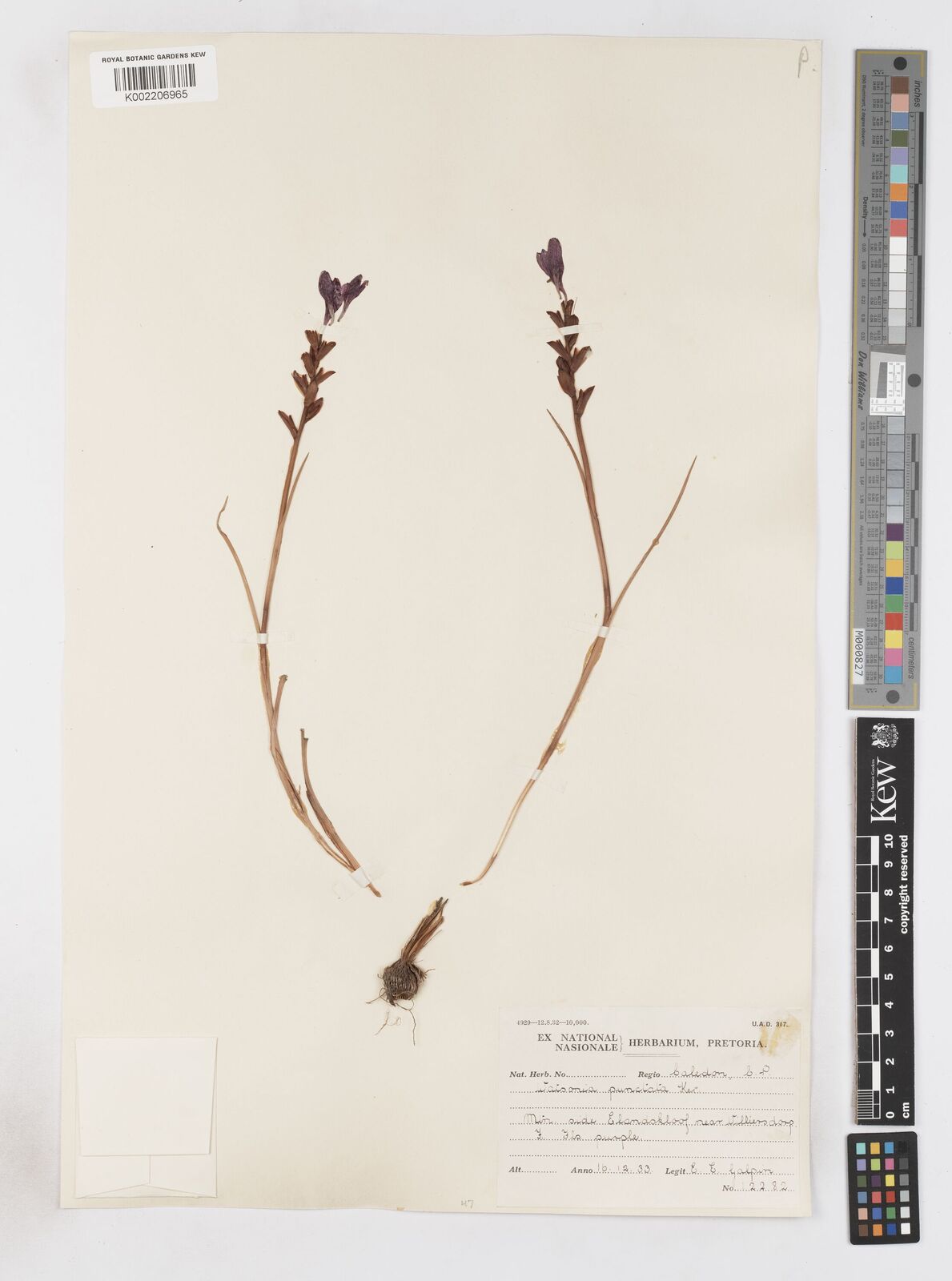
Thereianthus
Thereianthus is a genus of flowering plants in the family Iridaceae, first described as a genus in 1941. The entire genus is endemic to Cape Province in South Africa.

Diplarrena
Diplarrena is a genus of flowering plants in the family Iridaceae. The two species are endemic to Australia. The name is from Greek diploos ("double") and arren ("male"); plants in the genus have only two functional stamens, while all other Iridaceae have three. The name is often misspelled Diplarrhena, an error that began with George Bentham's Flora Australiensis in 1873.

Iridoideae
Iridoideae is one of the two main subfamilies in the popular family Iridaceae. It contains the best-known genus - Iris. The members of this subfamily are widely distributed worldwide. They grow in all continents except Antarctica.
left|thumb|Iris milesii

Crocoideae
Crocoideae is one of the major subfamilies in the family Iridaceae.
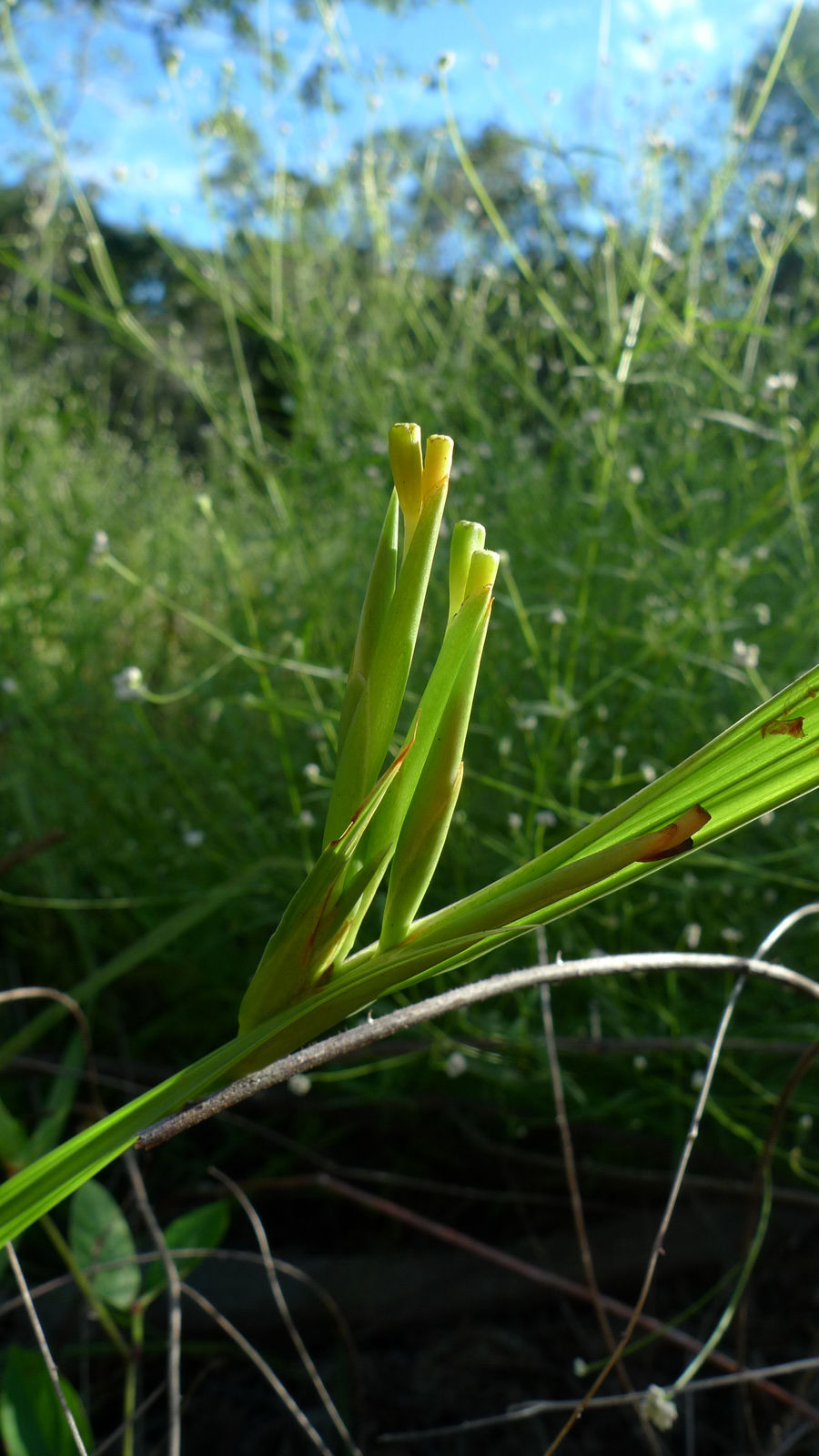
Eleutherine
Eleutherine is a genus of herbaceous, perennial and bulbous plants in the family Iridaceae, first described as a genus in 1843. It is native to Latin America and the West Indies.
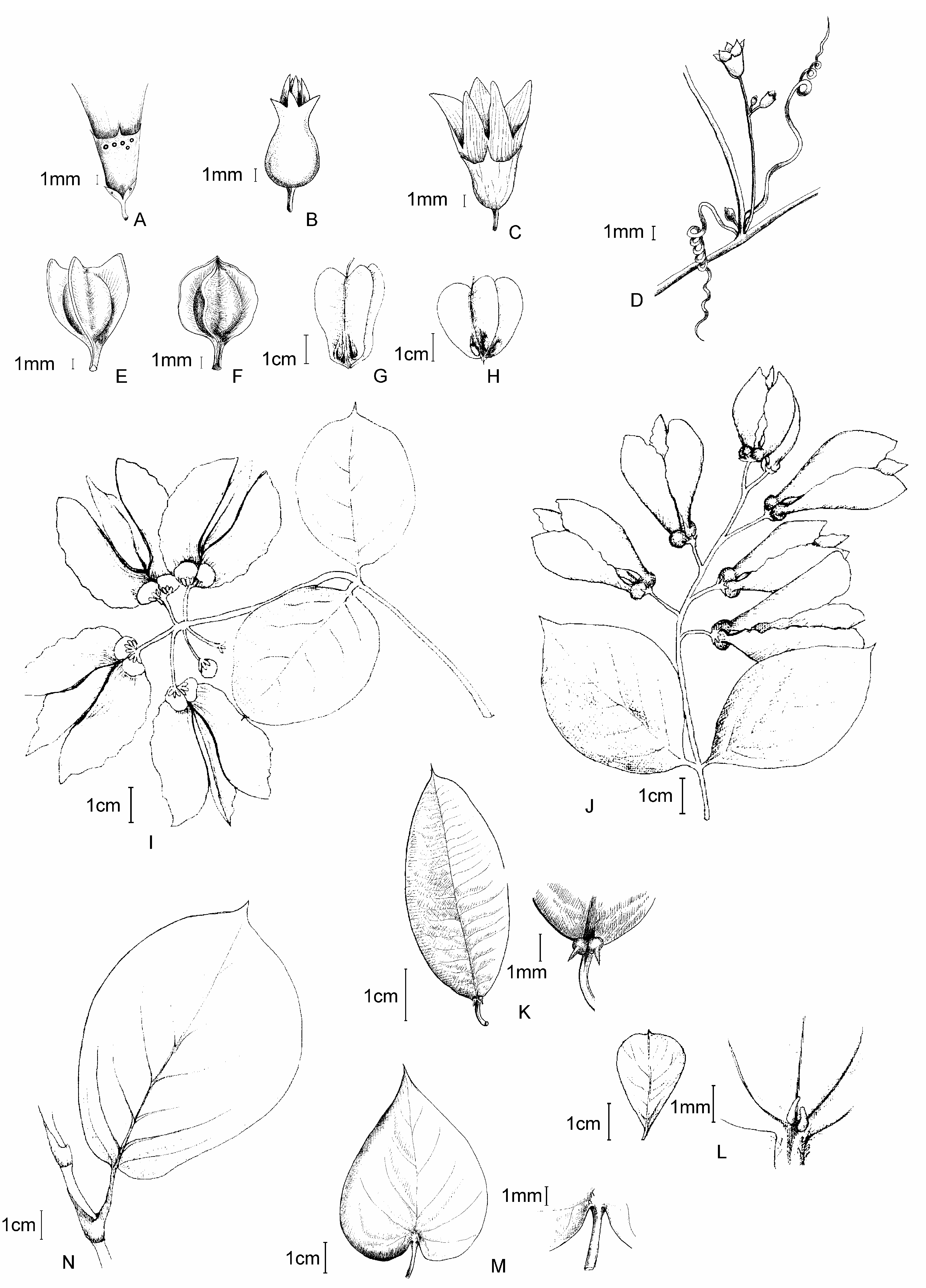
Nivenia
Nivenia is a genus of flowering plants in the family Iridaceae first described as a genus in 1808. Species in the genus are restricted in distribution to an area in the Cape Province of South Africa.

Watsonia meriana
species of plant
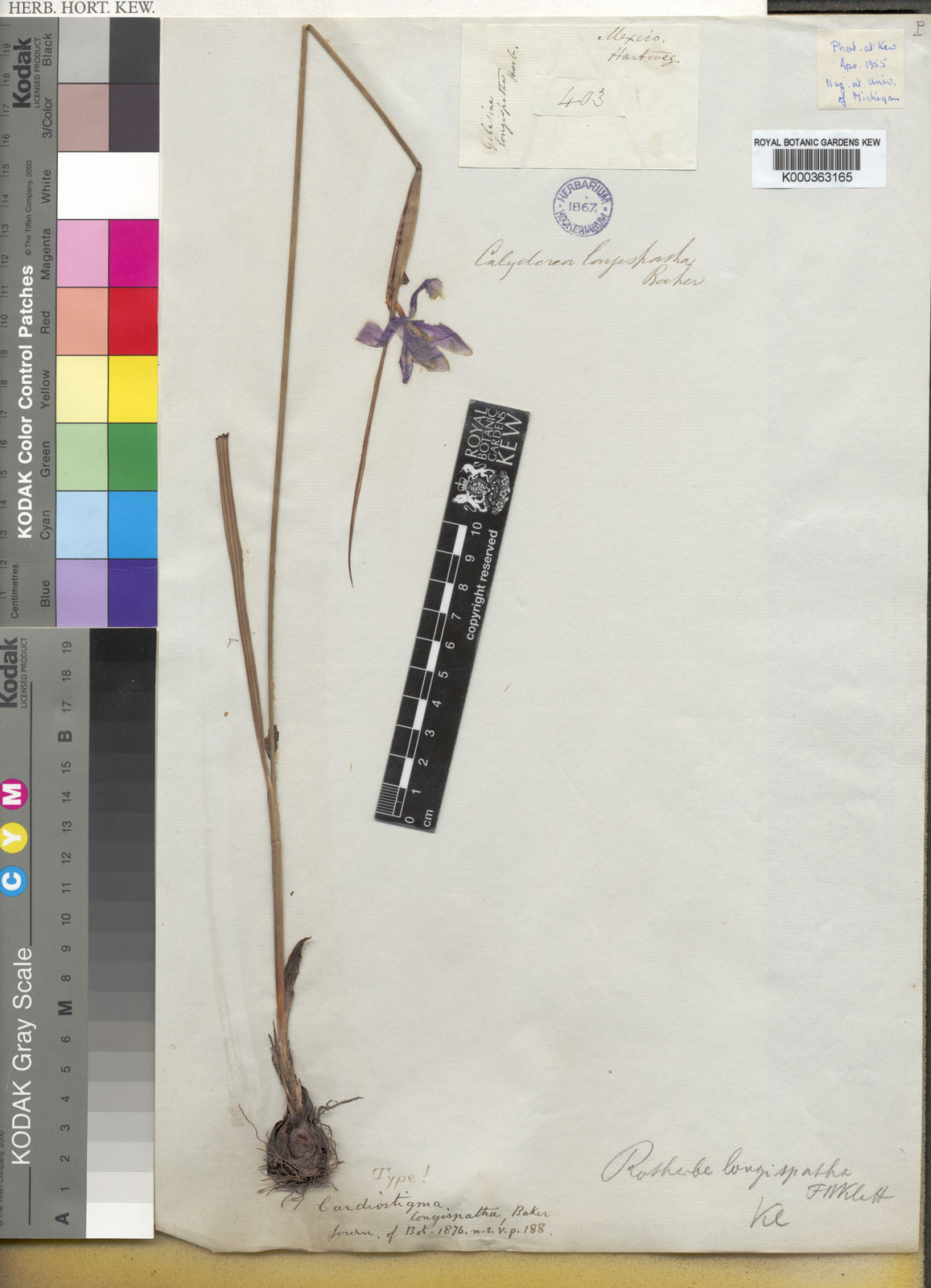
Calydorea
Calydorea is a small genus of perennial, herbaceous and bulbous plants in the family Iridaceae native to Mexico and South America. The plants in the genus are small with tunicated bulbs. The flowers are light blue, violet, white, or yellow, depending on the species, of which there are around twenty. Taxonomists considered that the already known genera Salpingostylis (endemic from Florida), Cardiostigma (from Mexico), Catila (from Brazil) and Itysa (from Venezuela) are not enough different from each other to justify their taxonomic segregation and, for this reason, all of them are now included

Watsonia borbonica
species of plant

Gelasine
Gelasine is a genus of flowering plants in the family Iridaceae, first described in 1840. The entire group is endemic to South America.
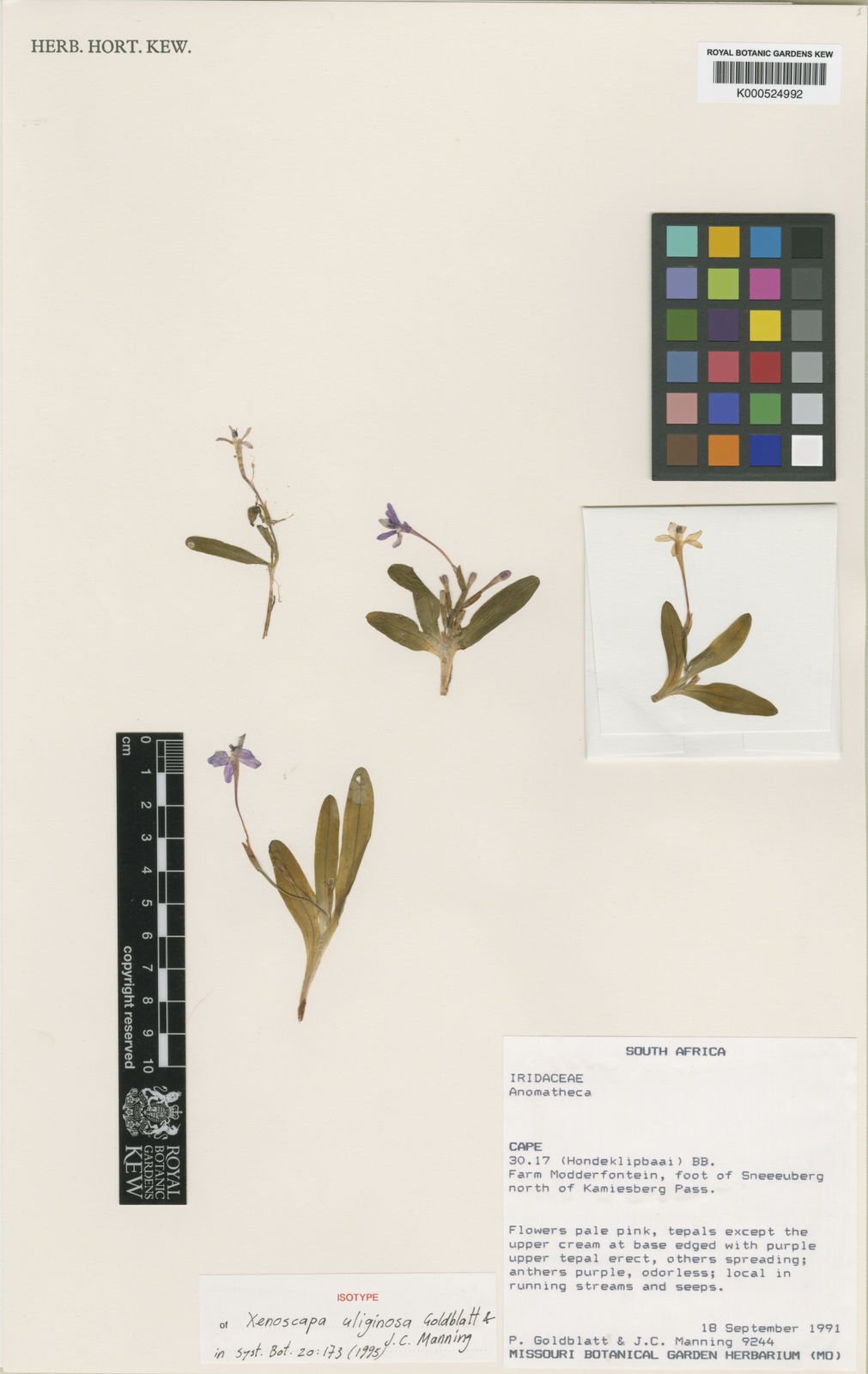
Xenoscapa
Xenoscapa is a genus of herbaceous, perennial and bulbous plants in the family Iridaceae. It consists of only three species distributed in Africa, and is closely related to the genera Freesia. The genus name is derived from the Greek words xenos, meaning "strange", and scapa, meaning "flowering stem".

Eleutherine bulbosa
species of herbaceous, perennial flowering plant in the iris family

Crocosmia masoniorum
species of plant with bright orange flowers
Irideae
right|thumb|Iris milesii
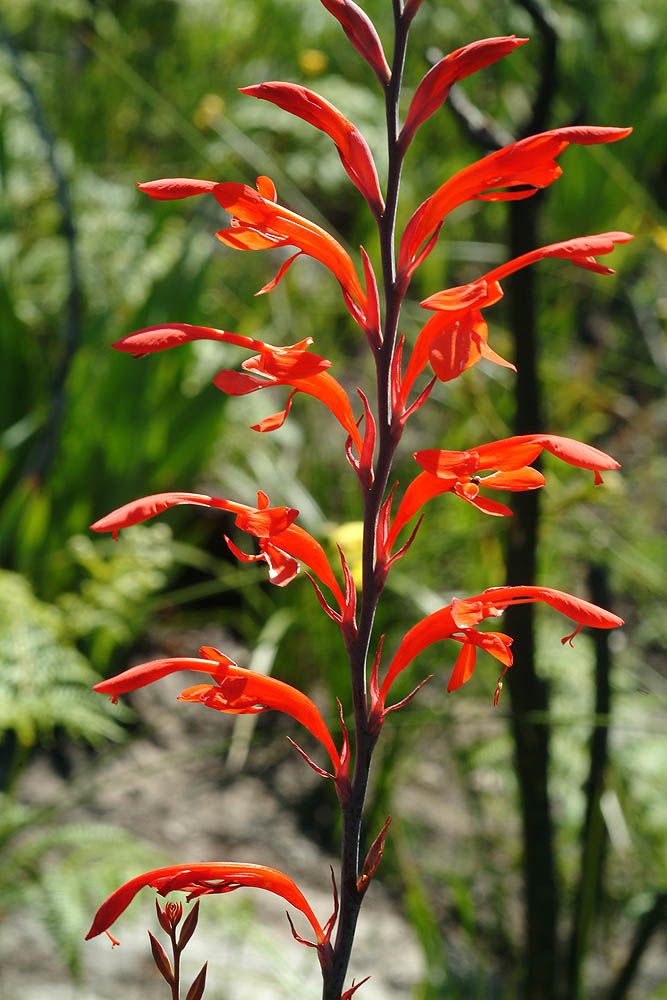
Tritoniopsis
genus of plants

Tritonia crocata
species of plant
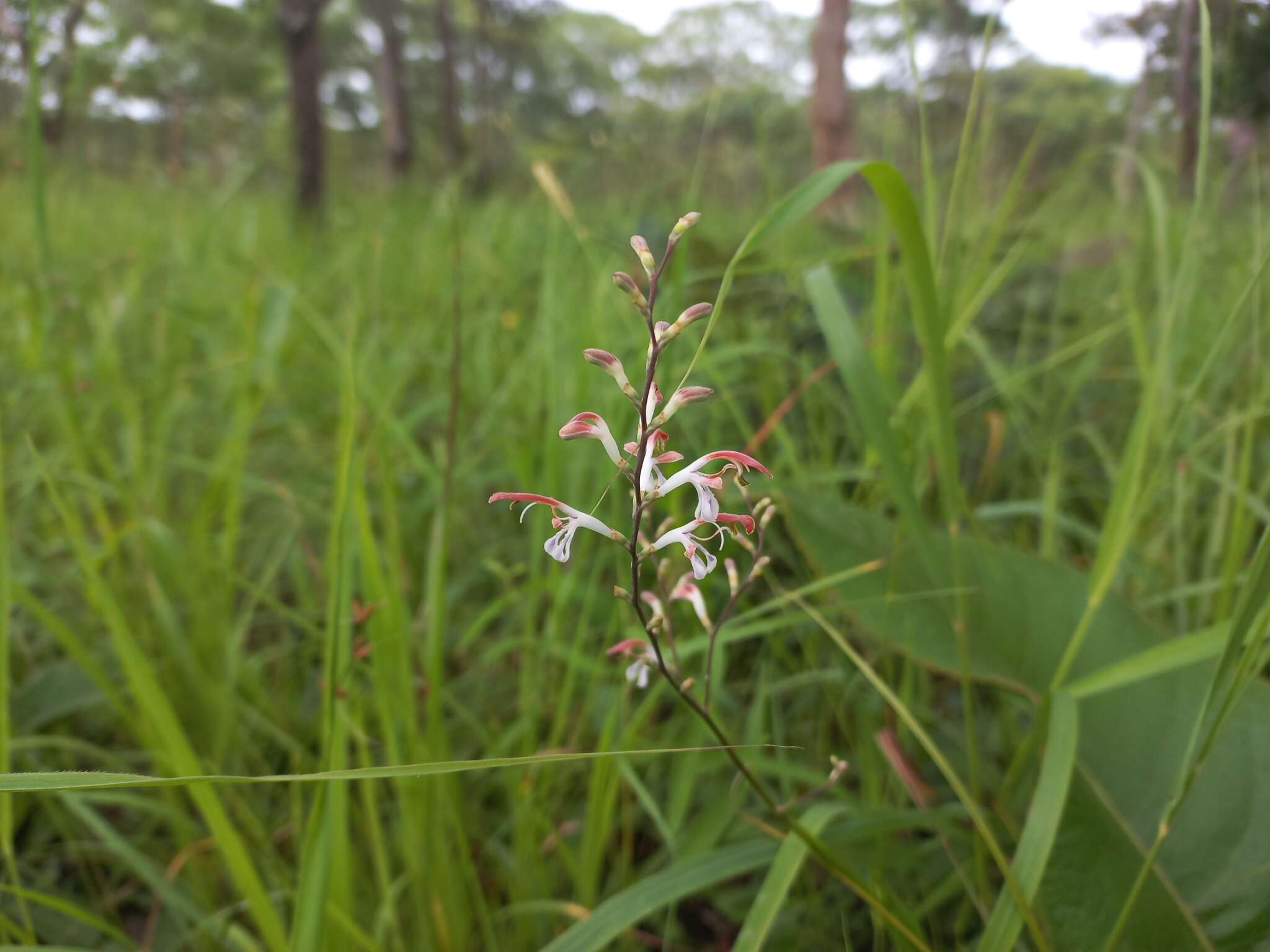
Zygotritonia
Zygotritonia is a genus of herbaceous, perennial and bulbous plants in the family Iridaceae. It contains four species distributed throughout sub-Saharan Africa. The genus name is derived from the word zygomorphic (meaning bilabiate), and the apparent resemblance to some species in the genus Tritonia.
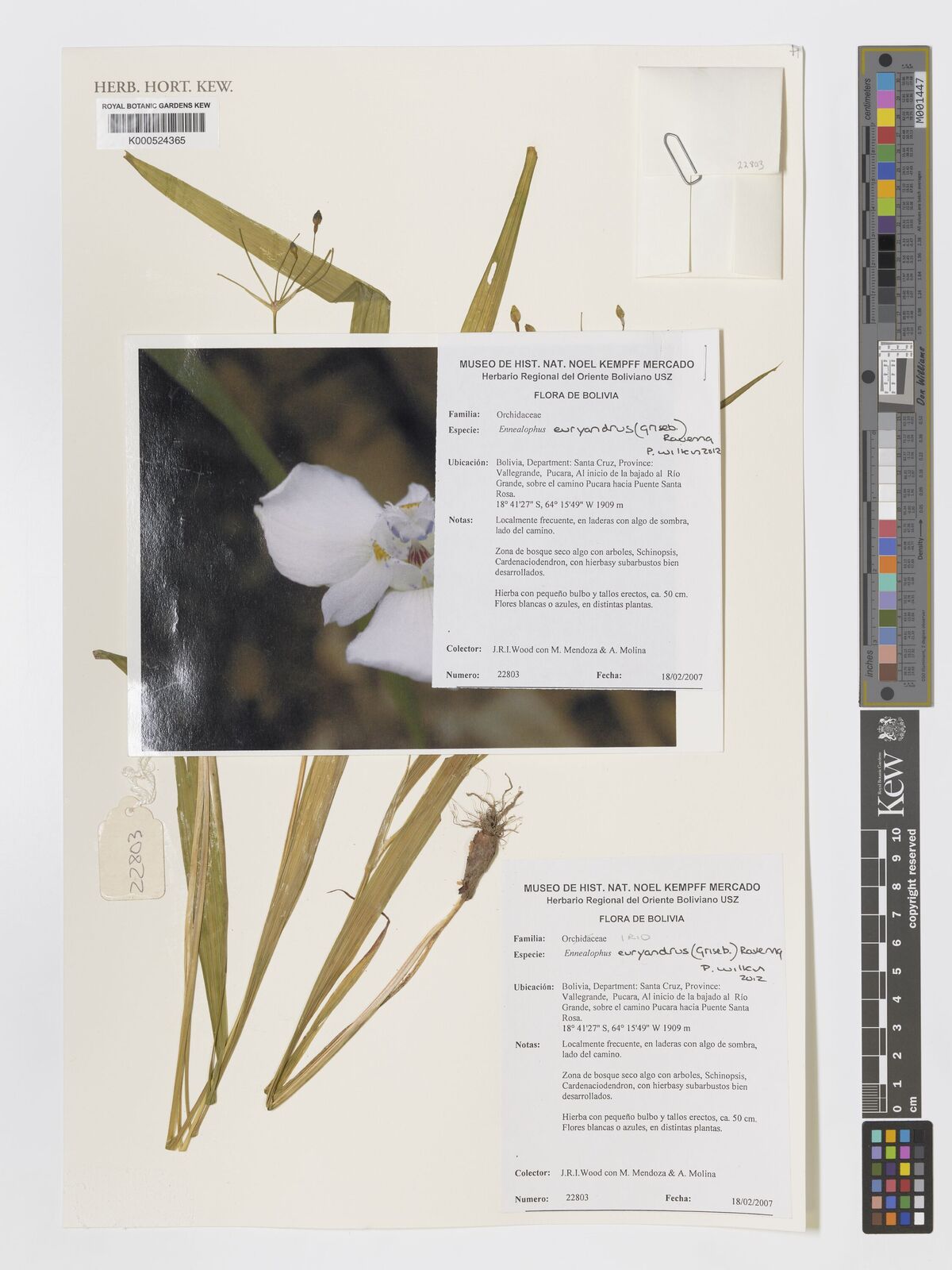
Ennealophus
Ennealophus is a genus of perennial, herbaceous and bulbous plants in the family Iridaceae. It consists in five species distributed from Ecuador to Northern Brazil and Northwest Argentina. The genus name is derived from the Greek words ennea, meaning "nine", and lophus, meaning "crest".

Chasmanthe aethiopica
species of plant

Freesia alba
species of plant
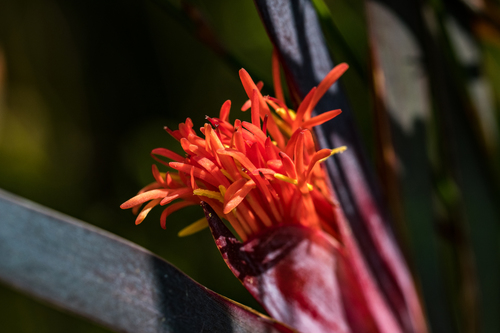
Klattia
Klattia is a genus of flowering plants in the family Iridaceae first described as a genus in 1877. The entire genus is endemic to Cape Province in South Africa. The genus name is a tribute to the German botanist Friedrich Wilhelm Klatt, who significantly advanced the body of knowledge of the family Iridaceae in the 19th century.

Chasmanthe bicolor
species of plant

Cipura
Cipura is a genus of perennial, herbaceous and bulbous plants in the family Iridaceae, related to the genus Cypella. The plants are widely distributed in Mexico, Central, the West Indies, and South America.
Syringodea
Syringodea is a genus of flowering plants in the family Iridaceae, first described as a genus in 1873. The entire genus is endemic to South Africa.
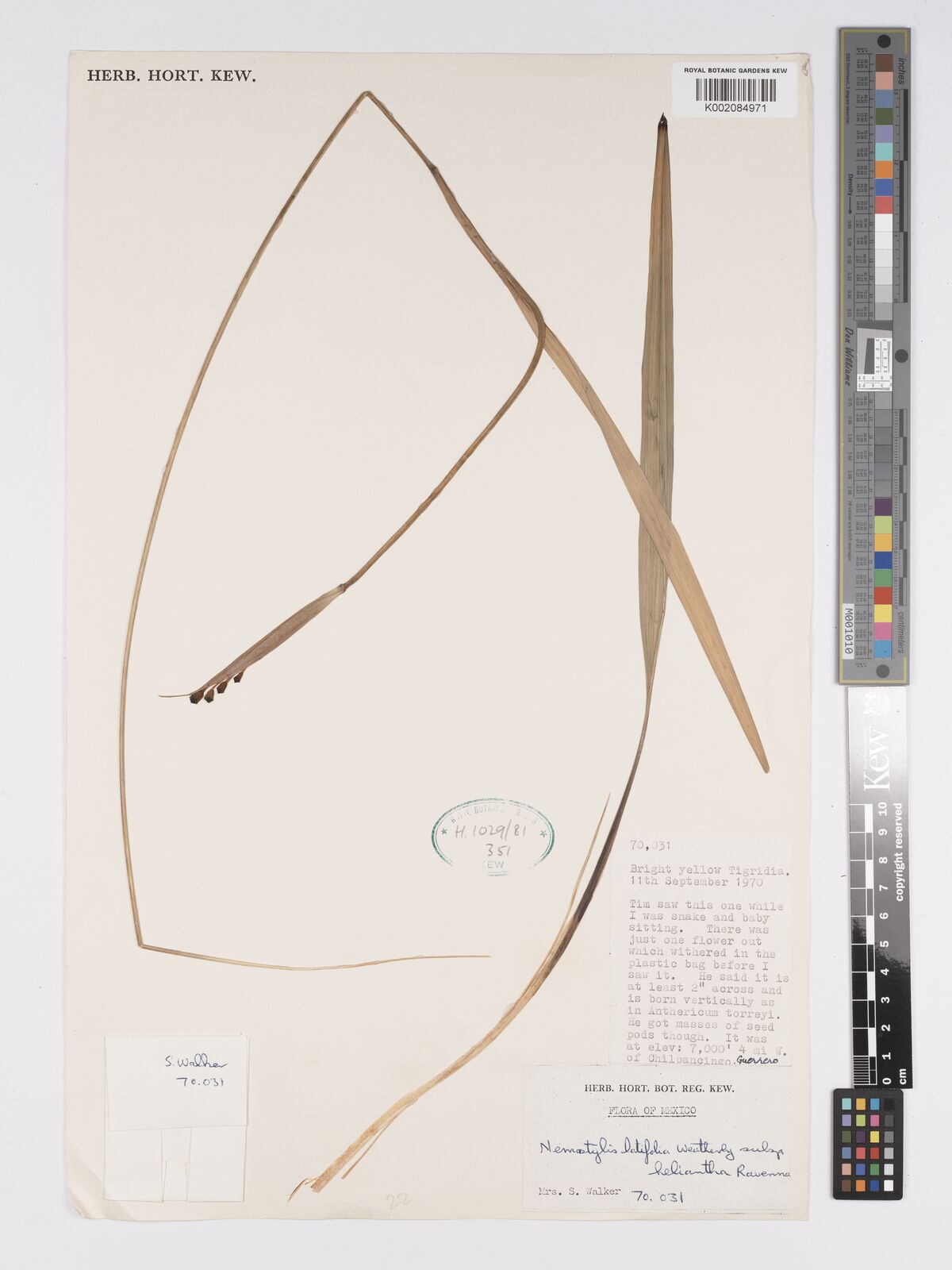
Nemastylis
Nemastylis, or pleatleaf, is a genus of flowering plants in the family Iridaceae, first described as a genus in 1835. It is native to Mexico, Central America, and the southern part of the United States. The genus name is derived from the Greek words nema, meaning "thread", and stylos, meaning "pillar" or "rod".
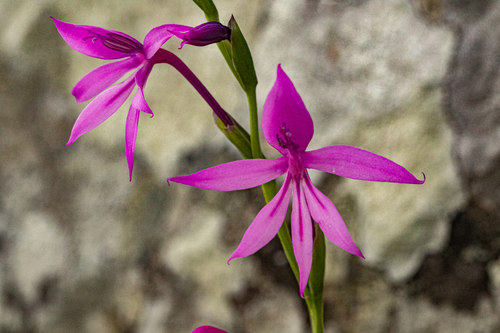
Radinosiphon
Radinosiphon is a genus of flowering plants in the family Iridaceae first described as a genus in 1932. It is native to southern + southeastern Africa.

Dietes grandiflora
species of plant
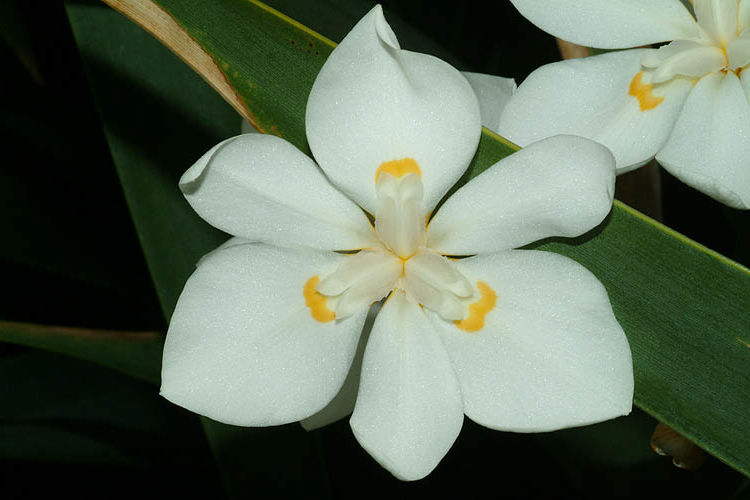
Dietes robinsoniana
species of plant
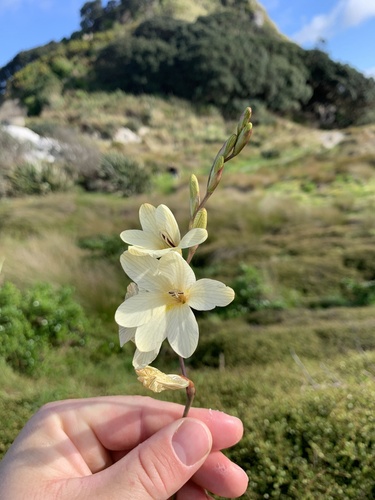
Tritonia gladiolaris
species of plant
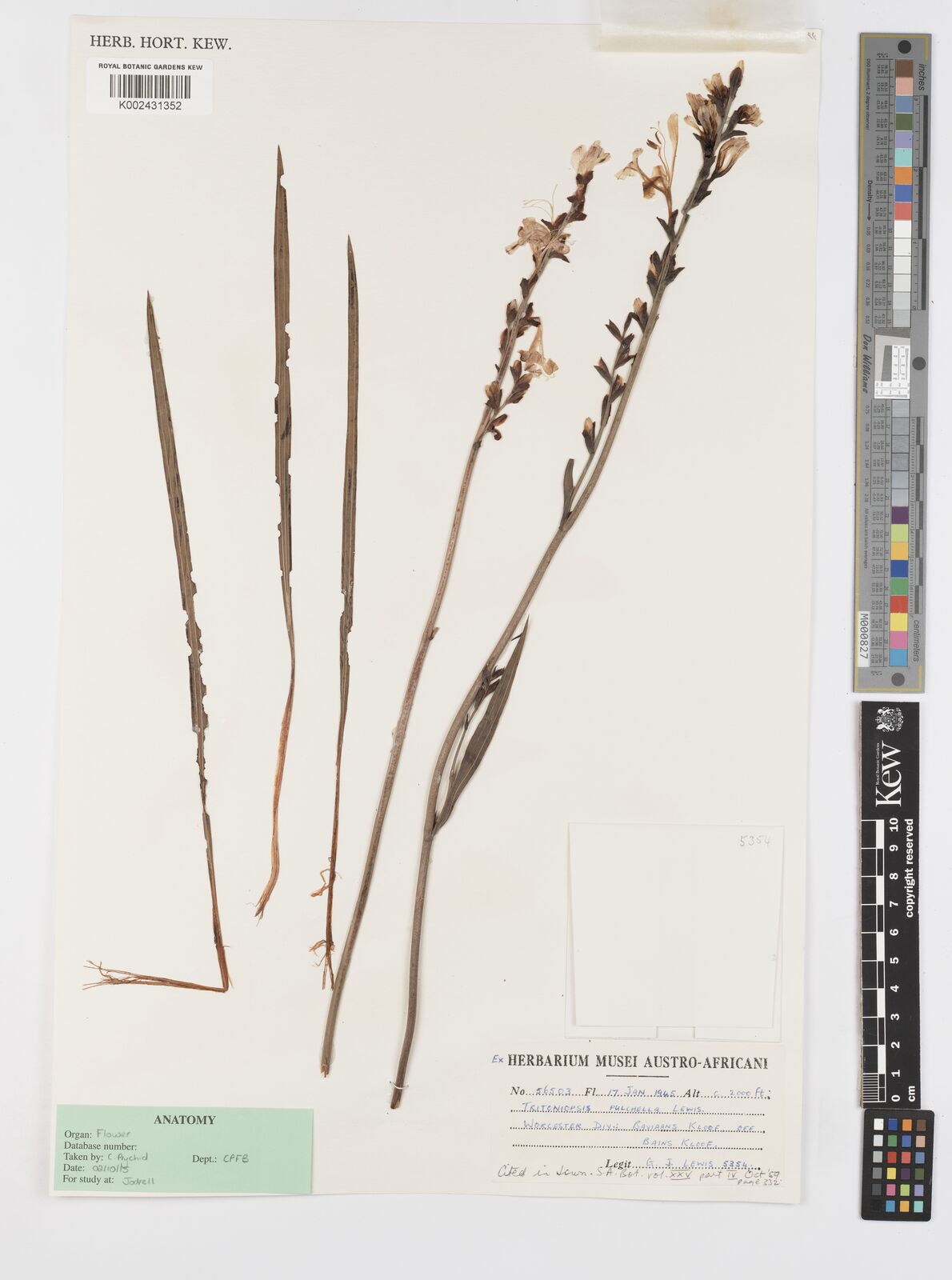
Tritoniopsis pulchella
species of plant

Geosiris
Geosiris is a genus in the flowering plant family Iridaceae, first described in 1894. It was thought for many years to contain only one species, Geosiris aphylla, endemic to Madagascar. But then in 2010, a second species was described, Geosiris albiflora, from Mayotte Island in the Indian Ocean northwest of Madagascar. In 2017, a third species was found in Queensland, Australia, Geosiris australiensis.
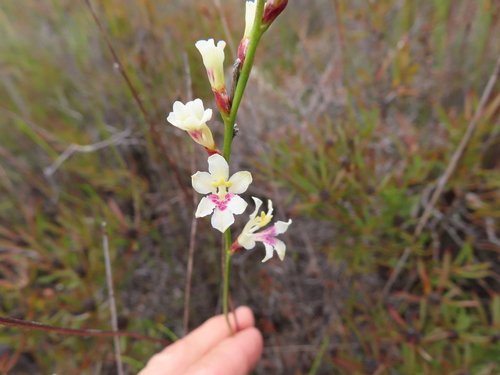
Tritoniopsis unguicularis
species of plant
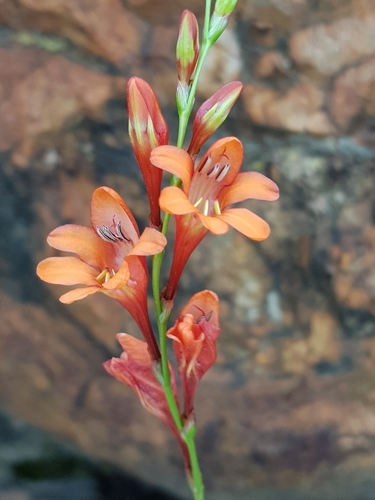
Tritonia nelsonii
African, monocotyledonous plant species
Codonorhiza
Codonorhiza is a genus of flowering plants belonging to the family Iridaceae. It is endemic to the southwestern Cape Provinces of South Africa.

Ferraria crispa
species of plant
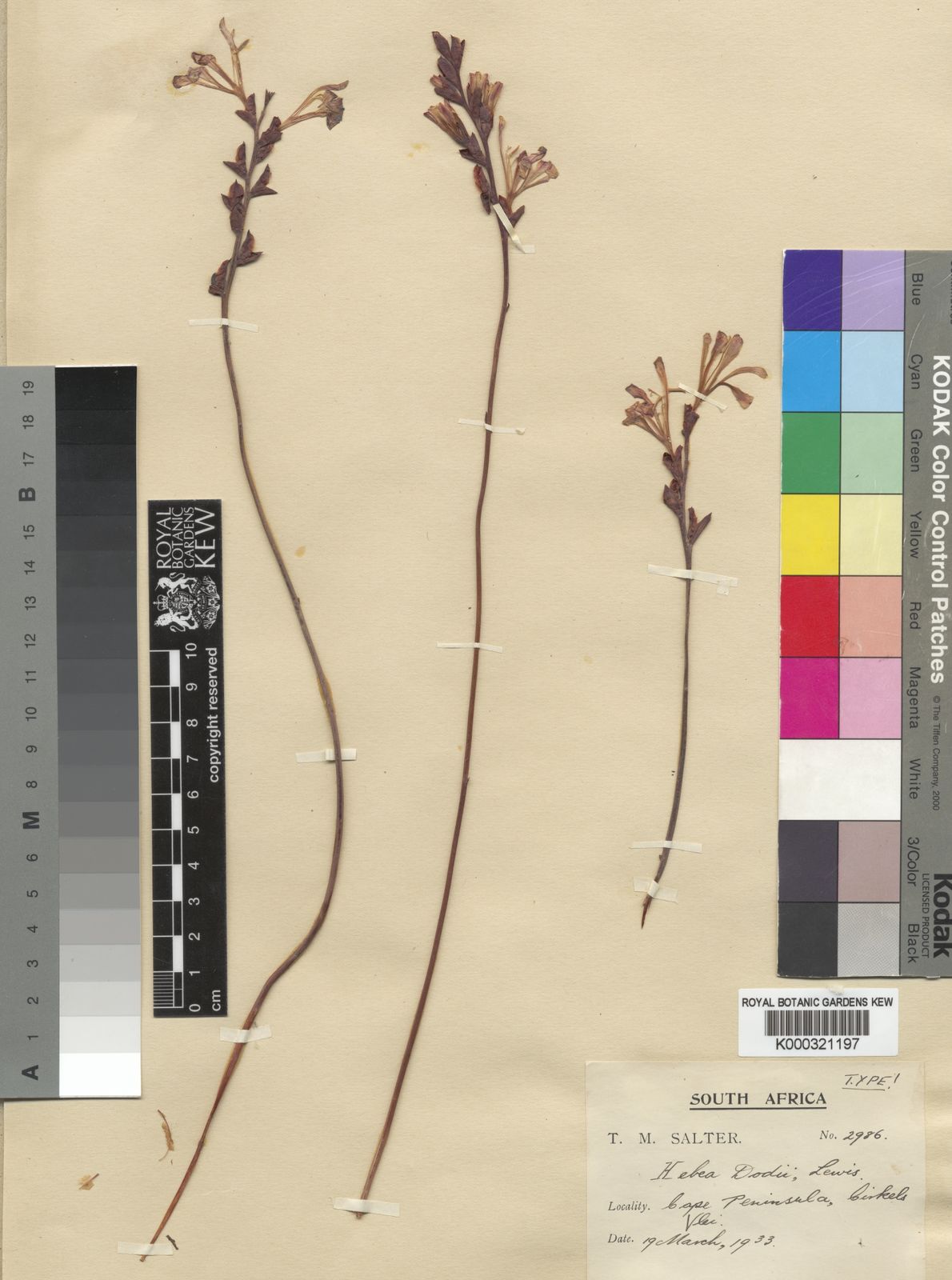
Tritoniopsis dodii
species of plant