Category
page 1Iron oxide pigments

hematite
Hematite (), also spelled as haematite, is a common iron oxide compound with the formula Fe2O3 and is widely found in rocks and soils. Hematite crystals belong to the rhombohedral lattice system which is designated the alpha polymorph of . It has the same crystal structure as corundum () and ilmenite (). With this crystal structure geometry it forms a complete solid solution at temperatures above .

magnetite
thumb|upright=1.2|Magnetite is one of the very few minerals that is ferrimagnetic; it is attracted by a [[magnet as shown here]]
thumb|Unit cell of magnetite. The gray spheres are oxygen, green are divalent iron, blue are trivalent iron. Also shown are an iron atom in an octahedral space (light blue) and another in a tetrahedral space (gray).
Magnetite is a mineral and one of the main iron ores, with the chemical formula . It is one of the oxides of iron, and is ferrimagnetic; it is attracted to a magnet and can be magnetized to become a permanent magnet itself. With the exception of extremel

goethite
thumb|upright|Unusual specimen of goethite replacing a gypsum [[stalactite; the center is hollow. From Santa Eulalia, Chihuahua, Mexico.]]
Goethite (, ) is a mineral of the diaspore group, consisting of iron(III) oxide-hydroxide, specifically the α-polymorph. It is found in soil and other low-temperature environments such as sediment. Goethite has been well known since ancient times for its use as a pigment (brown ochre). Evidence has been found of its use in paint pigment samples taken from the caves of Lascaux in France. It was first described in 1806 based on samples found in the Hollertszu

ochre
thumb|Ochre pigment
Ochre ( ; ) is a family of natural clay earth pigments, made up of ferric oxide and varying amounts of clay and sand, ranging in colour from yellow to deep orange or brown. The term is also used for the colours produced by this pigment, especially a light brownish-yellow. A variant of ochre containing a large amount of hematite, or dehydrated iron oxide, has a reddish tint known as red ochre (or, in some dialects in England, ruddle). The term "ochre" is colloquially used to cover a range of different substances used for their colours in Aboriginal Australian art and ceremon

iron oxide
class of chemical compounds composed of iron and oxygen
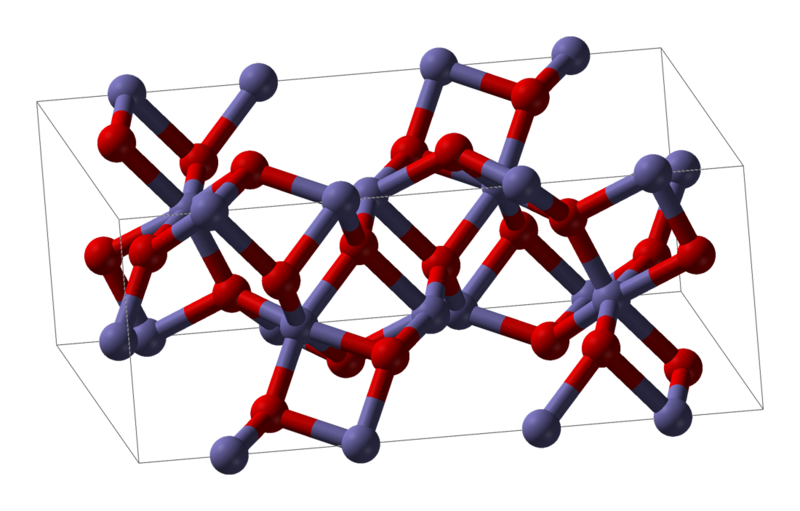
iron(III) oxide
chemical compound
iron(II) oxide
chemical compound
iron(II,III) oxide
chemical compound
Falu red
color
_-_Google_Art_Project.jpg)
umber
thumb|upright=1.0|Jules Bastien-Lepage, Pas Meche, 1882. An example of the shadows created by using umber in a painting.
sienna
Sienna () is an earth pigment containing iron oxide and manganese oxide. In its natural state, it is yellowish brown, and it is called raw sienna. When heated, it becomes a reddish brown, and it is called burnt sienna. It takes its name from the city-state of Siena, where it was produced during the Renaissance. Along with ochre and umber, it was one of the first pigments to be used by humans, and is found in many cave paintings. Since the Renaissance, it has been one of the brown pigments most widely used by artists.

hemosiderin
thumb|Histopathology of a case of chronic pulmonary congestion, showing interstitium with hemosiderin deposition (black arrow), edema and collagenous thickening. The alveolus contains a siderophage (white arrow, characterized by coarse brown pigment, which is slightly refractile).
thumb|Hemosiderin image of a kidney viewed under a microscope. The brown areas represent hemosiderin

sinopia
thumb|A sinopia showing a king, from the Museum of Sinopie in Pisa, [[Italy. ]]
thumb|The sinopia—in this case, meaning the underpainting—of a painting of the Madonna and Child by [[Giovanni di Francesco Toscani ]]
thumb|A sinopia for a fresco by Buonamico Buffalmacco (1290-1341), in the Museum of Sinopie in Pisa
Sinopia (also known as sinoper, named after the now Turkish city Sinop) is a dark reddish-brown natural earth pigment, whose reddish colour comes from hematite, a dehydrated form of iron oxide. It was widely used in Classical Antiquity and the Middle Ages for painting, and during the
Venetian red
pigment
mummy brown
brown paint made from white pitch, myrrh, and ground-up Egyptian mummies

ferrihydrite
thumb|alt=X-ray diffraction patterns for six-line and two-line ferrihydrite.|X-ray diffraction patterns for six-line (top) and two-line (bottom) ferrihydrite. Cu Kα radiation.
clay earth pigment
naturally occurring minerals used as pigments
Indian red
color
Caput mortuum
historical purple pigment