Category
page 1Ironmongery
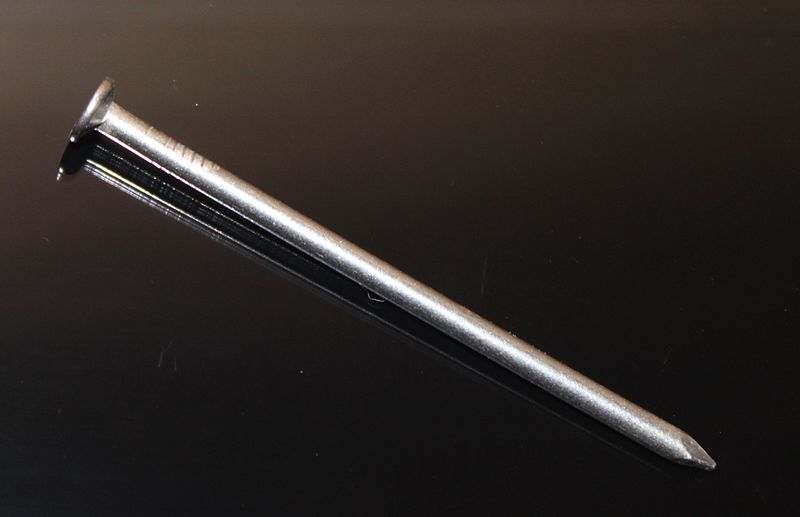
nail
sharp object of hard metal used as a fastener

washer
thin plate with a hole, normally used to distribute the load of a threaded fastener

door handle
attached device used to open or close a door

baluster
thumb|upright|Illustration of various examples of balusters, in A Handbook of Ornament, by Franz S. Meyer
thumb|upright|The term derives from the swelling form of the half-open flower of Punica granatum, in Italian balaustra

wrought iron
iron alloy with a very low carbon content and with fibrous slag inclusions, worked with hammers or dies

handrail
thumb|300px|A modern handrail made of metal
door knocker
item of door furniture

hook
thumb|Lifting hook on a crane truck with a standard round hook and a gated opening
A hook is a tool consisting of a length of material, typically metal, that contains a portion that is curved/bent back or has a deeply grooved indentation, which serves to grab, latch or in any way attach itself onto another object. The hook's design allows traction forces to be relayed through the curved/indented portion to and from the proximal end of the hook, which is either a straight shaft (known as the hook's shank) or a ring (sometimes called the hook's "eye") for attachment to a thread, rope or chain, p
door closer
mechanical device that closes a door in a controlled manner

ironmongery
thumb|An ironmonger's shop in Pickering, North Yorkshire
thumb|Inside a typical ironmonger's in Soignies (Belgium)
thumb|An ironmonger's shop in France, with iron goods and other consumer goods
Ironmongery originally referred, first, to the manufacture of iron goods and, second, to the place of sale of such items for domestic rather than industrial use. In both contexts, the term has expanded to include items made of steel, aluminium, brass, or other metals, as well as plastics.