Category
page 1Isaac Newton

Isaac Newton
Sir Isaac Newton was an English polymath who was a mathematician, physicist, astronomer, alchemist, theologian, author and inventor. He was a key figure in the Scientific Revolution and the Enlightenment that followed. His book Philosophiæ Naturalis Principia Mathematica, first published in 1687, achieved the first great unification in physics and established classical mechanics. Newton also made seminal contributions to optics, and shares credit with the German mathematician Gottfried Wilhelm Leibniz for formulating infinitesimal calculus, although he developed calculus years before Leibniz. Newton contributed to and refined the scientific method, and his work is considered the most influential in bringing forth modern science.

Newton's laws of motion
classical formulation of Mechanics by Isaac Newton
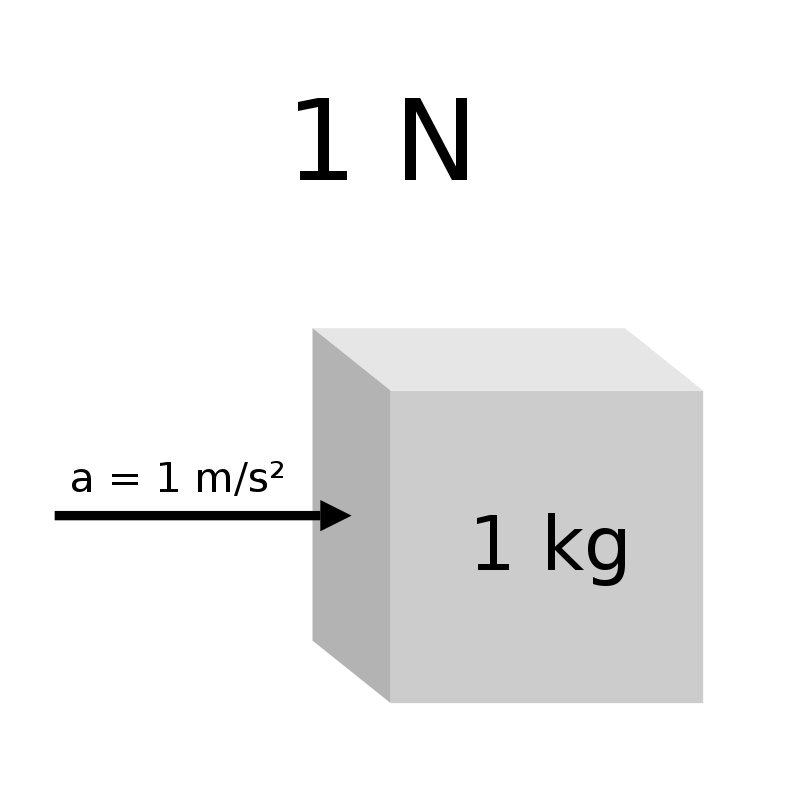
newton
SI unit of force

Newton's law of universal gravitation
classical mechanics physical law

Newton's method
algorithm for finding a zero of a function
Newton telescope
type of reflecting telescope
Newton's law of cooling
physical law
annus mirabilis
year during which events of major importance occurred, often referring to a specific year
corpuscular theory of light
theory
standing on the shoulders of giants
stylistic device to acknowledge previous discoveries
history of classical mechanics
aspect of history
Newton disc
rotating disc with segments in rainbow colours that appears as white or grey when spun fast
Woolsthorpe Manor
country house in Woolsthorpe-by-Colsterworth, Lincolnshire, England, UK
Hypotheses non fingo
famous phrase used by Isaac Newton in one of his essays
Newton's identities
relations between power sums and elementary symmetric functions
Newton's cannonball
thought experiment
Leibniz–Newton calculus controversy
argument between Isaac Newton and Gottfried Wilhelm Leibniz over who had first invented calculus
Newton's inequalities
inequality relating elementary symmetric means
Isaac Newton Medal
gold medal awarded annually by the Institute of Physics
Template:Isaac Newton
Wikimedia template
Isaac Newton's occult studies
Works by Newton now seen as non-scientific
post-Newtonian expansion
approximation of General Relativity

Newtonianism
thumb|Title page of Isaac Newton's Opticks
Newton's theorem of revolving orbits
Theorem in classical mechanics
Newtonian potential
green's function for Laplacian
impact depth
Depth of projectile penetration
Newton polygon
tool for solving algebraic equations with valued coefficients
bucket argument
argument demonstrating that rotational motion cannot be defined as the relative rotation of the body with respect to the immediately surrounding bodies
Catherine Barton
society wit, Isaac Newton's niece
Isaac Newton's religious views

The Analyst
book by George Berkeley
Newton–Pepys problem
probability problem
John Conduitt
British politician
William Chaloner
English counterfeit coiner and confidence trickster
clockwork universe theory
deterministic model of the universe
Newtonian dynamics
formulation of physics