Category
page 1Islam and Judaism
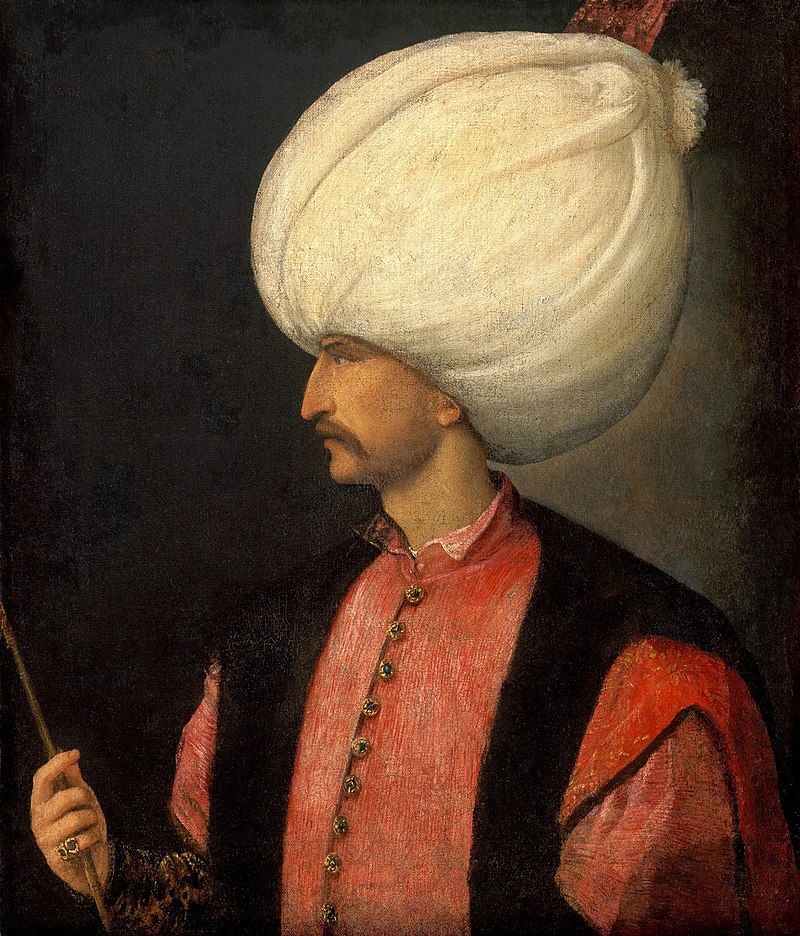
Suleiman the Magnificent
the tenth and greatest Sultan of Ottoman Empire (1520–1566)

Semitic people
obsolete term for an ethnic group in the Middle East
.jpg)
Al-Isra
thumb|right|Quran page with Al-Isra verses 34-44; a later interlinear Persian translation is in red. Delhi Sultanate, India late 14th-15th century.
.jpg)
Nimrod
thumb|267px|Nimrod by David Scott (painter)|David Scott, 1832
Nimrod is a biblical figure mentioned in the Book of Genesis and the Books of Chronicles. The son of Cush and thus the great-grandson of Noah, Nimrod was described as a king in the land of Shinar (Lower Mesopotamia). The Bible states that he was "a mighty hunter before the Lᴏʀᴅ [and] ... began to be mighty in the earth". Nimrod became a symbol of defiance against God.

Battle of the Trench
failed besieging of early Muslims by Arab and Jewish forces in 627 CE

People of the Book
Islamic term which refers to Jews, Christians and Sabians and is sometimes applied to members of other religions such as Zoroastrians

Hussein bin Ali
Sharif and Emir of Mecca, then King of Hejaz and Sharifian Caliph (1854–1931)

hamsa
upright|thumb|A hanging hamsa in a car in Tunisia.
The hamsa (Arabic ), also romanized khamsa, and known as the hand of Fatima, is a palm-shaped amulet popular throughout North Africa and in the Middle East and commonly used in jewellery and wall hangings. Depicting the open hand, an image recognized and used as a sign of protection in many times throughout history, the hamsa is believed to provide defense against the evil eye.
Safiyya bint Huyayy
The tenth wife of the Islamic Prophet Muhammad
%20Personification.jpg)
Samael
thumb|Samael (1890) by Evelyn De Morgan
thumb|A relief of the Archangel Samael in red robe, shown on the left side of the altar at Saint Bartholomew's Church, in Sydenham, London.

Khidr
Khidr () is a quranic figure of Islam. He is described in Surah al-Kahf as a righteous servant of God possessing great wisdom or mystic knowledge. In various Islamic and non-Islamic traditions, Khidr is described as an angel, prophet, or wali (saint), who guards the sea, teaches secret knowledge and aids those in distress. He prominently figures as patron of the Islamic saint Ibn Arabi. The figure of al-Khidr has been syncretized over time with various other figures including Dūraoša and Sorūsh in Iran, Sargis the General and Saint George in Asia Minor and the Levant, Elijah and Samael (the di
Jewish exodus from the Muslim world
departure of Jews from Arab countries from 1948 to the 1970s
Constitution of Medina
proclamation by Muhammad to end intertribal fighting in Medina

dönme
thumb|230px|right|Illustration of Sabbatai Zevi|Shabbetai Tzevi from the [[Jewish Encyclopedia (1906), Joods Historisch Museum, Amsterdam]]

Exilarch
thumb|250px|An exhibit depicting Exilarch Rav Huna|Huna at the [[Beit Hatfutsot]]
The exilarch was the leader of the Jewish community in Mesopotamia (modern-day Iraq) during the Parthian and Sasanian Empires and Abbasid Caliphate up until the 1258 CE Mongol invasion of Baghdad, with intermittent gaps due to ongoing political developments. The exilarch was regarded by the Jewish community as the royal heir of the Davidic line and held prominence as both a rabbinical authority and a noble within the Persian and Arab courts.
Islamic–Jewish relations
interreligious relations between two Abrahamic religions
Invasion of Banu Qurayza
627 Muslim victory in Dhul Qa‘dah
Islam and antisemitism
hosility, prejudice, or discrimination of Jews by Muslims
Museum of Moroccan Judaism
Museum for Jewish cultures in Casablanca, Morocco
Muslim supporters of Israel
Muslims who support Israel
Muhammad and the Bible
arguments that prophecies of Muhammad exist in the Bible

House of One
church building in Germany
Judaism's view on Muhammad
views of the Jewish religion on the Islamic prophet Muhammad
Ibn Kammuna
philosopher and dissenter of Islam
history of the Jews under Muslim rule
aspect of history
medieval Jewish philosophy
a philosophy developed from the 10th to the 14th century by Jews in the Middle East and Spain
Comparison of Islamic and Jewish dietary laws
Wikimedia list article
Judah HeHasid
Polish rabbi
Gharqad
According to several Sunni Islamic hadiths that describe Islamic eschatology, Gharqad () is a kind of tree that would protect Jews from Muslims at the end times.
Arabian tribes that interacted with Muhammad
tribes recored to have interacted with Muhammad
Ka'b ibn Asad
chief of a Jewish tribe in Medina
Arab rescue efforts during the Holocaust
Jews sheltered by Arab and Muslim population

Ports of Call
1996 novel by Amin Maalouf