Category
page 1Islam and politics
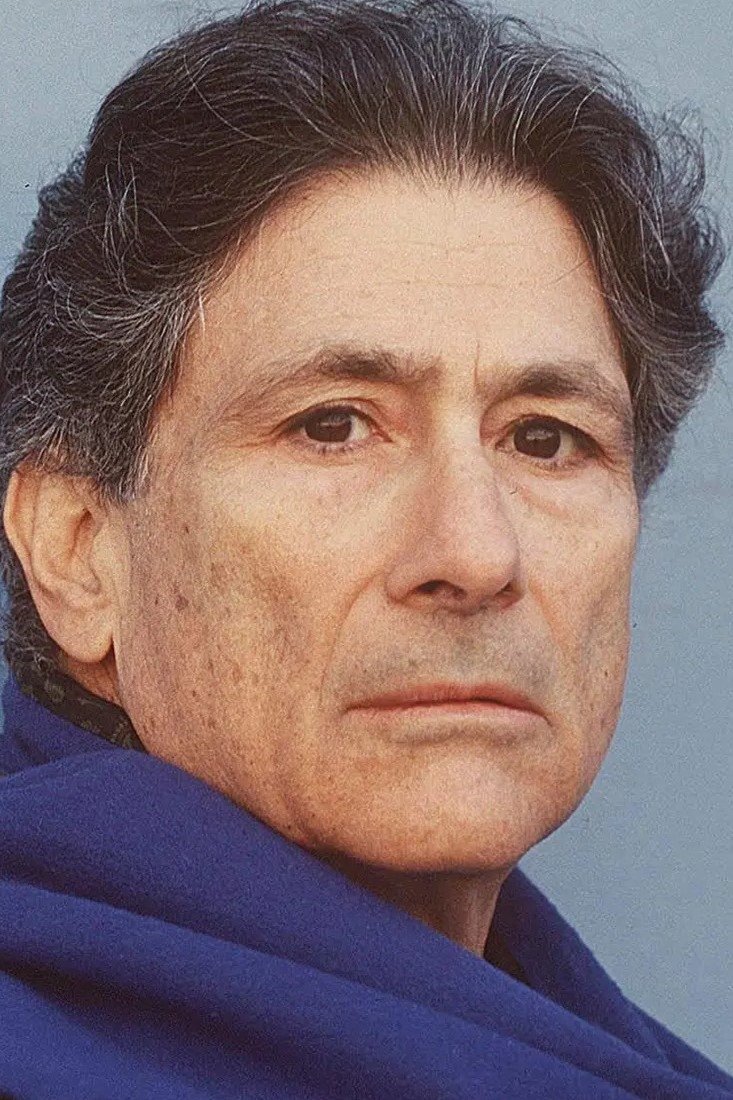
Edward Said
Palestinian-American professor (1935–2003)

Fethullah Gülen
Turkish preacher and imam (1941–2024)

Pan-Islamism
thumb|400px|Islam by country: [[Sunni Shia Ibadi]]thumb|Flag of the Shahada, often associated with Pan-Islamism.
Pan-Islamism () is a internationalist and anti-nationalist political movement that advocates the unity of Muslims under one Islamic state, often a caliphate or an international organization with Islamic principles. Historically, after Ottomanism, which aimed at the unity of all Ottoman citizens, pan-Islamism was promoted in the Ottoman Empire during the last quarter of the 19th century by Sultan Abdul Hamid II for the purpose of preventing secession movements of the Muslim peoples i
Islamic fundamentalism
ideology, which equals 'return to Islam'

Alexandre del Valle
French essayist
Daniel Pipes
American historian, writer, journalist and political scientist (born 1949)
islamic socialism
political ideology combining the ideas of socialism with the religion of Islam
Gülen movement
transnational Islamist movement
Vasily Bartold
Russian orientalist (1869–1930)
Islamic extremism
extreme or radical form of Islam
Maxime Rodinson
French historian, sociologist and orientalist (1915–2004)
.png)
Nahda
thumb|Renaissance by Moustafa Farroukh (1945), a painting symbolizing the Nahda
The Nahda (, meaning 'the Awakening'), also referred to as the Arab Awakening, Arab Enlightenment or Arab Renaissance, was a cultural movement that flourished in Arab-populated regions of the Ottoman Empire, notably in Syria, Lebanon, Egypt, and Tunisia, during the second half of the 19th century and the early 20th century.
Koenraad Elst
Belgian author
Mohamed Said Ramadan Al-Bouti
Syrian Sunni Muslim scholar (1929–2013)
Gilles Kepel
French political scientist and Arabist (born 1955)
political Islam
any interpretation of Islam as a source of political identity and action
Islamic democracy
political ideology that can be secular or religious
Olivier Roy
French political scientist
Great Mosque of Brussels
mosque in Brussels, Belgium
Ziauddin Sardar
British-Pakistani writer, cultural critic, and public intellectual
Islam and secularism
Relationship between Islam and Secularism
Imamate
The term imamate or imamah (, imāmah) means "leadership" and refers to the office of an imam or a Muslim theocratic state ruled by an imam.
Juan Cole
American scholar
Muslim supporters of Israel
Muslims who support Israel
Jakarta Charter
draft preamble to the Constitution of the Republic of Indonesia
political aspects of Islam
overview of political aspects drawn from the religion of Islam
Oxford Centre for Islamic Studies
research centre in Oxford, England
Maslaha
Maslaha or maslahah or maslahat (, ) or maslaha mursala (, ), comes from the term "Salihat" (good deeds, also linked to Islah and Istislah), is a concept in Sharia (Islamic divine law) regarded as a basis of law. It forms a part of extended methodological principles of Islamic jurisprudence (uṣūl al-fiqh) and denotes prohibition or permission of something, according to necessity and particular circumstances, on the basis of whether it serves the public interest of the Muslim community (ummah). In principle, maslaha is invoked particularly for issues that are not regulated by the Qur'an, the su

Park51
Park51 (originally named Cordoba House) was a development originally envisioned as a 13-story Islamic community center and mosque in Lower Manhattan, New York City, United States. The developers hoped to promote interfaith dialogue. Due to its proposed location, two blocks from the World Trade Center site of the September 11 attacks, the proposed building was widely and controversially referred to as the "Ground Zero mosque", and the issue was amplified as an astroturf campaign to influence the 2010 United States elections.
Efraim Karsh
Israeli-British historian (born 1953)
Middle East Forum
non-profit organization in the USA
Muhammad Shahrur
Syrian Islamic scholar (1938–2019)
Dhimmitude
Dhimmitude is a neologism characterizing the status of non-Muslims under Muslim rule, popularized by the Egyptian-born British writer Bat Ye'or in the 1980s and 1990s. It is constructed from the Arabic dhimmi, "non-Muslim living in an Islamic state". Akbarzadeh and Roose suggest that Ye'or equates Dhimmitude with servitude.
Aram Ter-Ghevondyan
Egyptian-born Armenian historian (1928–1988)
Norman Stillman
American historian

The World Forum for Proximity of Islamic Schools of Thought
organization
Martin Kramer
American journalist

moderate Muslim
political and religious term
Islamic nationalism
the political and cultural expression of nationalism founded upon the religious tenets and identity of Islam
International propagation of the Salafi movement and Wahhabism
2014 Constitution of Tunisia
constitution of Tunisia
Ulu'l-amr
In Islamic culture, the term '''''ulu'l-amr'' () or uli'l-amr''' () refers to "those charged with authority or responsibility or decision, or the settlement of affairs". It is referenced in the 59th verse of the fourth chapter of the Qur'an, and outlines the necessity of Islamic followers to obey the control of Allah, Muhammad and those in authority as long as they too obey Allah and Muhammad. They are seen as the leaders and scholars of Islamic culture.
Yoginder Sikand
Indian writer and academic
London Declaration for Global Peace and Resistance against Extremism 2011
The obedience verse
verse of the Quran, exhorting believers to obey God, the Prophet, and those of authority
prisoners of war in Islam
aspect of Islamic jurisprudence
Petro-Islam
thumb|upright|230px|Ibn Saud, the first king of [[Saudi Arabia]]
Female political leaders in Islam and in Muslim-majority countries
leaders of Muslim countries
Fiqh al-aqallīyāt
jurisprudence of Muslim minorities
Muzammil H. Siddiqi
American Islamic scholar
Saïd Amir Arjomand
Iranian-American sociologist (born 1946)
World Assembly of Islamic Awakening
Ahl al-hall wal-aqd
Those who are qualified to act on behalf of the Muslim community in electing a caliph
Jonathan Schanzer
American journalist

Joel Beinin
American academic and historian (born 1948)
peace in Islamic philosophy
Salaam
Yvonne Haddad
Syrian-American academic
Baghi
Oppression in Islam
Masood Ashraf Raja
Pakistani-American writer (born 1965)
political quietism in Islam
Islamic withdrawal from politics