Category
page 1James Watt
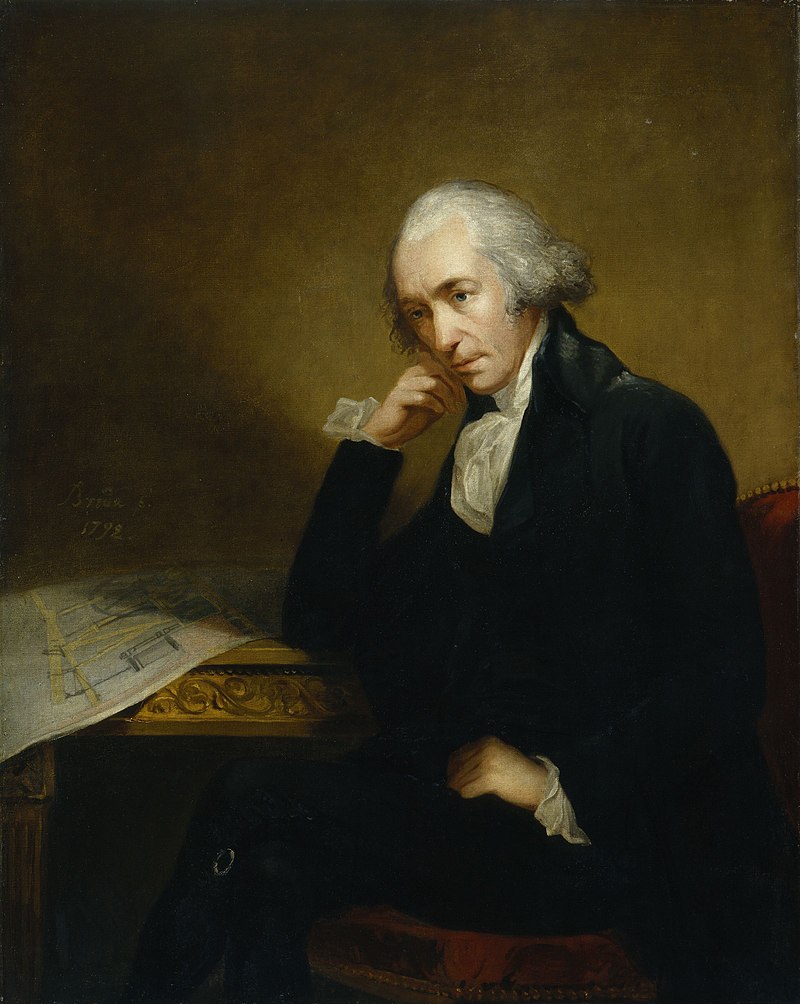
James Watt
British engineer (1736–1819)
watt
The watt (symbol: W) is the unit of power or radiant flux in the International System of Units (SI), equal to 1 joule per second or 1 kg⋅m2⋅s−3. It is used to quantify the rate of energy transfer. The watt is named in honor of James Watt (1736–1819), an 18th-century Scottish inventor, mechanical engineer, and chemist who improved the Newcomen engine with his own steam engine in 1776, which became fundamental for the Industrial Revolution.

metric horsepower
Horsepower (hp) is a unit of measurement of power, or the rate at which work is done, usually in reference to the output of engines or motors. There are many different standards and types of horsepower. Two common definitions used today are the imperial horsepower, abbreviated hp or bhp, which is about , and the metric horsepower, also represented as cv or PS, which is approximately . The electric horsepower, hpE, is exactly , while the boiler horsepower is 9809.5 or 9811 watts, depending on the exact year.
Boulton and Watt
Defunct British engineering firm (1775–1895)
Watt steam engine
Industrial Revolution era stream engine design
Watt's linkage
mechanical linkage that converts rotary motion to approximately-straight motion, invented by James Watt
Watt's curve
algebraic curve
James Watt International Medal
British award for mechanical engineering