Category
page 1Japan in World War II

Kamikaze
thumb|254x254px|A kamikaze attack aircraft crashes into a US naval warship, May 1945.
, officially , were a part of the Japanese Special Attack Units of military aviators who flew suicide attacks for the Empire of Japan against Allied naval vessels in the closing stages of the Pacific campaign of World War II, intending to destroy warships more effectively than with conventional air attacks. About 3,800 kamikaze pilots died during the war in attacks that killed more than 7,000 Allied naval personnel, sank several dozen warships, and damaged scores more. The term is used generically in modern w
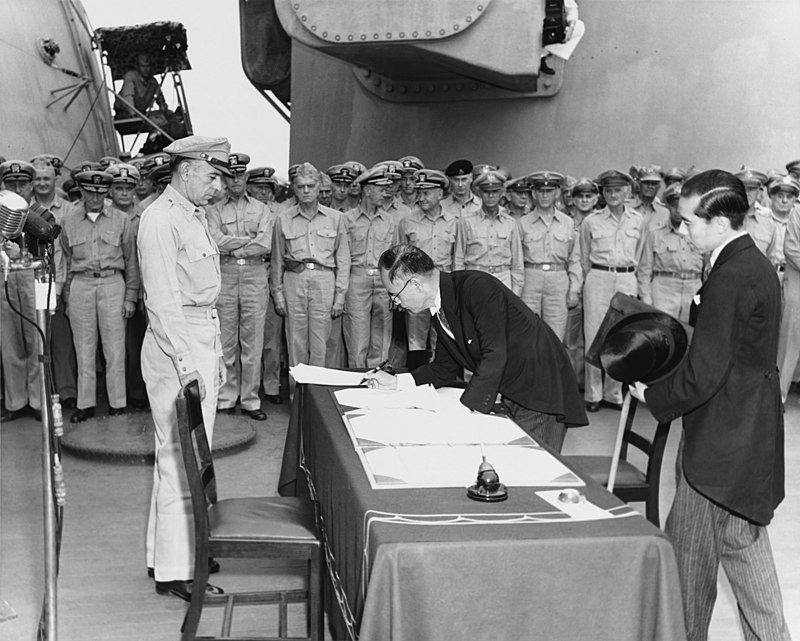
surrender of Japan
end of World War II, 2 September 1945

Imperial Japanese Army
ground-based armed forces of Japan, from 1868 to 1945
Japanese Instrument of Surrender
1945 agreement ending hostilities in WWII
Hirohito surrender broadcast
radio broadcast in which Emperor Hirohito announced the Japanese surrender in World War II
Greater East Asia Co-Prosperity Sphere
propaganda term for the sphere of influence of the Japanese empire, purporting to provide pan-Asian autonomy free from European colonialism
Rising Sun Flag
Japanese flag
Taisei Yokusankai
Empire of Japan's ruling organization during much of World War II
Kyūjō Incident
coup d'état
Japan during World War II
involvement of Japan in World War II
Sakhalin Koreans
Ethnic Koreans living on Sakhalin Island
Japanese holdout
World War II soldier in the Pacific who continued to fight after Japan surrendered

Tonarigumi
right|thumb|250px|Emergency food distribution by tonarigumi housewives
The was the smallest unit of the national mobilization program established by the Japanese government in World War II. It consisted of units consisting of 10-15 households organized for fire fighting, civil defense and internal security.
China Burma India Theater
area where important World War Ii military events occured
National Mobilization Law
1938 Japanese law which put civilian organizations (incl. labor unions) under governmental control, nationalized some industries (e.g. the media), introduced price controls and rationing and provided for unlimited budget to subsidize war production
Volunteer Fighting Corps
Defunct militia of Imperial Japan.
evacuations of civilians in Japan during World War II
Japanese resistance to the Empire of Japan in World War II
dissidence by Japanese citizens of the Empire of Japan during the Shōwa period, the reign of the Shōwa Emperor, Hirohito (1926–1989).
Cornerstone of Peace
monument in the Okinawa island, Japan
An Investigation of Global Policy with the Yamato Race as Nucleus
1943 secret report by the Ministry of Health and Welfare's Population Problems Research Center for the Japanese government about race theory, rationale behind racial policy in wartime Japan, and future Asia under Japanese control

League of Diet Members Carry Through the Holy War
political party coalition in the lower house of the Diet of Japan, formed in 1940, backed by the Army as a reaction against a speech made by Saitō Takao critical of the government’s aggressive policies in the Second Sino-Japanese War
home front during World War II
covering numerous countries
Nakano School
Japanese military training center
Japan and the Holocaust
Japan in World War II
Bombing of Akita in World War II
1945 last bombing mission in World War II