Category
page 1Japanese art
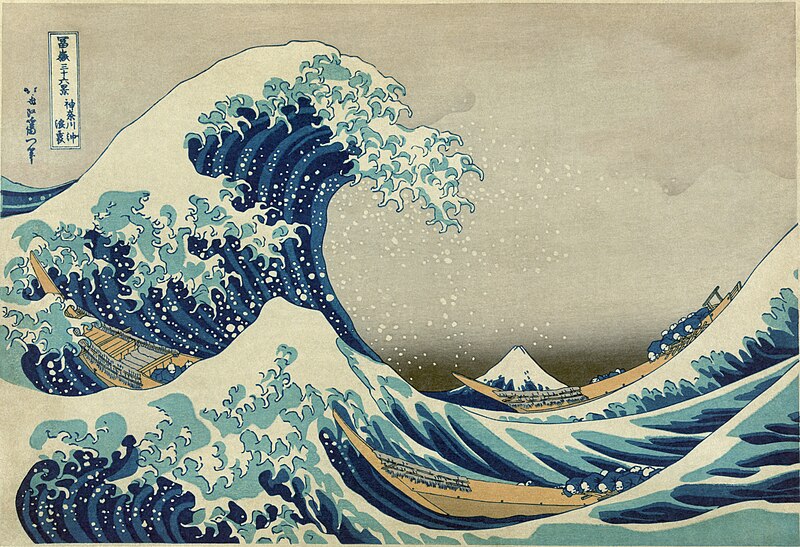
Japanese art
art from Japan
Japanese painting
art of painting in Japan
history of Asian art
history of Asian art or Eastern art
woodblock printing in Japan
ancient technique for reproducing images or text

gyotaku
thumb|Gyotaku print of a fish
is the traditional Japanese method of printing fish, a practice which dates back to the mid-1800s. This form of nature printing, where ink is applied to a fish which is then pressed onto paper, was used by fishermen to record their catches, but has also become an art form of its own.
Hyakkai Zukan
Edo-period Japanese picture scroll

yosegi
thumb|Japanese puzzle box
thumb|Japanese jewelry box
(lit., "parquet work") is a type of traditional Japanese marquetry developed in the town of during the Edo period. Resembling a type of mosaic, is created through the combination of fine oblong rods of wood chosen for their grain, texture and colour, making an intricate surface pattern which is then sliced into thin layers. It is commonly found on traditional Japanese puzzle boxes and similar decorative items. In 1984 it was designated as one of the Traditional Crafts of Japan.

Shōzaburō Watanabe
Japanese print publisher (1885–1962)
Hikone screen
Japanese painted byōbu folding screen (c. 1624)
%20(cropped).JPG)
Mingei
thumb|Thrown, combed tea bowl by Shōji Hamada
The concept of , variously translated into English as "folk craft", "folk art" or "popular art", was developed from the mid-1920s in Japan by a philosopher and aesthete, Yanagi Sōetsu (1889–1961), together with a group of craftsmen, including the potters Hamada Shōji (1894–1978) and Kawai Kanjirō (1890–1966). As such, it was a conscious attempt to distinguish ordinary crafts and functional utensils (pottery, lacquerware, textiles, and so on) from "higher" forms of art – at the time much admired by people during a period when Japan was going through
Nanban art
Japanese art genre of the 16th and 17th centuries
ojime
thumb|A Japanese 19th-century mixed metal bead
thumb|Inro, ojime and [[netsuke. Lacquer inro, stained ivory ojime and wooden netsuke; inro features a reclining figure in a boat; netsuke is in the form of a mask, by Ikkan (ca. 1750-1850)]]
An is a bead used in Japanese (carrying cases). It is typically under an inch in length. Each is carved into a particular shape and image, similar to the , though smaller. It is used to fasten the cord of the so that it does not unstack while carried.
bonseki
thumb
thumb|left|A woman making a tray landscape showing the full moon. Ukiyo-e woodblock print by Yōshū Chikanobu, 1899
Bonseki (, "tray rocks") is the ancient Japanese art of creating miniature landscapes on black trays using white sand, pebbles, and small rocks.
Kibyōshi
thumb|An example of a
is a genre of produced during the middle of the Edo period (1603–1867), from 1775 to the early 19th century, physically identifiable by their yellow-backed covers. Considered to be the first purely adult comic books in Japanese literature, a large picture spanned each page, with descriptive prose and dialogue filling the blank spaces in the image.
Tamamushi Shrine
7thC miniature Japanese shrine
Nemuri-neko
thumb|right|The Nemuri-neko at Tōshō-gū
thumb|right|The close-up image of the cat
bokuseki
Bokuseki (墨跡) is a Japanese term meaning “ink trace”, and refers to a form of Japanese calligraphy (shodō) and more specifically a style of zenga developed by Zen monks.

e-hon
thumb|right|Cover and back of 2 bound-together volumes from the series

Nasser D. Khalili Collection of Japanese Art
private collection of Meiji-era art
Sundai, Edo
woodblock printing by Katsushika Hokusai
history of photography in Japan
aspect of history
Mavo
thumb|Cover Mavo #3, collection of Machiya City Museum of Graphic Art
thumb|MAVO Dance
Buddhist art in Japan
Anglo-Japanese style
hybrid artistic style
yūrei-zu
thumb|Yūrei by Sawaki Sūshi (1737)
are a genre of Japanese art consisting of painted or woodblock print images of ghosts, demons and other supernatural beings. They are considered to be a subgenre of , "pictures of manners and customs". These types of art works reached the peak of their popularity in Japan in the mid- to late 19th century.
egoyomi
thumb|A courtier and boy playing with a ball under a tree. The numbers of the months are on the courtier's cloak.