Category
page 1Japanese board games

kakuro
thumb|250px|An easy Kakuro puzzle
thumb|250px|Solution for the above puzzle
Kakuro or Kakkuro or Kakoro () is a kind of logic puzzle that is often referred to as a mathematical transliteration of the crossword. Kakuro puzzles are regular features in many math-and-logic puzzle publications across the world. In 1966, Canadian Jacob E. Funk, an employee of Dell Magazines, came up with the original English name Cross Sums and other names such as Cross Addition have also been used, but the Japanese name Kakuro, abbreviation of Japanese kasan kurosu (加算クロス, "addition cross"), seems to have gained ge
Nurikabe
logic puzzle

Hashiwokakero
Hashiwokakero (橋をかけろ Hashi o kakero; lit. "build bridges!") is a type of logic puzzle published by Nikoli. It has also been published in English under the name Bridges or Chopsticks (based on a mistranslation: the hashi of the title, 橋, means bridge; hashi written with another character, 箸, means chopsticks). It has also appeared in The Times under the name Hashi. In France, Denmark, the Netherlands, and Belgium it is published under the name Ai-Ki-Ai.

Hitori
right|thumb|240px|Example of a Hitori puzzle
Hitori (Japanese: "Alone" or "one person"; Hitori ni shite kure; literally "leave me alone") is a type of logic puzzle published by Nikoli.

Slitherlink
thumb|right|class=skin-invert-image|Moderately difficult Slitherlink puzzle (Media:Slitherlink-answer.png|solution)
Slitherlink (also known as Sli-Lin, Fences, Takegaki, Loop the Loop, Loopy, Ouroboros, Suriza, Rundweg, Tectonic and Dotty Dilemma) is a logic puzzle developed by publisher Nikoli.

KenKen
thumb|A simple KenKen puzzle, with answers filled in as large numbers.
KenKen and KenDoku are trademarked names for a style of arithmetic and logic puzzle invented in 2004 by Japanese math teacher Tetsuya Miyamoto, who intended the puzzles to be an instruction-free method of training the brain. The name derives from the Japanese word for . The names Calcudoku and Mathdoku are sometimes used by those who do not have the rights to use the KenKen or KenDoku trademarks.
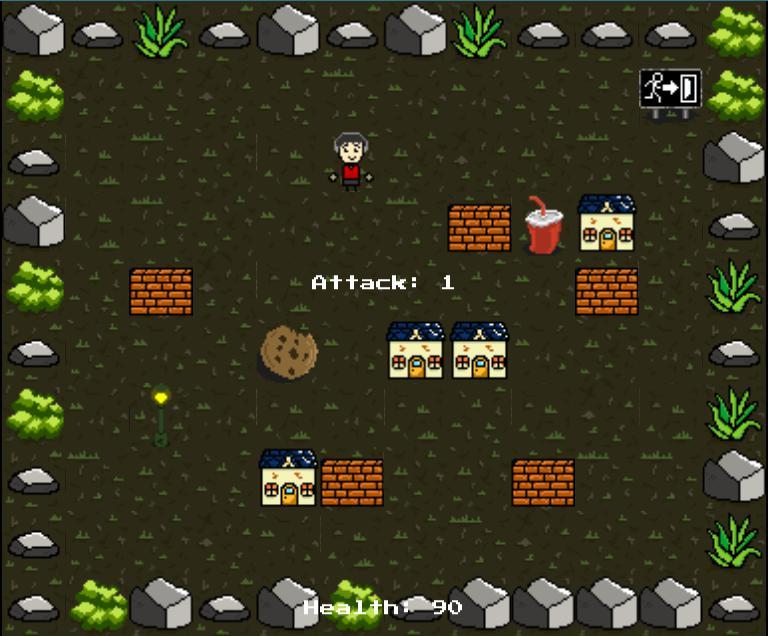
Light Up
2001 video game
shikaku
is a logic puzzle published by Nikoli.

Masyu
thumb|right|Sample puzzle
thumb|right|Solution to above puzzle
is a type of logic puzzle designed and published by Nikoli. The purpose of its creation was to present a puzzle that uses no numbers or letters and yet retains depth and aesthetics.
Futoshiki
, or More or Less, is a logic puzzle game from Japan. Its name means "inequality". It is also spelled hutosiki (using Kunrei-shiki romanization). Futoshiki was developed by Tamaki Seto in 2001.
Kuromasu
, abbreviated or , is a binary-determination logic puzzle published by Nikoli. A book consisting entirely of puzzles has been published by Nikoli.
Heyawake
thumb|A Heyawake puzzle
Heyawake (Japanese: へやわけ, "divided rooms") is a binary-determination logic puzzle published by Nikoli. As of 2013, five books consisting entirely of Heyawake puzzles have been published by Nikoli. It first appeared in Puzzle Communication Nikoli #39 (September 1992).
Inshi no heya
logic puzzle
Yajilin
thumb|An example of a Yajilin puzzle.
thumb|Solved.
Yajilin (ヤジリン) is a type of logic puzzle published by Nikoli. It has been published in English under the name Arrow Ring, such as in the 2005 U.S. qualifier for the World Puzzle Championship.
Goishi Hiroi
logic puzzle
Gokigen Naname
logic puzzle