Category
page 1Japanese calligraphy

ensō
thumb| () by Kanjuro Shibata XX. Some artists draw with an opening in the circle, while others close the circle.
In Zen art, an is a circle hand-drawn in one or two uninhibited brushstrokes to express the Zen mind, which is associated with enlightenment, emptiness, freedom, and the state of no-mind.
Japanese calligraphy
artistic writing of the Japanese language
Kumano
town in Aki district, Hiroshima prefecture, Japan

huaya
Huaya ("flower seal"; ; ; , Vietnamese: , chữ Hán: ) are stylized signatures or marks used in East Asian cultures in place of a fully written signature. Originating from China, the huaya was historically used by prominent figures such as government officials, monks, artists, and craftsmen. The use of stamp seals gradually replaced the huaya, though they are still used occasionally in modern times by important people.
kakizome
thumb|A Florida woman writing "New Year" ()
Kakizome (, literally "first writing") is a Japanese term for the first calligraphy written at the beginning of a year, traditionally on January 2. Other terms include kissho (), shihitsu () and hatsusuzuri ().
Edomoji
(or '''''' are Japanese typefaces invented for advertising during the Edo period. The main styles of are , found on paper lanterns outside restaurants; , used to label and drinks like and ; , literally "cage letters"; , a thick and rectangular seal script; , often used on flyers for performances such as kabuki and ; and , a mix of and .
water-dropper
instrument to drip water onto an inkstone for grinding an ink stick
bokuseki
Bokuseki (墨跡) is a Japanese term meaning “ink trace”, and refers to a form of Japanese calligraphy (shodō) and more specifically a style of zenga developed by Zen monks.
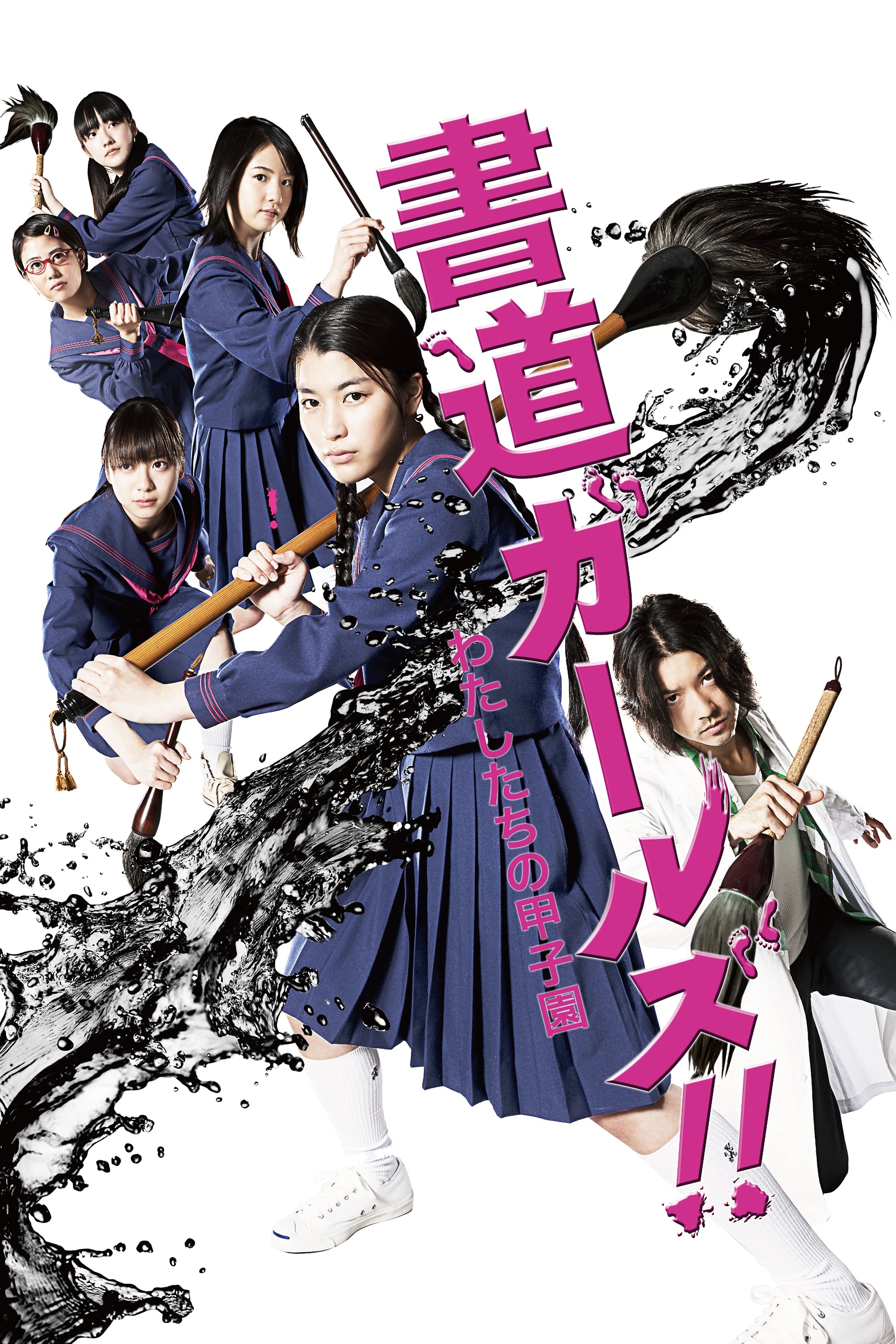
Shodo Girls
2010 Japanese film