Category
page 2Japanese folklore

kitsunebi
thumb|The Bakemono [[Tsukushi Emaki, author unknown (late Edo period)]]
Jugemu
is a famous story, a form of Japanese spoken entertainment. It has a simple story, with the most humorous part being the repetition of a ridiculously long name. It is often used in training for entertainers.

Hakuzōsu
right|thumb|One_Hundred_Aspects_of_the_Moon #13 "Konkai (The Cry of the Fox)". Woodblock print by [[Tsukioka_Yoshitoshi.]]
Akateko
monster of Japanese folklore
Nezumi Kozō
Japanese thief

iomante
, sometimes written as is an Ainu ceremony of Hokkaido and Sakhalin in which a hand-raised brown bear cub is ceremonially killed, under the notion that the soul merely returns to its god-world (). The physical body of the bear god is considered merely to be his "disguise" (), and the pelt and meat harvested are accepted as gifts that the god has left in gratitude for the ceremonious hospitality it received.

Ashinaga-Tenaga
are a pair of yōkai in Japanese folklore. One, , has extremely long legs, while the other, , has extremely long arms. They were first described in the Japanese encyclopedia Wakan Sansai Zue. They are said to be found in Kyūshū.
thumb|right|Ashinaga and tenaga fishing, ukiyo-e by [[Utagawa Kuniyoshi]]

Yōsei
200px|right|thumb|The house spirits [[Zashiki warashi, are described as being the size of a five or six-year-old child and prone to playing harmless pranks and occasionally causing mischief.]]
is a Japanese word that is generally synonymous with the English term . Today, this word usually refers to spirits from Western legends, but occasionally it may also denote a creature from native Japanese folklore. For example, according to an old folk belief from Iwate Prefecture, it was once feared that the yōsei could resurrect the dead. It is also mentioned that the people of Mt. Hōrai are small fai
Hidari Jingorō
Japanese sculptor and painter (1584-1644)
kamikakushi
trope in Japanese mythology about people being abducted by an angry god

Chūjō-hime
(also written Chūjō Hime or Hase-Hime) (c. 753?–781?) was by most accounts a daughter of the court noble Fujiwara no Toyonari who escaped persecution at the hands of her stepmother by becoming a nun at the Taima-dera in Nara. There she took on the name Zenshin-ni or the Dharma name Honyo (法如). She has become a folk heroine, the subject of numerous Japanese folktales which celebrate her filial piety. She is sometimes called the Japanese Cinderella.
onibi
thumb|Onibi (Wakan Sansai Zue)
is a type of atmospheric ghost light in legends of Japan. According to folklore, they are the spirits born from the corpses of humans and animals. They are also said to be resentful people that have become fire and appeared. Also, sometimes the words "will-o'-the-wisp" or "jack-o'-lantern" are translated into Japanese as "onibi".
Yako
type of fox spirit in Japanese mythology
Sanpaku
thumb|200px|John F. Kennedy, one of the twelve famous people [[George Ohsawa claimed were suffering from sanpaku because of visible sclerae under their irises.]]
shiryō
right|thumb|200px|"" from the by Toriyama Sekien
'''''' are the souls of the dead in Japanese folklore. This contrasts with , which are souls of the living.
Kasa Jizō
Japanese folk tale

Gon, the Little Fox
Japanese children's story
Mikoshi-nyūdō
thumb|"" from the Hyakkai Zukan by Sawaki Suushi
thumb|"" from the Gazu Hyakki Yagyō by [[Sekien Toriyama]]
Mikoshi-nyūdō (見越し入道 or 見越入道) is a type of bald-headed yōkai "goblin" with an ever-extending neck. In Japanese folklore and Edo period (1603–1868) kaidan "ghost story" texts, mikoshi-nyūdō will frighten people who look over the top of things such as byōbu folding screens. The name combines mikoshi 見越し (lit. "see over") "looking over the top (of a fence); anticipation; expectation" and nyūdō 入道 (lit. "enter the Way") "a (Buddhist) priest; a bonze; a tonsured monster".
atmospheric ghost lights
lights (or fires) of unknown origin
Hachikazuki
thumb|Princess Hachikazuki and Prince Saisho pledge their love
Konaki-jiji
Konaki-jiji (子泣き爺, Konaki-Jijī, translated into Old man crying) is a kind of Japanese yōkai, a supernatural spirit in Japanese folklore. It is similar to the Scandinavian myling, the Slavic poroniec and the Germanic Aufhocker.
okiagari-koboshi
thumb|Okiagari-kobōshi from Aizuwakamatsu, Fukushima
is a Japanese traditional doll. The toy is made from papier-mâché and is a roly-poly toy, designed so that its weight causes it to return to an upright position if it is knocked over. Okiagari-kobōshi is considered a good-luck charm and a symbol of perseverance and resilience (including for Daruma versions).
Chimimōryō
thumb|right|200px|"Hyakki Yakōka Monogatari" by Edo Iseya Jisuke. The one to the right (from the viewer's perspective) is the chimi, and to the left is the mōryō.
Chimei wangliang, or Chimimōryō (), is a term that refers to monsters of the mountains and monsters of the rivers. The term originated in China roughly 2,500 years ago in ancient chronicles such as the Zuo Zhuan. It originates from ancient Chinese legends about the spirits that harm people in the mountains and swamps, and its original meaning is "all kinds of Yaoguai (demons and ghosts)".
Zennyo Ryūō
rain-god dragon in Japanese mythology
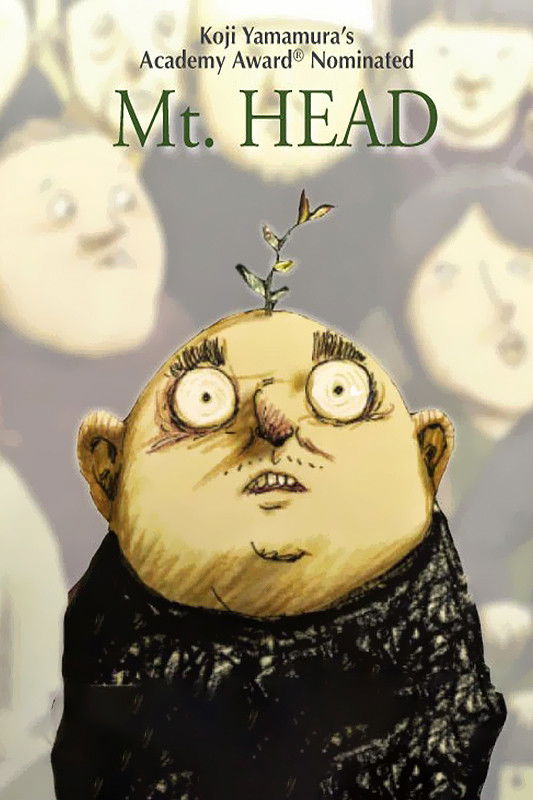
Mount Head
2002 film by Kōji Yamamura
kitsune no yomeiri
Japanese folk tale based on atmospheric lights
Kobutori Jiisan
Japanese folk tale
ushi no toki mairi
traditional Japanese method of laying a curse
Mayoiga
Mayoiga () in Japanese folklore refers to a "lavish" or "well-kept" but abandoned house found in remote parts of the mountains or similar wilderness.
Kirigakure Saizō
Japanese ninja
Mizuchi
thumb|350px|Agatamori battling mizuchi in the pool. From Zenken kojitsu (1878)
The is a type of Japanese dragon or legendary serpent-like creature, either found in an aquatic habitat or otherwise connected to water. Some commentators perceived it to have been a water deity. It is described in the Nihon Shoki and one ''Man'yōshū'' poem.
fukusuke
thumb|An example of a Fukusuke doll
are traditional dolls associated with good luck in Japan. A Fukusuke doll is the depiction of a man kneeling seiza style, with a large head and a topknot.
Marebito
The concept of "marebito" ( or , まれびと) represents a spiritual or divine being that visits from the 'other world' (takai, a term for the Japanese afterlife) at specific times. This belief, rooted in the welcoming of outsiders as gods from another world, has been an important part of Japanese folklore and customs throughout history. Marebito has been observed in various forms, from gods visiting during festivals to wandering ascetics and itinerant performers being treated as divine beings. Comparative studies have been conducted on the "sacred visitor" among the Germanic and Celtic peoples, high
Orochimaru
thumb|
alt=“Jiraiya Goketsu Monogatari” (#7, pp. 4–5), ca. 1850 hanshita-e artist: Kanwatei Onotake 8.5 x 6 inch pages, woodblock print book Coppola Collection|thumb|
One Hundred Ghost Stories
series of woodblock prints by Katsushika Hokusai
Inugami Gyōbu
Japanese folkore
Mōryō
right|thumb|200px|"Mōryō" (Wiktionary:魍魎|魍魎) from the [[Konjaku Gazu Zoku Hyakki by Toriyama Sekien]]
Mōryō or mizuha ( or ) is a collective term for spirits of mountains and rivers, trees and rocks, as well as mononoke that live in places like graveyards, or kappa and various other yōkai. There is also mizu no kami as well to refer to them.
Botan Dōrō
play by San'yūtei Enchō
wani
dragon
Kurozuka
thumb|right|180px|"Ōshū Adachigahara Hitotsu Ie no Zu" () by Tsukioka Yoshitoshi. This color print was banned by the Meiji government for "disturbing public morals."
thumb|180px|right|"Kurozuka" from the Gazu Hyakki Yagyō by [[Toriyama Sekien]]
Kurozuka (, "black mound") is the grave of an onibaba in Nihonmatsu, Fukushima Prefecture (previously Oodaira), Adachi District, or the legend of that onibaba. It lives in Adachigahara (the name of the eastern shore of Abukuma River as well as the eastern base of Mount Adatara) and it is told in legends as the "Onibaba of Adachigahara." The Kurozuka is
Chōchinbi
right|thumb|200px|"Chōchin no hi" (提灯火) from the Konjaku Gazu Zoku Hyakki by [[Sekien Toriyama]]
Chōchinbi (提灯火) is a type of onibi, told in legends in each area of Japan.
Nuribotoke
thumb|Nuribotoke ぬりぼとけ from Bakemono no e (化物之繪, c. 1700), Harry F. Bruning Collection of Japanese Books and Manuscripts, L. Tom Perry Special Collections, [[Harold B. Lee Library, Brigham Young University.]]
right|thumb|240px|"Nuribotoke" (ぬりぼとけ) from the Hyakkai Zukan by Sawaki Suushi
right|thumb|200px|"Nuribotoke" (塗仏) from the Gazu Hyakki Yagyō by [[Sekien Toriyama]]
The is a yōkai found in Japanese yōkai emaki such as the Hyakkai Zukan by Sawaki Suushi. They are also depicted in the Gazu Hyakki Yagyō by Toriyama Sekien.
yūrei-zu
thumb|Yūrei by Sawaki Sūshi (1737)
are a genre of Japanese art consisting of painted or woodblock print images of ghosts, demons and other supernatural beings. They are considered to be a subgenre of , "pictures of manners and customs". These types of art works reached the peak of their popularity in Japan in the mid- to late 19th century.
Myōbu
thumb|A figurine of a myōbu with the wish-fulfilling jewel placed on the tip of the fox's tail. A ball of fire is seen underneath the fox's raised paw.
thumb|A statue of a myōbu wearing a red votive bib and holding a granary key at Fushimi Inari-taisha.
thumb|Examples of purchasable myōbu figurines.
thumb|Myōbu-shaped ema at Fushimi Inari-taisha.
In Japan, is a title which was given to ladies of the fifth rank in the imperial court or to midrank noblewomen. In The Pillow Book, Lady Myōbu was also the name of a pet cat belonging to Empress Consort Sadako, whom the author Sei Shōnagon served.
Tenko
divine beast in Japanese folklore
Revenge of Soga Brothers
Revenge case in the early Kamakura period