Category
page 1Japanese literature

Japanese literature
literature of Japan

light novel
Japanese novella-type storytelling in conjunction with illustrations, geared toward young adults

Shūsaku Endō
author from Japan (1923–1996)
waka
type of poetry in classical Japanese literature
Thousand Character Classic
Chinese poem consisting of 1000 characters, each used only once, arranged into 250 lines and grouped into four line rhyming stanzas

rakugo
thumb|right|Rakugoka at Sanma Festival
Hyakunin Isshu
classical Japanese anthology of one hundred Japanese waka by one hundred poets
Japanese philosophy
overview about the Japanese philosophy

Kintarō
thumb|180px|right|A young Kintarō battling Namazu, in a print by Yoshitoshi
is a folk hero from Japanese folklore. A child of superhuman strength, he was raised by a yama-uba ("mountain witch") on Mount Ashigara. He became friendly with the animals of the mountain, and later, after catching Shuten-dōji, the terror of the region around Mount Ōe, he became a loyal follower of Minamoto no Yorimitsu under the new name . He is a popular figure in Bunraku and kabuki drama, and it is a custom to put up a Kintarō doll on Boy's Day in the hope that boys will become equally brave and strong.
Shōsetsuka ni Narō
Japanese novel publishing website
I-novel
The I-novel (, , ) is a literary genre in Japanese literature used to describe a type of confessional literature where the events in the story correspond to events in the author's life. This genre was founded based on the Japanese reception of naturalism during the Meiji period, and later influenced literature in other Asian countries as well. This genre of literature reflects greater individuality and a less constrained method of writing. From its beginnings, the I-novel has been a genre that also is meant to expose aspects of society or of the author's life.
haibun
is a prosimetric literary form originating in Japan, combining prose and haiku. The range of haibun is broad and frequently includes autobiography, diary, essay, prose poem, short story and travel journal.

kigo
thumb|Cherry blossoms (sakura), often simply called blossoms () are a common spring kigo.
Aozora Bunko
Japanese digital library

kyōka
thumb|upright=2|Two pages from the anthology Kokon kyōka-bukuro (1787), by Santō Kyōden|Kitao Masanobu and published by [[Tsutaya Jūzaburō ]]
Kyōka (, "wild" or "mad poetry") is a popular, parodic subgenre of the tanka form of Japanese poetry with a metre of 5-7-5-7-7. The form flourished during the Edo period (17th–18th centuries) and reached its zenith during the Tenmei era (1781–89).
hokku
is the opening stanza of a Japanese orthodox collaborative linked poem, renga, or of its later derivative, renku (haikai no renga). From the time of Matsuo Bashō (1644–1694), the hokku began to appear as an independent poem, and was also incorporated in haibun (in combination with prose). In the late 19th century, Masaoka Shiki (1867–1902) renamed the standalone hokku as "haiku", and the latter term is now generally applied retrospectively to all hokku appearing independently of renku or renga, irrespective of when they were written. The term hokku continues to be used in its original sense, a

Rokkasen
thumb|488x488px|Rokkasen, by Hokusai
The are six Japanese poets of the mid-ninth century who were named by Ki no Tsurayuki in the kana and mana prefaces to the poetry anthology Kokin wakashū (c. 905–14) as notable poets of the generation before its compilers.
Jugemu
is a famous story, a form of Japanese spoken entertainment. It has a simple story, with the most humorous part being the repetition of a ridiculously long name. It is often used in training for entertainers.
gesaku
is an alternative style, genre, or school of Japanese literature. In the simplest contemporary sense, any literary work of a playful, mocking, joking, silly or frivolous nature may be called gesaku. Unlike predecessors in the literary field, gesaku writers did not strive for beauty and perfect form in their writings, but rather for popular acceptance. Gesaku writers were dependent on making a living by sale of their books. Like popular magazines and books of the 21st century, their product was aimed at as wide a public as possible. When a book was successful it was usually followed by as many
Buraiha
The were a group of dissolute writers who expressed the aimlessness and identity crisis of post-World War II Japan. While not comprising a true literary school, the Buraiha writers were linked together by a similar approach to the subject matter and literary style. The main characters in works of the Buraiha feature anti-heroes that are dissolute and aimless. Their work was based on criticism of the complete body of pre-war Japanese literature as well as American social values that were introduced into Japanese society with the occupation. Their work did not appeal to any one particular group,
Class S
Japanese term for romantic friendships between girls
setsuwa
Setsuwa () is a Japanese literary genre. It consists of myths, legends, folktales, and anecdotes. Among the , those that are full-length are generally referred to as . In Japan, the term is also applied to similar works around the world.
National Museum of Taiwan Literature
public art museum in Tainan, Taiwan
Kibyōshi
thumb|An example of a
is a genre of produced during the middle of the Edo period (1603–1867), from 1775 to the early 19th century, physically identifiable by their yellow-backed covers. Considered to be the first purely adult comic books in Japanese literature, a large picture spanned each page, with descriptive prose and dialogue filling the blank spaces in the image.
Murasaki Shikibu Nikki Emaki
mid-13th century emaki, a Japanese picture scroll, inspired by the diary of Murasaki Shikibu
kokkeibon
thumb|From Otsuriki (1810) by Jippensha Ikku, a book about how to make shadow pictures
The was a genre and type of early modern Japanese novel. It came into being late in the Edo period during the 19th century. As a genre, it depicted the comical behavior occurring in commoners' daily lives.
kanazōshi
frame|right|Printed page of text from kanazōshi, published c. 1650
describes a type of printed Japanese book that was produced primarily in Kyoto between 1600 and 1680. The term literally means “books written in kana” (kana being the phonetic Japanese syllabary that is simpler to read and write than kanji, or Chinese characters). The designation thus derives from the fact that the text of these books was written either entirely in kana or in a mixture of kana and kanji. Kanazōshi are considered to be a transitional genre, bridging the gap between medieval romances and the first high point of
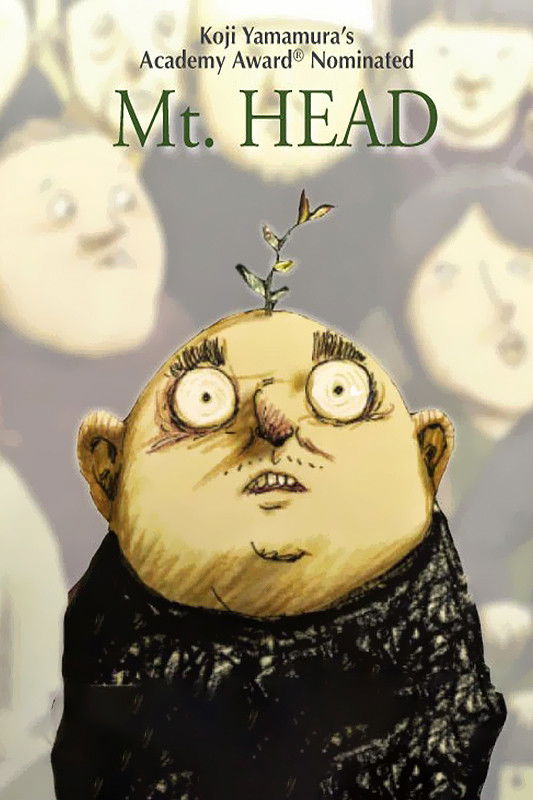
Mount Head
2002 film by Kōji Yamamura
kōdan
is a style of traditional oral Japanese storytelling. The form evolved out of lectures on historical or literary topics given to high-ranking nobles of the Heian period, changing over the centuries to be adopted by the general samurai class and eventually by commoners, and eventually, by the end of the Edo period, declining in favor of new types of entertainment and storytelling such as naniwa-bushi. It was at this time that the term kōshaku was abandoned and kōdan adopted. Today, after a failed attempt to revive the art in 1974, there are four schools of kōdan and only a very few performers b

Tales of Old Japan
1871 anthology of short stories
Atomic bomb literature
Japanese literary genre
nikki bungaku
genre of Japanese diary literature
Sharebon
, which can be roughly translated as "book of manners", was a pre-modern Japanese literary genre, produced during the middle of the Edo period from the 1720s all the way to the end of the 18th century. Plots almost invariably took place in the Yoshiwara pleasure quarters, and usually revolved around the misadventures of two contrasting male archetypes, the "Tsu" or "sophisticate", and the Tanketsu or "one who only pretends at sophistication." The writing had a huge emphasis on humor and dialogue, without much in the way of actual dramatic or narrative plot elements. Physically, were produced u
Japanese science fiction
genre of speculative fiction
Shinkankakuha
was a pre-war Japanese literary group led by Riichi Yokomitsu and Yasunari Kawabata which focused on exploring "new impressions" or "new perceptions" in the writing of Japanese literature. Riichi Yokomitsu wrote "The phenomenon of perception for Shinkankakuha is, to put it briefly, the direct, intuitive sensation of a subjectivity that peels away the naturalized exterior aspects and leaps into the thing itself."

The Bells of Nagasaki
1950 non-fiction work by Takashi Nagai
Nunobiki Falls
waterfalls in Kobe, Japan
Second Generation of Postwar Writers
classification in modern Japanese literature
Kenyūsha
thumb|Ken'yūsha members, 1891
wakan konkō-bun
Japanese written language
National Institute of Japanese Literature
library
Soga Monogatari
war chronicle based on 'Revenge of Soga Brothers'
The First Generation of Postwar Writers
overview about The First Generation of Postwar Writers
Bible translations into Japanese
Japanese-language translations of the Bible
The Third Generation of Postwar Writers
modern Japanese literature classification