Category
page 1Japanese mythology

Kojiki
The , also sometimes read as ' or ', is an early Japanese chronicle of myths, legends, hymns, genealogies, oral traditions, and semi-historical accounts dating as far back as 641 concerning the origin of the Japanese archipelago, the kami, and the Japanese imperial line. It is claimed in its preface to have been composed by Ō no Yasumaro at the request of Empress Genmei in the early 8th century (711–712), and thus is usually considered to be the oldest extant literary work in Japan.

Nihon Shoki
8th century book of classical Japanese history

Japanese mythology
mythology
Imperial Regalia of Japan
legendary items used during the enthronement ceremony in Japanese
Konjaku Monogatarishū
literary work
Kusanagi
legendary Japanese sword
Abe no Seimei
Japanese onmyōji

fudoki
are ancient reports on provincial culture, geography, and oral tradition presented to the reigning monarchs of Japan, also known as local gazetteers. They contain agricultural, geographical, and historical records as well as mythology and folklore. Fudoki manuscripts also document local myths, rituals, and poems that are not mentioned in the Kojiki and the Nihon Shoki chronicles, which are the most important literature of the ancient national mythology and history. In the course of national unification, the imperial court enacted a series of criminal and administrative codes called ritsuryō an
Yata no Kagami
sacred mirror that is part of the Imperial Regalia of Japan

Kokutai
thumb|The nationalistic essence of kokutai is thought of as the uniqueness of the Japanese polity as issuing from a leader of divine origin.
is a concept in the Japanese language translatable as "system of government", "sovereignty", "national identity, essence and character", "national polity; body politic; national entity; basis for the Emperor's sovereignty; Japanese constitution" or nation.
Kotodama
refers to the Japanese belief that mystical powers dwell in words and names. English translations include "soul of language", "spirit of language", "power of language", "power word", "magic word", and "sacred sound". The notion of kotodama presupposes that sounds can affect objects, and that ritual word usages can influence the environment, body, mind, and soul. Some interpret the belief as the discovery of commands words that can affect physiology and the mind.
%2CNasu%2CTochigi%2CJapan%2020160817.jpg)
Sesshō-seki
thumb|Sessho-seki in 2016
The , or "Killing Stone", is a stone in the volcanic mountains of Nasu, an area of Tochigi Prefecture, Japan, that is famous for sulphurous hot springs. In Japanese mythology, the stone is said to kill anyone who comes into contact with it. In Japan, rocks and large stones in areas where volcanic toxic gases are generated are often named Sessho-seki (殺生石), meaning Killing Stone, and the representative of such stones is this one associated with the legend of Tamamo-no-Mae and the nine-tailed fox.
Hyakumonogatari Kaidankai
parlor game

Kamiumi
In Japanese mythology, the story of the occurs after the creation of Japan (Kuniumi). It concerns the birth of the divine (kami) descendants of Izanagi and Izanami.
Japanese creation myth
Japanese mythology about the creation of the world and of Japan

Kuniumi
In Japanese mythology, is the traditional and legendary history of the emergence of the Japanese archipelago, of islands, as narrated in the Kojiki and Nihon Shoki. According to this legend, after the creation of Heaven and Earth (Tenchi-kaibyaku), the gods Izanagi and Izanami were given the task of forming a series of islands that would become what is now Japan. In Japanese mythology, these islands make up the known world. The creation of Japan is followed by the creation of the gods (Kamiumi).
Takamimusubi
Takamimusubi (高御産巣日, lit. "Exalted Generative Force") is a creation deity in Japanese mythology, who was the second of the first beings to come into existence.
-fol26-shojo.jpg)
Shōjō
thumb|A shōjō rolling a ( barrel of sake).
Tenson Kōrin
Japanese mythological event
Kwaidan: Stories and Studies of Strange Things
English work of Japanese horror and entomology
Ame no Tajikarao
is a Japanese deity (kami) of physical strength who appears in Japanese mythology. Ame-no-tajikarao is written as 天手力男神 in Kojiki, and 天手力雄神 in Nihon Shoki. Tajikarao's name means sky-hand-power-male.
Ame-no-Nuboko
thumb|right|. Painting by Kobayashi Eitaku, 1880–90. [[Museum of Fine Arts, Boston. Izanagi to the right, Izanami to the left]]
, also known simply by the Kan-on reading , is the name given to the hoko (lance) used to raise the primordial land-mass, Onogoro Island, from the sea in Japanese religion. It is often represented as a naginata.
Age of the Gods
period of Japanese mythology before the first emperor Jimmu
Thirteen Buddhas
Japanese grouping of Buddhist deities
koshintō
refers to the animistic religion of Jōmon period Japan which is the alleged basis of modern Shinto. The search for traces of Koshintō began with the "Restoration Shinto" in the Edo period, whose goal was to remove any foreign ideas and worldviews from Shinto (specifically referring to Buddhism). Some movements which claim to have discovered this primeval way of thought are Oomoto and Izumo-taishakyo.
Hagoromo
Noh play
Amakuni
is the legendary swordsmith who supposedly created the first single-edged longsword (tachi) with curvature along the edge in the Yamato Province around 700 AD. He was the head of a group of swordsmiths employed by the Emperor of Japan to make weapons for his warriors. His son, Amakura, was the successor to his work. Although there are almost no modern examples of signed works by Amakuni, legend has it that the double-edged katana, Kogarasu Maru, was forged by this man. The true author of this work is not known, though the work bears similarities to works of the various Yamato schools so it is
Zennyo Ryūō
rain-god dragon in Japanese mythology
Hotsuma Tsutae
ancient Japanese literature, ancient literature written in Woshite script
Toilet meal
Practice of dining in a toilet room

Harima-no-Kuni Fudoki
Ancient Japanese Provincial Gazeteer
Kuni-yuzuri
The was a mythological event in Japanese prehistory, related in sources such as the Kojiki and the Nihon Shoki. It relates the story of how the rulership of Japan passed from the earthly kami (kunitsukami) to the kami of Heaven (amatsukami) and their eventual descendants, the Imperial House of Japan.

Minamoto no Hiromasa
Nobleman and gagaku musician in the Heian period
Hata no Kawakatsu
government official in the Asuka period in Japan
Mizuchi
thumb|350px|Agatamori battling mizuchi in the pool. From Zenken kojitsu (1878)
The is a type of Japanese dragon or legendary serpent-like creature, either found in an aquatic habitat or otherwise connected to water. Some commentators perceived it to have been a water deity. It is described in the Nihon Shoki and one ''Man'yōshū'' poem.
Yomotsuhirasaka
mythical entrance of the underworld in Matsue, Japan
Haniyasu
gods of earth, clay, and pottery in Japanese mythology
Matsura Sayohime
legendary heroine in Japanese mythology
wani
dragon
Ishikori-dome no Mikoto
shinto kami of mirrors
Tashima Shrine
Shinto shrine in Saga Prefecture, Japan

Inai no Mikoto
Japanese nobleman
Yanari
right|thumb|200px|"Yanari" (鳴屋) from the Gazu Hyakki Yagyō by [[Toriyama Sekien]]
right|thumb|The illustrated card "En no Shita kara Deru Tatamiage no Kuwai" (えんの下から出るたたみあげのくわい, "Mysterious Thing That Lifts Up Tatami from Beneath the Edges") from Yōkai Karuta, depicting the yanari legend of Tajima Province.
Yanari (家鳴, 家鳴り, 鳴家, or 鳴屋, literally "house creak") is a paranormal phenomenon told about in legends in various places in Japan where the house or furniture would start shaking for no reason.
Tokoyo no Kuni
location in Shinto mythology
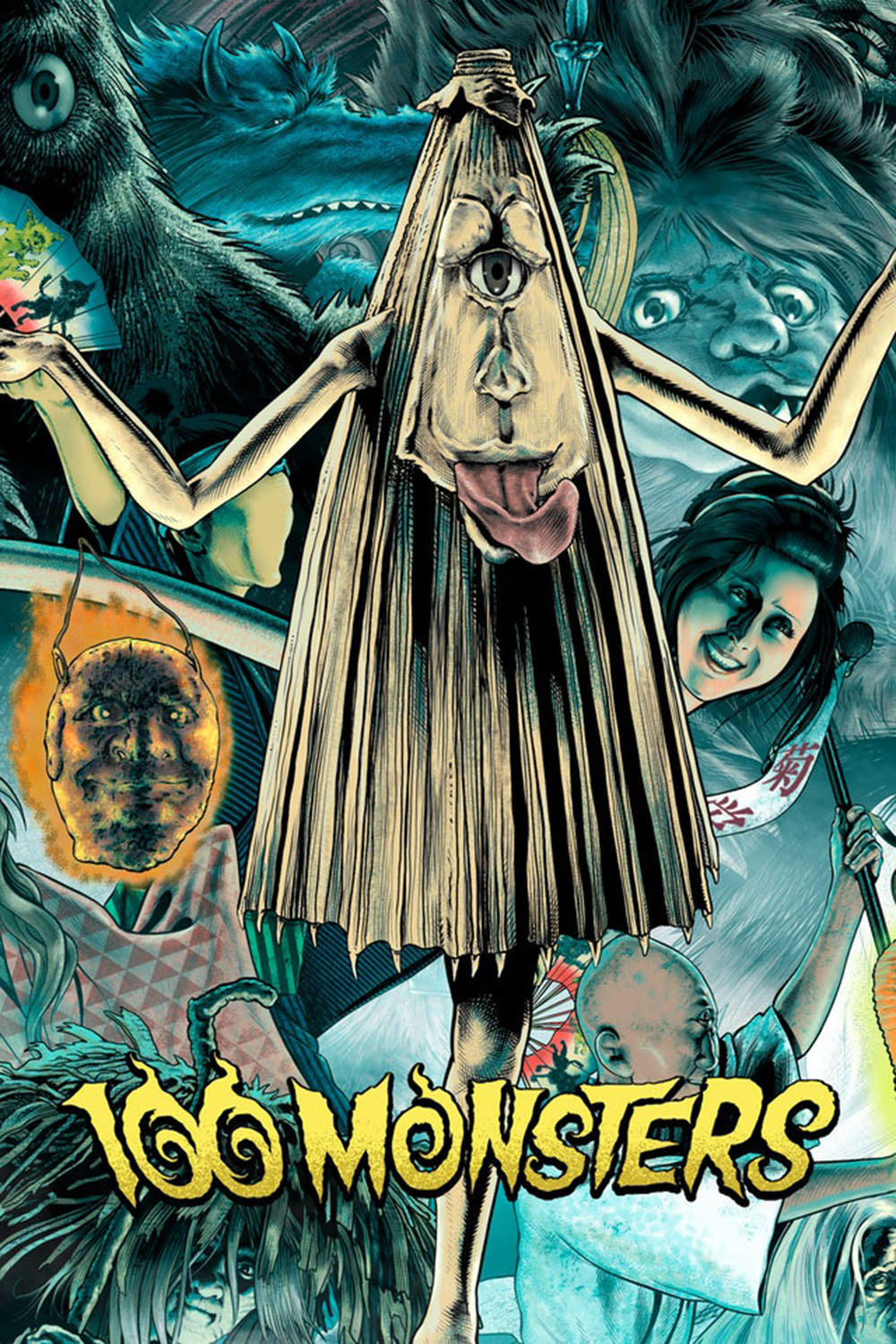
Yokai Monsters: One Hundred Monsters
1968 film by Kimiyoshi Yasuda
Myōbu
thumb|A figurine of a myōbu with the wish-fulfilling jewel placed on the tip of the fox's tail. A ball of fire is seen underneath the fox's raised paw.
thumb|A statue of a myōbu wearing a red votive bib and holding a granary key at Fushimi Inari-taisha.
thumb|Examples of purchasable myōbu figurines.
thumb|Myōbu-shaped ema at Fushimi Inari-taisha.
In Japan, is a title which was given to ladies of the fifth rank in the imperial court or to midrank noblewomen. In The Pillow Book, Lady Myōbu was also the name of a pet cat belonging to Empress Consort Sadako, whom the author Sei Shōnagon served.