Category
page 1Japanese pottery

kintsugi
thumb|Repair work (right) on Mishima ware -type tea bowl with kintsugi gold lacquer, 16th century
thumb|Small repair (top) on Nabeshima ware dish with [[hollyhock design, over-glaze enamel, 18th century, Edo period]]

dogū
thumb|Dogū, Ebisuda site in Tajiri, Miyagi|Tajiri, [[Miyagi Prefecture, 1000–400 BC.]]
raku ware
type of Japanese pottery traditionally used in tea ceremonies

celadon
Celadon () is a term for pottery denoting both wares glazed in the jade green celadon color, also known as greenware or "green ware" (the term specialists now tend to use), and a type of transparent glaze, often with small cracks, that was first used on greenware, but later used on other porcelains. Celadon originated in China, though the term is purely European, and notable kilns such as the Longquan kiln in Zhejiang province are renowned for their celadon glazes. Celadon production later spread to other parts of East Asia, such as Japan and Korea, as well as Southeast Asian countries, such a
%20from%20Iizuka-machi%2C%20Ota-shi%2C%20Gunma%20-%20Tokyo%20National%20Museum%20-%20DSC06425.JPG)
haniwa
thumb|Haniwa Warrior in Keiko Armor|Haniwa warrior in keikō type armor, Ōta, [[Gunma Prefecture, c. 6th century AD. Height: . National Treasure of Japan]]
thumbnail|Haniwa figure of a woman, 5th–6th century. Earthenware. Excavation point unknown. This figure is considered to represent a high-ranking woman, possibly a shaman or priestess. The figure is fragmentary: the arms are missing and, like many extant haniwa, it has been reassembled from shards.
Imari ware
type of Japanese porcelain ware

hibachi
thumb|A porcelain
thumb|North American "hibachi" cast iron grill
Jōmon pottery
Japanese ancient pottery
Japanese pottery and porcelain
ceramics from Japan

okimono
thumb| of a reclining boar, Hirado ware|Hirado Mikawachi porcelain with clear glaze, [[Edo period, 19th century]]
thumb| figure of a dragon made of iron, by Myochin Muneaki in 1713
In Japanese art, is a Japanese term meaning "ornament for display; objet d'art; decorative object", for small objects typically displayed in a alcove or altar. The nearest equivalent term in Western art is probably objet d'art.
Bizen ware
type of Japanese pottery

tenmoku
thumb|White tenmoku Ofuke ware bowl, medium stoneware with rice-straw [[ash glaze, between 1700–1850 Edo period ]]
Tenmoku (天目, also spelled "temmoku" and "temoku") is a type of glaze that originates in imitating Chinese Jian ware (建盏) of the southern Song dynasty (1127–1279), original examples of which are also called tenmoku in Japan.
Anagama kiln
ancient type of pottery kiln
Hagi ware
type of Japanese pottery
Satsuma ware
type of Japanese pottery
Karatsu ware
style of Japanese pottery
Arita ware
type of Japanese porcelain ware
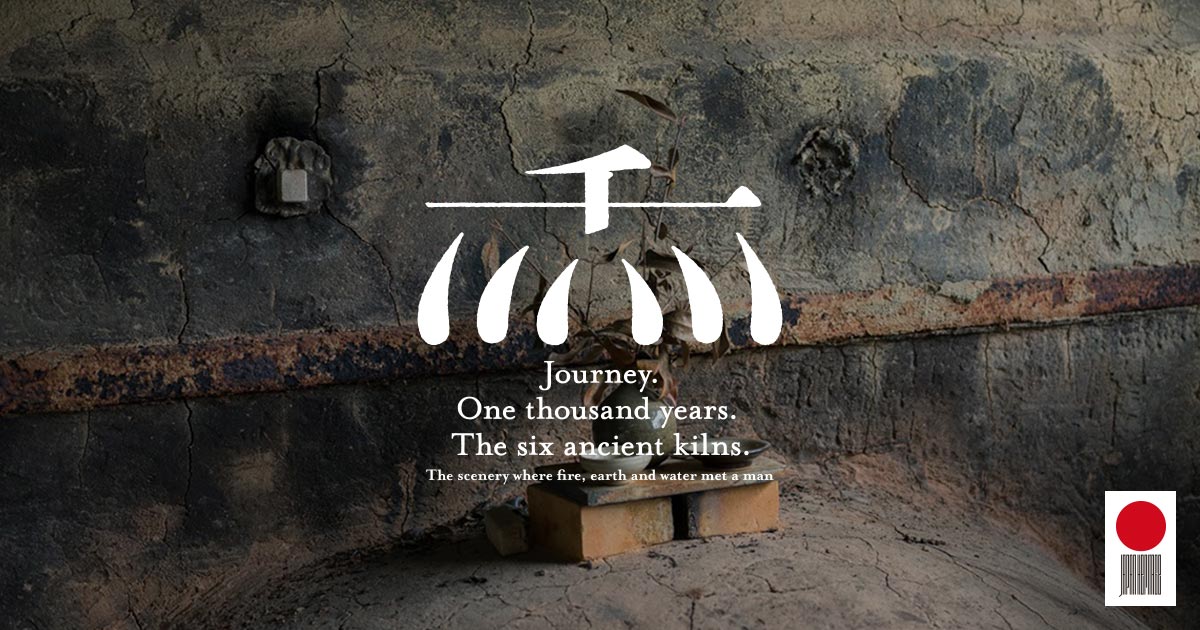
Six Ancient Kilns
Group of ceramic kilns
Yayoi pottery
Ancient pottery in Japan during the Yayoi period
Suribachi
thumb|Small sized suribachi with black sesame seeds in it, and a medium-sized surikogi made out of wood
Ōdai Yamamoto I Site
archaeological site in Sotogahama, Japan
Mino ware
type of Japanese pottery
Takatori ware
type of Japanese pottery
Shino ware
Japanese pottery
Sue pottery
type of blue-gray pottery from Japan and Korea
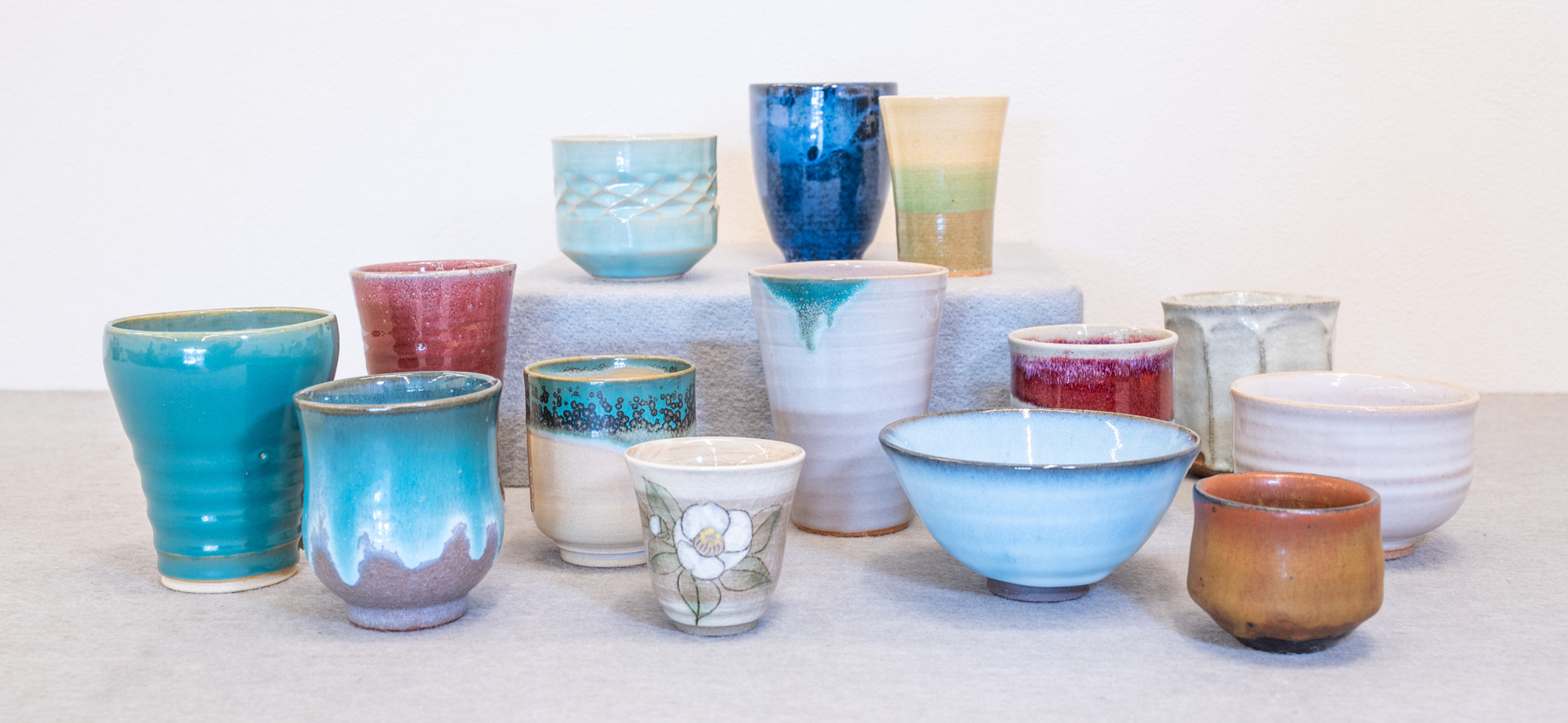
Agano ware
type of Japanese pottery
Oribe ware
type of Japanese pottery
Kasama ware
Japanese ceramic style
Tamba ware
type of Japanese pottery
donabe
300px|thumb|Various ingredients in nabeyaki udon (pot-cooked noodle) using a donabe
Donabe (Japanese: 土鍋, literally "earthenware pot") are pots made out of a special clay for use over an open flame in Japanese cuisine, and in the case of semi-stoneware Banko ware of high petalite content. Often, the food is cooked at the table on a gas burner for various nabemono dishes such as shabu-shabu and dishes served simmering including nabeyaki udon. They are sized by sun, one of the Japanese units of measurement.
Seto ware
type of Japanese pottery
Onta ware
type of Japanese pottery

Haji pottery
Japanese pottery
Shigaraki ware
pottery and stoneware made in Shigaraki area, Japan
Imado ware
type of Japanese pottery
Koishiwara ware
type of Japanese pottery
Ryukyuan pottery
pottery made on the Ryukyu Islands
nerikomi
is a Japanese pottery term describing the artistic technique where multiple colors of clay are marbled or combined to create various designs. The technique can also be called , although this more commonly refers to throwing multiple colors of clay on a wheel.
Tokoname ware
Type of Japanese pottery
Cochin ware
type of Chinese pottery from Guangdong, southern China.
list of Japanese ceramics sites
Wikimedia list article
Kyusu
thumb|Kyūsu pots with side handle (right) and top handle, design by Masahiro Mori (designer)|Masahiro Mori
thumb|Kyūsu tea pot with side handle
A is a traditional Japanese teapot mainly used for brewing green tea.

Hasami ware
type of Japanese porcelain ware