Category
page 1July observances

Mother's Day
celebration honoring mothers

Father's Day
celebration honoring fathers

children's day
one of many public observances in honor of children
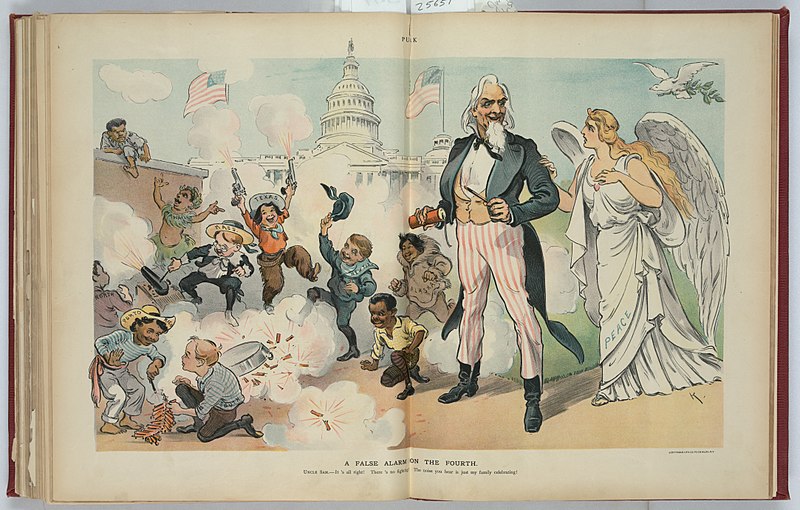
Independence Day
United States holiday held on July 4 to mark the Declaration of Independence

Pi Day
mathematical holiday on March 14

national day
designated date on which celebrations mark the nationhood of a nation

Bastille Day
French National Day

World Population Day
world day
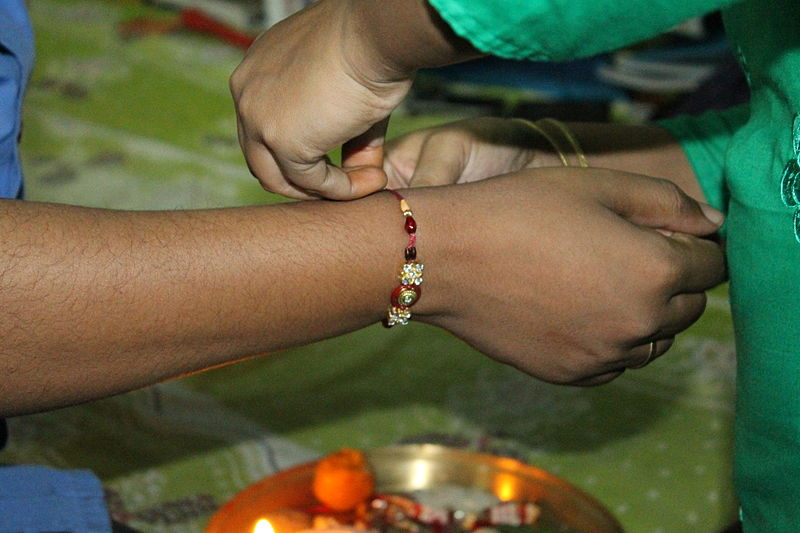
Raksha Bandhan
annual ritual originating from the Indian Subcontinent
Canada Day
Canadian national holiday on July 1
Friendship Day
day for celebrating friendship
Feast of Saints Peter and Paul
anniversary

Tanabata
thumb|right|Women dressed in yukata at Tanabata
thumb|Tanabata festivities in Hiratsuka, Kanagawa in 2023
, also known as the , is a Japanese festival originating from the Chinese Qixi Festival. It celebrates the meeting of the deities Orihime and Hikoboshi (represented by the stars Vega and Altair respectively). According to legend, the Milky Way separates these lovers, and they are allowed to meet only once a year on the seventh day of the seventh lunar month of the lunisolar calendar. The date of Tanabata varies by region of the country, but the first festivities begin on 7 July of the Greg
Mandela Day
Nelson Mandela International Day (or Mandela Day) is an annual international day in honour of Nelson Mandela, celebrated each 18 July (on Mandela's birthday).

Naadam
thumb|270px|Naadam opening ceremony at the National Sports Stadium (Mongolia)|National Sports Stadium in [[Ulaanbaatar, 2024]]
Naadam (, , , , ) is a traditional festival celebrated in Mongolia, Inner Mongolia and Tuva, involving Mongolian wrestling, horse racing and archery. The festival is also locally termed "" (, ), and is held during midsummer.

World Hepatitis Day
world day

Bon Festival
or just is a fusion of the ancient Japanese belief in ancestral spirits and a Japanese Buddhist custom to honor the spirits of one's ancestors. This syncretic folk Buddhist custom has evolved into a family reunion holiday during which people return to ancestral family places and visit and clean their ancestors' graves when the spirits of ancestors are supposed to revisit the household altars. It has been celebrated in Japan for more than 500 years and traditionally includes a dance, known as .
Ratha Yatra
Hindu festival
International Tiger Day
International observance, 29 July
World Emoji Day
annual observance
Naga Panchami
Hindu Festival honouring serpents
International chess day
U.N. commemorative day, July 20th
Constitution Day
Wikimedia disambiguation page
International Kissing Day
international day

Ólavsøka
thumb|Ólavsøka – Horses and sportspeople on parade on 28 July
thumb|Ólavsøka – Clergymen and politicians on parade on 29 July

Vassa
alt=MONK AT VASSA|thumb|Monk at Vassa
Vassa (, , both "rain") is the three-month annual retreat observed by Theravada Buddhists. Taking place during the wet season, Vassa lasts for three lunar months, usually from July (the Burmese month of Waso, ) to October (the Burmese month of Thadingyut, ).
Guru Purnima
Spiritual tradition
Parents' Day
one of several holidays dedicated to parents
International Non-Binary People's Day
holiday to recognize non-binary people globally
System Administrator Appreciation Day
abbreviated as SAAD, an unofficial celebration day for system administrators
World Chocolate Day
day which is credited as the beginning of the arrival of chocolate in Europe from the Americas in 1550

Neptunalia
The Neptunalia was an obscure archaic two-day festival in honor of Neptune as god of waters, celebrated at Rome in the heat and drought of summer, probably 23 July (Varro, De lingua Latina vi.19). It was one of the dies comitiales, when committees of citizens could vote on civil or criminal matters. In the ancient calendar this day is marked as Nept. ludi et feriae, or Nept. ludi, from which Leonhard Schmitz (in Smith, see link) concluded that the festival was celebrated with games (ludi). Respecting the ceremonies of this festival nothing is known, except that the people used to build huts of
Asalha Puja
Theravada Buddhist festival celebrated in Southeast Asia and Sri Lanka

Matariki
In Māori culture, Matariki is the Pleiades star cluster and a celebration of its first rising in late June or early July. The rising marks the beginning of the new year in the Māori lunar calendar.

International Co-operative Day
world day
Marine Day
Japanese national holiday

Vardavar
thumb|300px|Yerevan, 2011
Vardavar or Vartavar (, Homshetsi: Vartevor or Behur) is a festival in Armenia where people drench each other with water. It is included in the intangible cultural heritage list of Armenia.
National Doctors' Day
national day to appreciate physicians
Youth Day
day dedicated to the youths of a country
Belgian National Day
national day of Belgium

Ketikoti
thumb|Kwakoe (statue)|Kwakoe statue in [[Paramaribo, representing a former slave whose chains are cut]]
Engineer's Day
Engineers Day all over the world
The Twelfth
Ulster Protestant celebration

ludi
thumb|upright=1.75|Chariot races, as depicted on this 2nd-century relief, were among the ludi presented at Roman religious festivals
Ludi (Latin for "games"; plural of ludus) were public games held for the benefit and entertainment of the Roman people (populus Romanus). Ludi were held in conjunction with, or sometimes as the major feature of, Roman religious festivals, and were also presented as part of the cult of state.
Consualia
The Consualia or Consuales Ludi was the name of two ancient Roman festivals in honor of Consus, a tutelary deity of the harvest and stored grain. Consuales Ludi harvest festivals were held on August 21, and again on December 15, in connection with grain storage. The shrine of Consus was underground, it was covered with earth all year and was only uncovered for this one day. Mars, the god of war, as a protector of the harvest, was also honored on this day, as were the Lares, the household gods that individual families held sacred.
%20spotted%20at%20Kambalakonda%2001.jpg)
Teej
Tīja, , literally meaning "third"—denoting the third day after the new moon when the monsoon begins per the Hindu calendar—is a collective term for three Hindu festivals primarily dedicated to the mother goddess Pārvatī and her consort Śiva. It is mainly celebrated by married women and unmarried girls, especially in Nepal and North India, to pray for the long life of their husband or future husband and to welcome the arrival of the monsoon through singing, swinging, dancing, joyous celebration, pūjā, and often fasting.
Kargil Vijay Diwas
celebrated every year in honour of the Kargil War's Heroes.
Van Mahotsav
Annual tree planting movement in India
Liberation Day
public holiday in various countries to commemorate a liberation
Tiregān
Tirgan (, Tirgān), is an early summer ancient Iranian festival, celebrated annually on Tir 13 (July 2, 3, or 4).
It is celebrated by splashing water, dancing, reciting poetry, and serving traditional foods such as spinach soup and sholezard. The custom of tying rainbow-colored bands on wrists, which are worn for ten days and then thrown into a stream, is also a way to rejoice for children.
World Day for International Justice
International day on July 17
Feast of the Sacred Heart
Solemnity in the Catholic Church
Fatherland Liberation War Day
holiday in North Korea
Esperanto Day
26th July; anniversary of the publication of Unua Libro, the first book describing Esperanto
Shayani Ekadashi
Ekadashi
Independence Day
National holiday in Belarus on 3 July, anniversary of the liberation of Minsk in 1944
Ludi Apollinares
ancient Roman festival
Feast of the Transfiguration
Christian feast day
Caprotinia
The Caprotinia, or feasts of Juno Caprotina, were ancient Roman festivals which were celebrated on July 7, in favor of the female slaves. During this solemnity, they ran about, beating themselves with their fists and with rods. None but women assisted in the sacrifices offered at this feast.
Pioneer Day
holiday in Utah, United States