Category
page 1Jurassic insects
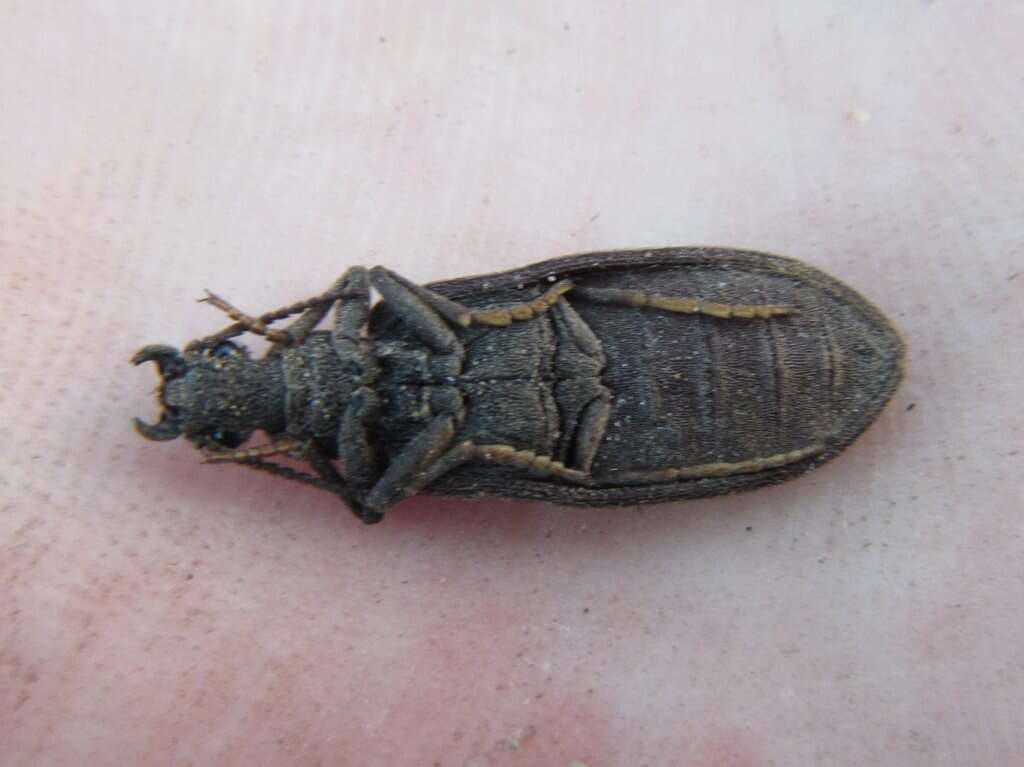
Ommatidae
The Ommatidae are a family of beetles in the suborder Archostemata. The Ommatidae are considered the extant beetle family that has most ancestral characteristics. There are only seven extant species, confined to Australia and South America. However, the geographical distribution was much wider during the Mesozoic spanning across Eurasia and Australia, suggesting that they were widespread on Pangea. So far, over 26 extinct genera containing over 170 species of these beetles have been described. Three extant genera have been assigned to this family: Omma, Tetraphalerus and Beutelius. The family
Kalligrammatidae
Kalligrammatidae, sometimes known as kalligrammatids or kalligrammatid lacewings, is a family of extinct insects in the order Neuroptera (lacewings) that contains twenty genera and a number of species. The family lived from the Middle Jurassic to the early Late Cretaceous before going extinct. Species of the family are known from Europe, Asia, and South America. The family has been occasionally described as "butterflies of the Jurassic" based on their resemblance to modern butterflies in morphology and ecological niche.

Omma
Omma is a genus of beetles in the family Ommatidae. Omma is an example of a living fossil. The oldest species known, O. liassicum, lived during the final stage of the Triassic (Rhaetian), over 200 million years ago, though the placement of this species in Omma has been questioned. Numerous other fossil species are known from the Jurassic and Cretaceous of Europe and Asia. The only living species is Omma stanleyi, which is endemic to Australia. Three other extant species endemic to Australia that were formerly part of this genus were moved to the separate genus Beutelius in 2020. Omma stanleyi