Category
page 1Keyboard layouts

Armenian alphabet
alphabet used to write the Armenian language
Dvorak
keyboard layout for English
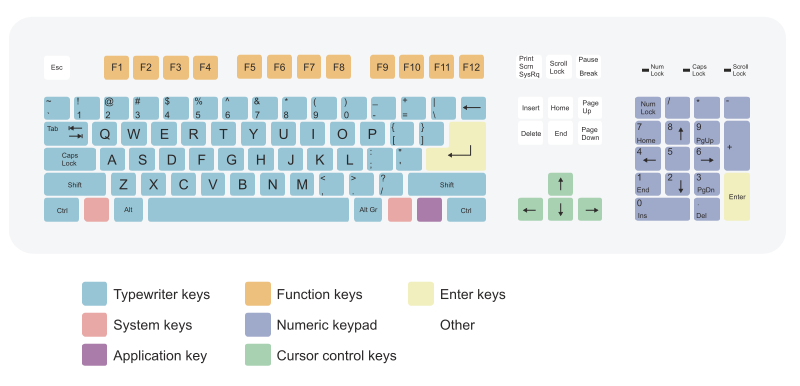
keyboard layout
any specific mechanical, visual, or functional arrangement of the keys of a keyboard or typewriter

JCUKEN
JCUKEN (ЙЦУКЕН, also known as YCUKEN, YTsUKEN and JTSUKEN) is the main Cyrillic keyboard layout for the Russian language in computers and typewriters.

Colemak
thumb|400px|Colemak keyboard layout (US) using the “ANSI” key arrangement
Colemak is a keyboard layout for Latin-script alphabets, designed to make typing English more efficient and comfortable than QWERTY by placing the most frequently used letters of the English language on the home row, while keeping many common keyboard shortcuts the same as in QWERTY. Released on 1 January 2006, it is named after its inventor, Shai Coleman.
dead key
special kind of modifier key
Pan-Nigerian alphabet
set of 33 letters used to write Nigerian languages; in addition to the 24 letters of the English alphabet except QX, contains ƁƊƎẸỊƘỌṢỤ
InScript keyboard
standard keyboard layout for Indian scripts
ISO/IEC 9995
series of international standards defining layout principles for computer keyboards
Japanese input method
method used to input Japanese characters on a computer
phonetic keyboard layout
keyboard layout for a writing system based on that of another, where letters with similar sounds are placed at the same keys
Swarachakra
Swarachakra (Devanagari: ) is a free text input application developed by the IDIN group at Industrial Design Center (IDC), Indian Institute of Technology Bombay for Indic scripts. Swarachakra's alphabetical keyboard layout performed better than the Inscript layout (a QWERTY-based design and government standard in India). As of 2014, it is available for Android devices in twelve languages.
Hebrew keyboard
keyboard layout used for the Hebrew alphabet
Georgian keyboard
keyboard layout used for the Georgian scripts