Category
page 1Kidney anatomy

nephron
The nephron is the minute or microscopic structural and functional unit of the kidney. It is composed of a renal corpuscle and a renal tubule. The renal corpuscle consists of a tuft of capillaries called a glomerulus and a cup-shaped structure called Bowman's capsule. The renal tubule extends from the capsule. The capsule and tubule are connected and are composed of epithelial cells with a lumen. A healthy adult has 1 to 1.5 million nephrons in each kidney. Blood is filtered as it passes through three layers: the endothelial cells of the capillary wall, its basement membrane, and between the p
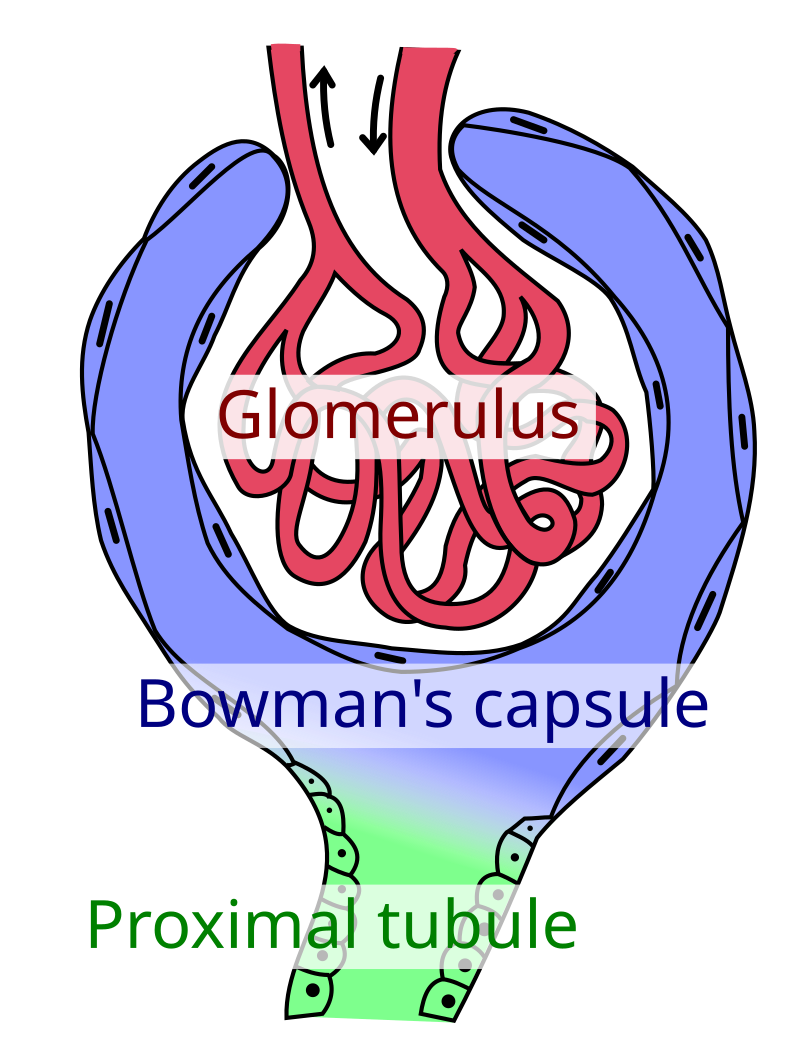
glomerulus
functional unit of nephron
Bowman's capsule
kidney structure which encloses the glomerular
renal pelvis
basin-like or funnel-like dilated proximal part of the ureter in the kidney
loop of Henle
section of kidney tissue
juxtaglomerular apparatus
structure in the kidney that regulates the function of each nephron

podocyte
Podocytes are cells in Bowman's capsule in the kidneys that wrap around capillaries of the glomerulus. Podocytes make up the epithelial lining of Bowman's capsule, the third layer through which filtration of blood takes place. Bowman's capsule filters the blood, retaining large molecules such as proteins while smaller molecules such as water, salts, and sugars are filtered as the first step in the formation of urine. Although various viscera have epithelial layers, the name visceral epithelial cells usually refers specifically to podocytes, which are specialized epithelial cells that reside in
renal corpuscle
kidney functional structural unit
macula densa
a region of juxtaglomerular apparatus
collecting duct system
series of tubules and ducts in the kidney that physically connect nephrons to a minor calyx or directly to the renal pelvis
juxtaglomerular cell
cell type
proximal tubule
kidney structure
afferent arteriole
blood vessel that supplies the glomeruli of the kidney
renal calyx
anatomical structure in kidneys
hilum of kidney
hylus of the kidney
efferent arteriole
blood vessels that are part of the urinary tract of organisms
distal convoluted tubule
portion of the kidney nephron between the loop of Henle and the collecting duct
renal medulla
part of the kidney
renal cortex
the outer portion of the kidney
renal capsule
fibrous layer surrounding the kidney
renal column
extention of the Cortex into the Medulla
vasa recta
kidney blood supply
arcuate artery of kidney
artery
interlobular artery of kidney
kidney structure
renal pyramid
cone-shaped tissue of the kidney
renal fascia
connective‑tissue envelope of kidney/adrenal; includes the anterior renal fascia (Gerota) and posterior renal fascia (Zuckerkandl); laterally forms lateroconal fascia
glomerular basement membrane
part of the filtration apparatus of the kidney

renal papilla
in the kidney
interlobar artery of kidney
blood vessels
renal circulation
circulation of the blood through the vessels of the kidney
arcuate vein
anatomical structure
interlobar vein
blood vessels
descending limb of loop of Henle
also known by the Latin term pars descendens ansa nephrica
Peritubular capillaries
tiny blood vessels, supplied by the efferent arteriole, that travel alongside nephrons allowing reabsorption and secretion between blood and the inner lumen of the nephron; capillaries that surround the renal tubule
Interlobular veins
blood vessels
renal ectopia
congenital disorder describing a kidney that is not located in its usual position
stellate veins
blood vessels
medullary ray
middle part of the cortical lobule or renal lobule
renal sinus
cavity within the kidney