Category
page 1Language articles with speaker number undated

German
West Germanic language native to Central Europe

Russian
East Slavic language
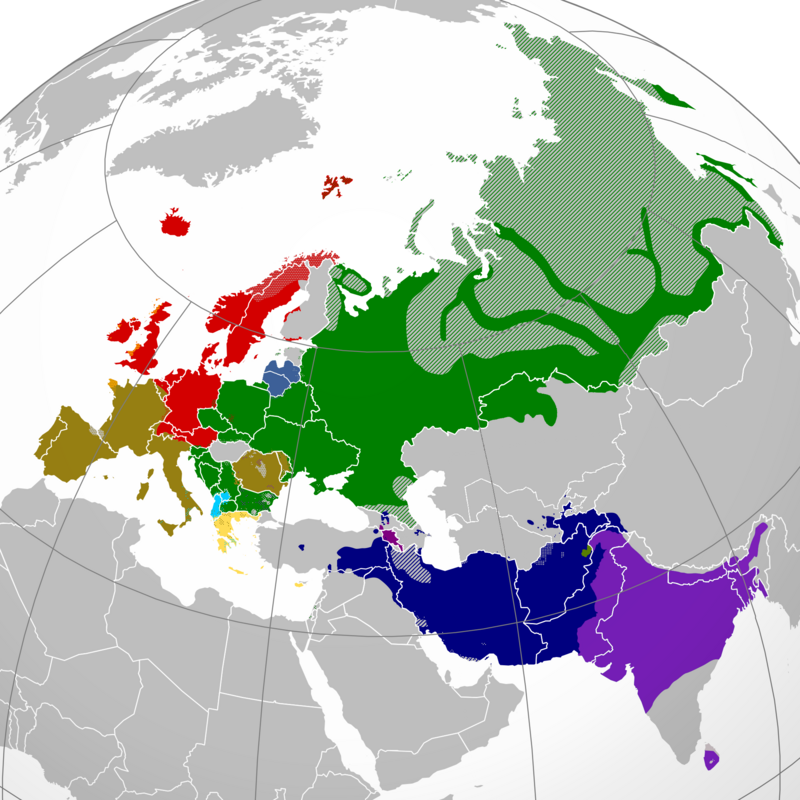
Indo-European
language family native to western and southern Eurasia— Europe, Iran and India
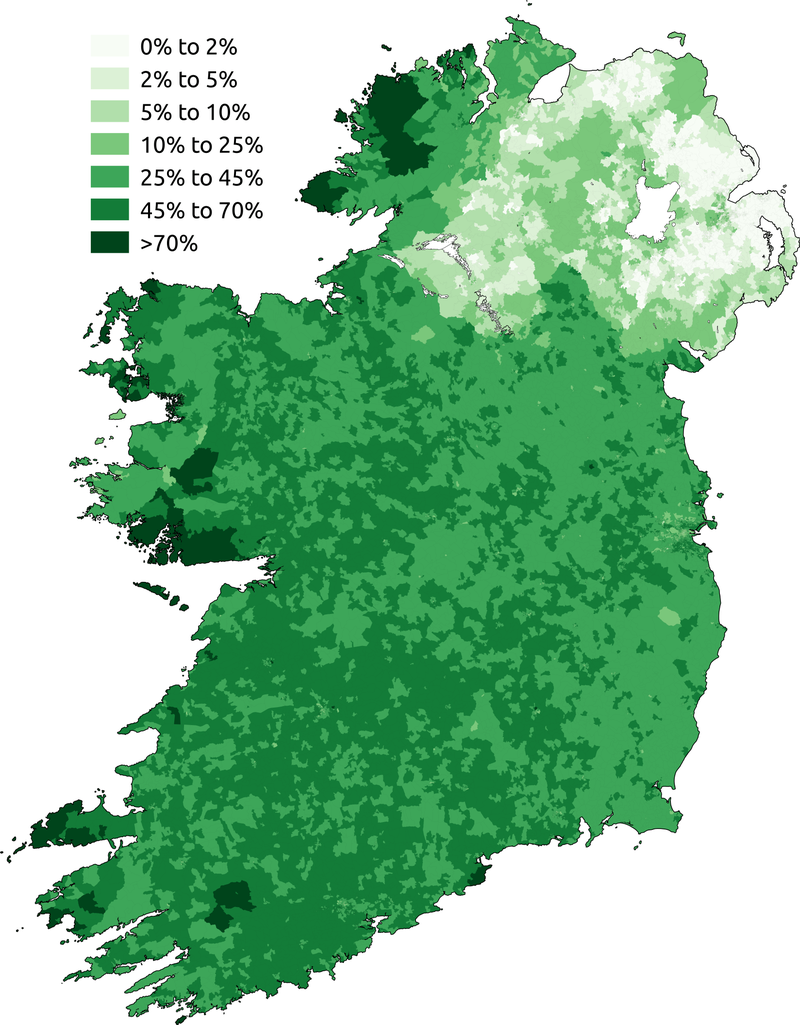
Irish
language native to Ireland

Vietnamese
Austroasiatic language originating in Vietnam

Welsh
Brittonic language spoken natively in Wales
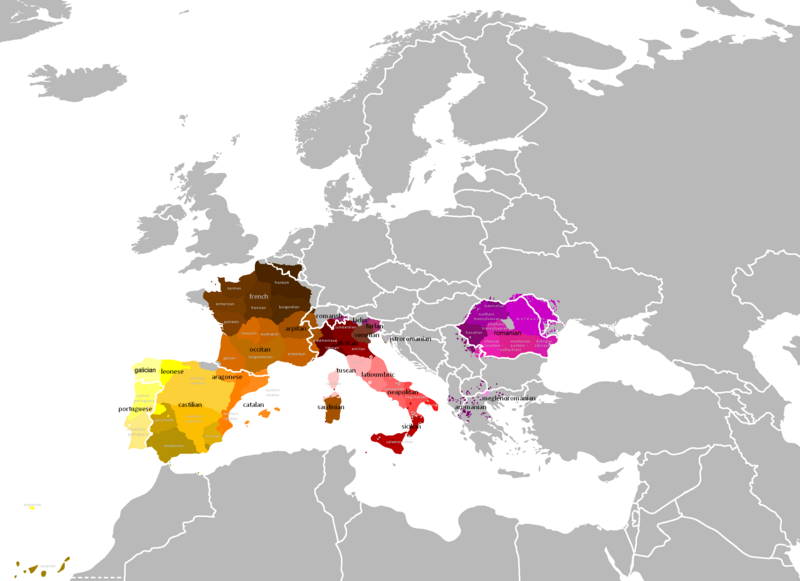
Romance languages
group of Indo-European languages, direct descendants of Vulgar Latin

Germanic languages
branch of the Indo-European language family

Ido
Ido () is a constructed language derived from a reformed version of Esperanto, and designed similarly with the goal of being an international auxiliary language (or universal second language) for people of diverse languages. To function as an effective international auxiliary language, Ido was designed specifically to be grammatically, orthographically, and lexicographically regular (and, above all, easy to learn and use). It is the most successful of the many Esperanto derivatives, known as Esperantidoj.

Quechua
language family spoken primarily in the Andes region of South America

Semitic
language group containing Arabic and Hebrew

Afroasiatic
large language family of Africa and West Asia

Uralic
language family prevalent in northern Eurasia

Malagasy
language spoken in Madagascar
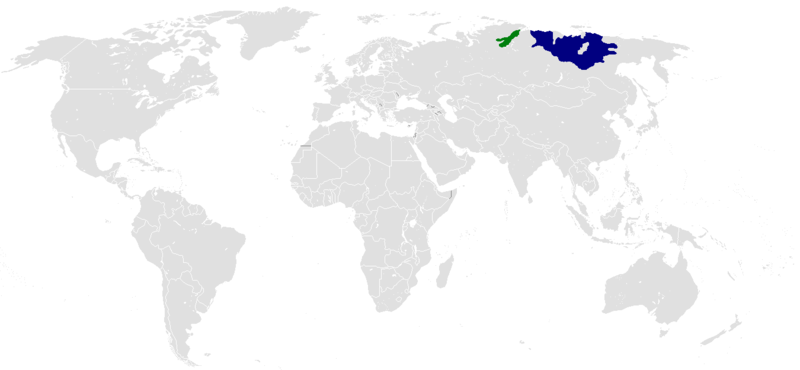
Yakut
Turkic language belonging to Siberian Turkic branch
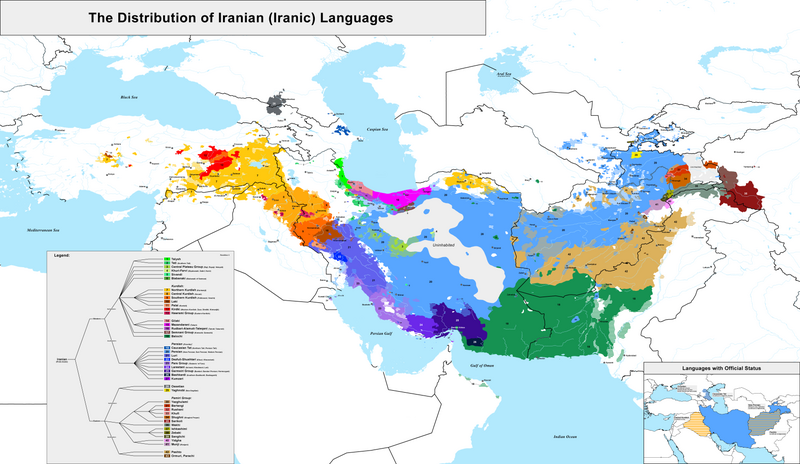
Iranian
branch of the Indo-Iranian languages in the Indo-European language family

Montenegrin
normative variety of Serbo-Croatian in Montenegro

Interslavic
Interslavic ( / ) is a pan-Slavic auxiliary language. Its purpose is to facilitate communication between speakers of various Slavic languages, as well as to allow people who do not speak a Slavic language to communicate with Slavic speakers by being mutually intelligible with most, if not all, Slavic languages. For Slavs and non-Slavs, it can be used for educational purposes as well. Its use spans a broad range of fields, including tourism and education.

Filipino
official language of the Philippines; standard and prescriptive form of Tagalog language; alternative name for Tagalog language, particularly its standardized form

Austroasiatic
language family of Continental Southeast Asia

Italic
subfamily of the Indo-European language family spoken by Italic peoples

West Germanic languages
group of languages

Sorbian
Lechitic language spoken by the Sorbs
Lojban
Lojban (pronounced ) is a logical, constructed human language created by the Logical Language Group, which aims to be syntactically unambiguous. It succeeds the Loglan project.

Nilo-Saharan
language family

Mayan
language family spoken in Mesoamerica
Hiri Motu
Austronesian language of Papua New Guinea

Cushitic
branch of Afroasiatic native to the Punt peninsula of the Horn of Africa

Kra–Dai
language family of mainland Southeast Asia

Standard Chinese
standard form of the Chinese language

Balto-Slavic
branch of the Indo-European language family

Altai
language of the Turkic group of languages

Madurese
Malayo-Polynesian language spoken in Madura

Chadic
branch of the Afroasiatic languages

Meänkieli
Meänkieli (), also known as Tornedalian, is a Finnic language or a group of distinct Finnish dialects spoken in the northernmost part of Sweden, particularly along the Torne River Valley. It is officially recognized in Sweden as one of the country's five minority languages and is treated as a separate language from Finnish. According to the National Association of Swedish Tornedalians, 70,000 individuals understand Meänkieli, at least to some level. Most fluent speakers are aged 65 or older.

Nuristani
language group of the Indo-Iranian language family

Saraiki
Indo-Aryan language spoken in Pakistan

Yukaghir
small family of two closely related languages – Tundra and Kolyma Yukaghir – spoken by the Yukaghir in the Russian Far East living in the basin of the Kolyma River

Gallo
regional language of France

Inuit
branch of the Inuit–Yupik (Eskimo) language subfamily of the Eskaleut languages

Seychellois Creole
language
Omotic
language family
Tlingit
language of southeast Alaska and western Canada

Nilotic
small language family of East Africa

Bikol
group of languages of the Philippines
Kwanyama
Kwanyama or Cuanhama is a national language of Angola and Namibia. It is a standardized dialect of the Ovambo language, and is mutually intelligible with Oshindonga, the other Ovambo dialect with a standard written form.
Dutch Low Saxon
group of Low Saxon dialects spoken in the northeastern Netherlands
Siberian Tatar
Turkic language spoken in Western Siberia
Batak
subgroup of the Northwest Sumatra–Barrier Islands branch
Arbëresh
Albanian dialect spoken in Italy
.png)
Hokkien
Hokkien ( , ) is a variety of the Southern Min group of Chinese languages. Native to and originating from the Minnan region in the southeastern part of Fujian in southeastern China, it is also referred to as Quanzhang (), from the first characters of the urban centers of Quanzhou and Zhangzhou.
Teochew
Southern Min language
Tanoan
language family
Indian English
group of English dialects spoken primarily in the Indian subcontinent
Acholi
Southern Luo dialect

Auslan
Auslan (; an abbreviation of Australian Sign Language) is the sign language used by the majority of the Australian Deaf community. Auslan is related to British Sign Language (BSL) and New Zealand Sign Language (NZSL); the three have descended from the same parent language, and together comprise the BANZSL language family. As with other sign languages, Auslan's grammar and vocabulary is quite different from spoken English. Its origin cannot be attributed to any individual; rather, it is a natural language that emerged spontaneously and has changed over time.
Gujari
Gujari (گُجری) also spelt Gurjari, Gojri, Gujri, Gojari, or Gurjar is a Central Indo-Aryan language belonging to the Indo-Iranian subdivision of the Indo-European languages, spoken by most of the Gurjars in the northern parts of India and Pakistan, as well as in eastern parts of Afghanistan. Gujari is the second most widely spoken language in Azad Kashmir, after Pahari, and third most widely spoken language in Jammu and Kashmir, after Kashmiri and Dogri. It is mostly spoken in the northern Pakistan, including Gilgit-Baltistan, Khyber Pakhtunkhwa, and Azad Kashmir, and northern Indian states, i
Central Siberian Yupik
language
Standard Moroccan Tamazight
standardised form of Amazigh language of Morocco (including all regional accents), written in Tifinagh alphabet
Nagpuri
Eastern Indo-Aryan language, also named Sadri, Sadari or Sadani, part of the Bihari languages subfamily, originating from North-Eastern India