Category
page 1Language articles without reference field
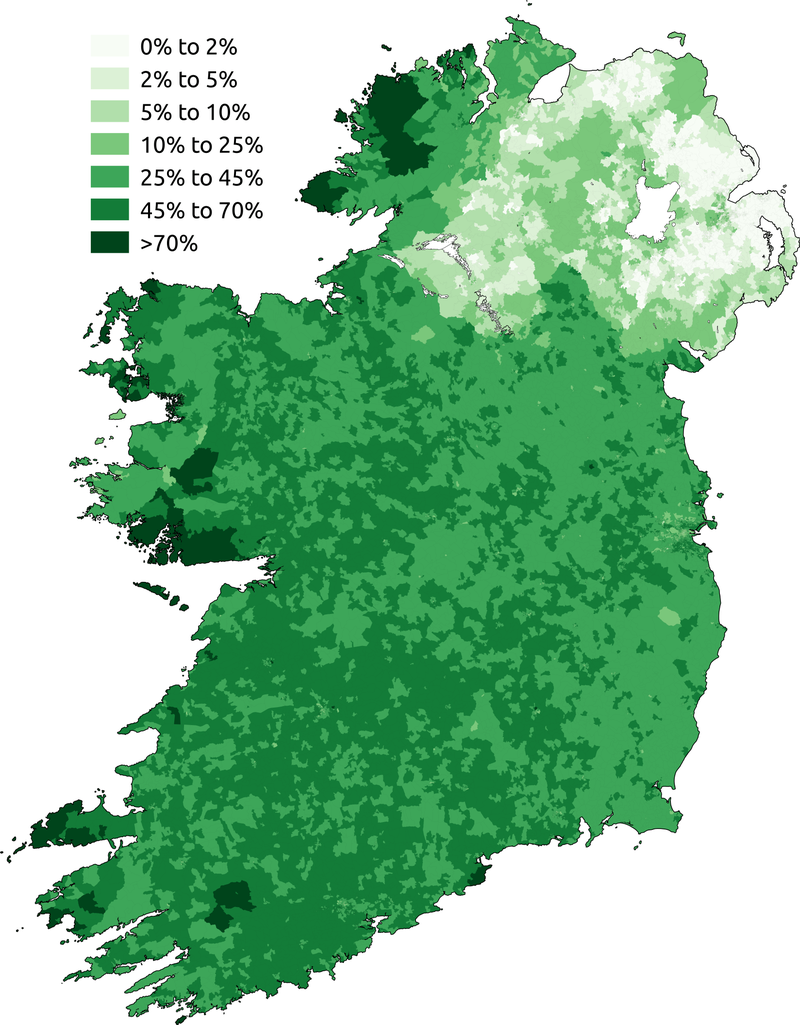
Irish
language native to Ireland

Belarusian
East Slavic language

Latvian
Baltic language, official in Latvia and the European Union

Vietnamese
Austroasiatic language originating in Vietnam

Welsh
Brittonic language spoken natively in Wales

Ido
Ido () is a constructed language derived from a reformed version of Esperanto, and designed similarly with the goal of being an international auxiliary language (or universal second language) for people of diverse languages. To function as an effective international auxiliary language, Ido was designed specifically to be grammatically, orthographically, and lexicographically regular (and, above all, easy to learn and use). It is the most successful of the many Esperanto derivatives, known as Esperantidoj.

Bashkir
Turkic language spoken in Russia

Malagasy
language spoken in Madagascar

Montenegrin
normative variety of Serbo-Croatian in Montenegro

Tuvan
Siberian Turkic language

Interslavic
Interslavic ( / ) is a pan-Slavic auxiliary language. Its purpose is to facilitate communication between speakers of various Slavic languages, as well as to allow people who do not speak a Slavic language to communicate with Slavic speakers by being mutually intelligible with most, if not all, Slavic languages. For Slavs and non-Slavs, it can be used for educational purposes as well. Its use spans a broad range of fields, including tourism and education.

Filipino
official language of the Philippines; standard and prescriptive form of Tagalog language; alternative name for Tagalog language, particularly its standardized form

Ladin
Rhaeto-Romance language of northeast Italy
Lojban
Lojban (pronounced ) is a logical, constructed human language created by the Logical Language Group, which aims to be syntactically unambiguous. It succeeds the Loglan project.

Mirandese
Romance language belonging to the Astur-Leonese linguistic group, sparsely spoken in a small area of northeastern Portugal
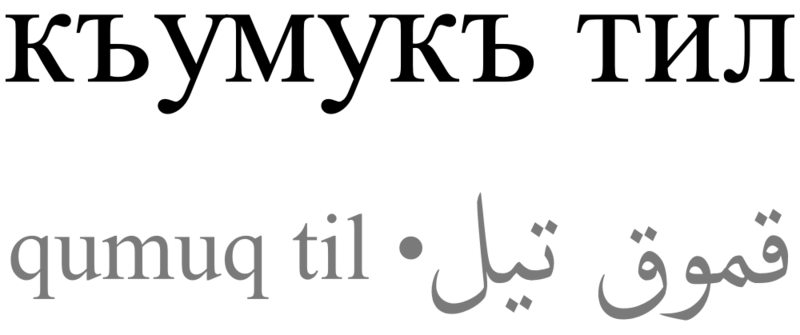
Kumyk
Turkic language

Madurese
Malayo-Polynesian language spoken in Madura

Saraiki
Indo-Aryan language spoken in Pakistan

Gallo
regional language of France

Skolt Sami
Sámi language spoken in Finland, Russia, Norway

Seychellois Creole
language
Shughni
Eastern Iranian language
Jèrriais
thumb| teacher Ben Spink speaks and tells the words of the song by Frank Le Maistre.
' ( ; also known as the Jersey language, Jersey French and Jersey Norman French' in English) is a Romance language and the traditional language of the Jersey people. It is a form of the Norman language spoken in Jersey, an island in the Channel Islands archipelago off the coast of France. Its closest relatives are the other Norman languages, such as , spoken in neighbouring Guernsey, and the other .
Tlingit
language of southeast Alaska and western Canada
silbo Gomero
whistled language from la Gomera island, Spanish Canarias.
Kwanyama
Kwanyama or Cuanhama is a national language of Angola and Namibia. It is a standardized dialect of the Ovambo language, and is mutually intelligible with Oshindonga, the other Ovambo dialect with a standard written form.
Dutch Low Saxon
group of Low Saxon dialects spoken in the northeastern Netherlands
Siberian Tatar
Turkic language spoken in Western Siberia
Kusunda
endangered language isolate of Nepal
Teochew
Southern Min language
Gujari
Gujari (گُجری) also spelt Gurjari, Gojri, Gujri, Gojari, or Gurjar is a Central Indo-Aryan language belonging to the Indo-Iranian subdivision of the Indo-European languages, spoken by most of the Gurjars in the northern parts of India and Pakistan, as well as in eastern parts of Afghanistan. Gujari is the second most widely spoken language in Azad Kashmir, after Pahari, and third most widely spoken language in Jammu and Kashmir, after Kashmiri and Dogri. It is mostly spoken in the northern Pakistan, including Gilgit-Baltistan, Khyber Pakhtunkhwa, and Azad Kashmir, and northern Indian states, i

Auslan
Auslan (; an abbreviation of Australian Sign Language) is the sign language used by the majority of the Australian Deaf community. Auslan is related to British Sign Language (BSL) and New Zealand Sign Language (NZSL); the three have descended from the same parent language, and together comprise the BANZSL language family. As with other sign languages, Auslan's grammar and vocabulary is quite different from spoken English. Its origin cannot be attributed to any individual; rather, it is a natural language that emerged spontaneously and has changed over time.
Central Siberian Yupik
language
Bagheli
language
Idiom Neutral
international auxiliary language, published by the International Academy of the Universal Language in 1902 under the leadership of W. Rosenberger; a heavy revision of Volapük
Fuzhou dialect
Min Chinese dialect in Fujian
Judeo-Berber
group of languages
Algherese
dialect
Franc-Comtois
Frainc-Comtou () is a Romance language of the ''langues d'oïl'' language family spoken in the Franche-Comté region of France and in the Canton of Jura and Bernese Jura in Switzerland.
Yazgulyam
member of the Pamir subgroup of the Iranian languages, spoken by native speakers along the Yazgulyam River, Gorno-Badakhshan, Tajikistan
Ro
a priori constructed language
Yuchi
language of the Yuchi people living in the southeastern United States, including eastern Tennessee, western Carolinas, northern Georgia and Alabama, in the period of early European colonization
African French
generic name of the varieties of the French language in the African continent
Bajjika
Bajjika is an Indo-Aryan language variety spoken in parts of Bihar, India and in Nepal.
Sylt North Frisian
dialect of the North Frisian language
talian
dialect
Munsee
Algonquian language
Namibian Black German
pidgin based on Standard German spoken in Namibia
Brabantian
dialect
Haketia
Haketia ( Ḥakkītīyā; al-Ḥakītiya; ) (also written as Hakitia or Haquitía) is an endangered Jewish Romance language also known as Djudeo Spañol, Ladino Occidental, or Western Judaeo-Spanish. It was historically spoken by the North African Sephardim in the Moroccan cities of Tétouan, Tangier, Asilah, Larache, Chefchaouen, Ksar el-Kebir, and the Spanish towns of Ceuta and Melilla. Tetuani Ladino was also spoken in Oran, Algeria. One of the distinctions between Ladino and Haketia (Haquetia) is that the latter incorporates Moroccan Arabic.
Gora dialect
dialect of Slavic languages, variety of South Slavic spoken by the Gorani people
Bartangi
Pamir language natively spoken in Afghanistan and Tajikistan
Banat Bulgarian
dialect
Eastern Lombard
Lombard dialects of Italy
Crow
language
Öömrang
dialect of the North Frisian language
Central Italian
group of Italo-Dalmatian Romance dialects spoken in central Italy
Bengkulu
language of Indonesia
Abellen
language
Coastal Kadazan
language