Category
page 1Languages of Taiwan
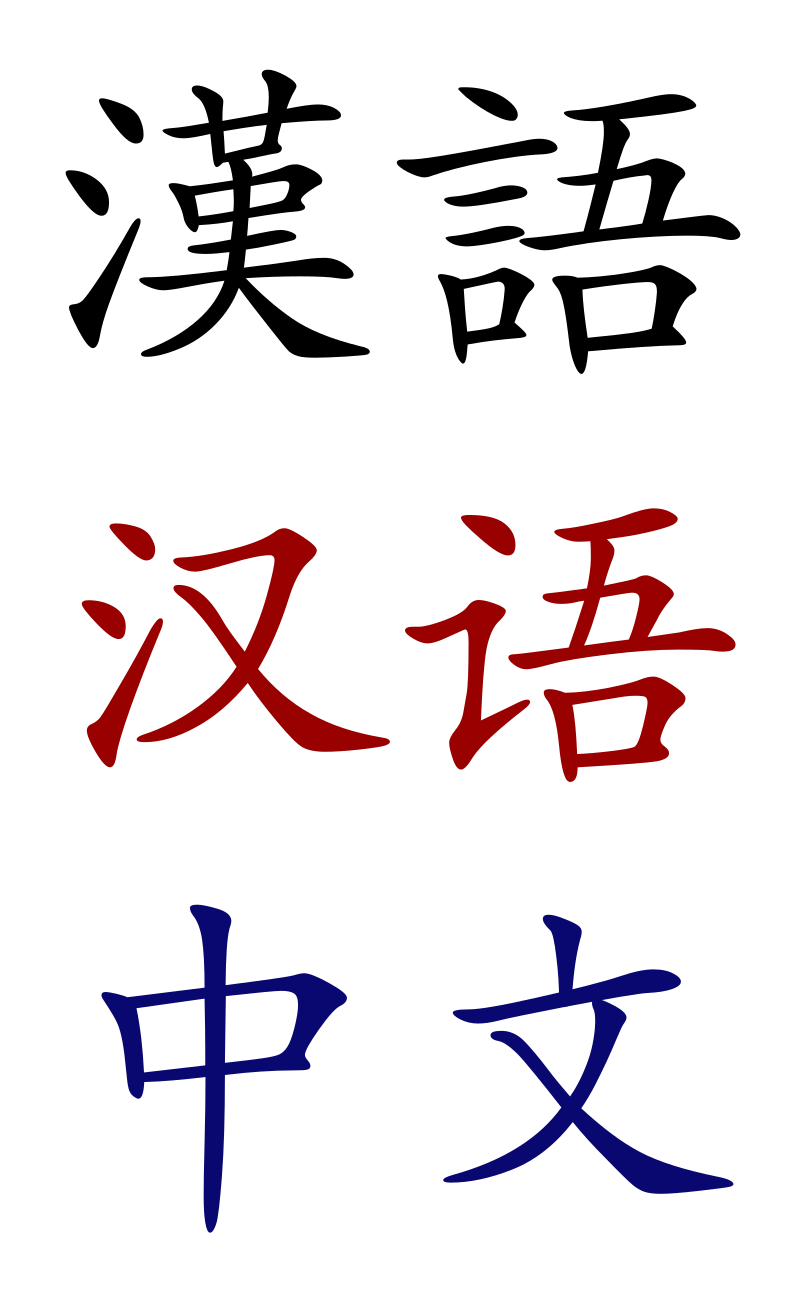
Chinese
language group of the Sinitic languages

Vietnamese
Austroasiatic language originating in Vietnam

Southern Min
branch of the Min Chinese language

Standard Chinese
standard form of the Chinese language

Formosan
geographic grouping of languages spoken by Taiwanese Aborigines
Eastern Min
branch of the Min group of Sinitic languages of China
Taiwanese Hokkien
variety of Hokkien spoken in Taiwan, official name is Taiwanese Taigi
Amis
East Formosan language of Taiwan
Paiwan
Austronesian language spoken in Taiwan

Pe̍h-ōe-jī
' ( ; , , ; POJ), also known as Church Romanization', is an orthography used to write variants of Hokkien Southern Min, particularly Taiwanese and Amoy Hokkien. It is widely employed as one of the writing systems for Southern Min. During its peak, it had hundreds of thousands of readers.
Bunun
Formosan language spoken by the Bunun people of Taiwan
Pu-Xian Min
language
.png)
Shanghainese
The Shanghainese language, also known as the Shanghai dialect, or Hu language, is a variety of Wu Chinese spoken in the central districts of the city of Shanghai and its surrounding areas. It is classified as part of the Sino-Tibetan language family. Shanghainese, like the rest of the Wu language group, is mutually unintelligible with other varieties of Chinese, such as Mandarin.
Yami
language
Puyuma
Austronesian language spoken in Taiwan
Saisiyat
language
Kanakanavu
Austronesian language spoken in Taiwan
Standard Taiwanese Mandarin
variety of Modern Standard Chinese serving as the official language of the Republic of China (Taiwan)
Saaroa
language
Basay
extinct Formosan language of northern Taiwan
Babuza
language
Q718269
Eastern Taiwan language
Pazeh-Kaxabu
Northwest Formosan language of Taiwan
languages of Taiwan
languages of the country and its peoples
Yilan Creole Japanese
Japanese-based Creole language in Taiwan
Ketagalan
extinct Austronesian language of Taiwan
Taiwanese Sign Language
sign language used in Taiwan
Tsouic
language family
Pha̍k-fa-sṳ
Pha̍k-fa-sṳ () is an orthography similar to Pe̍h-ōe-jī and used to write Hakka, a variety of Chinese. Hakka is a whole branch of Chinese, and Hakka dialects are not necessarily mutually intelligible with each other, considering the large geographical region. This article discusses a specific variety of Hakka. The orthography was invented by the Presbyterian church in the 19th century. The Hakka New Testament published in 1924 is written in this system.
Papora-Hoanya
language
Taiwanese Hakka
Chinese topolect spoken in Taiwan

East Formosan
Austronesian language family of Taiwan
Favorlang
extinct Formosan language
Atayalic
Austronesian language group of Taiwan
Putian
dialect of Pu-Xian Min Chinese spoken in the city of Putian in Fujian, China
O͘
thumb|O͘ o͘
Matsu dialect
Eastern Min dialect; mother tongue of residents of the Matsu Islands in Lianjiang County, Fujian Province, Republic of China
writing systems of Formosan languages
Northern Formosan
proposed grouping of Formosan languages
Junjiahua
Junjiahua, Junhua,
Junsheng, or "military speech" in English, is any of a number of isolated dialects in Guangdong, Guangxi, Hainan, Fujian, and Taiwan. Some believe that they are a Mandarin dialect group that assimilated to local Chinese variants in southern China. Junhua began as a lingua franca in the army, being spoken between soldiers dispatched to various parts of China during the Ming dynasty. It was subsequently spread to areas around the camps where the army settled. It is now an endangered language. In Hainan, it is still spoken by about 100,000 people. These speakers mainly live in
Sinckan Manuscripts
series of Chinese leases, mortgages, and other commerce contracts
2030 Bilingual Nation
policy in the Republic of China (Taiwan)
Fuqing dialect
It is spoken in the county-level city of Fuqing, situated within the prefecture-level city of Fuzhou.
Written Hokkien
Written form of the Hokkien language